If you are one of the online businesses that provide hosting services to your customers, you may encounter various problems in your field such as performance, source leaks, or security issues. All these issues are recovered by the CloudLinux operating system that is used for the shared hosting environment. So, we will show you how to install CloudLinux on CentOS 7.
What is CloudLinux Operating System?
As mentioned, CloudLinux is an operating system for commercial use and can replace CentOS. The system uses LVE kernel-level technology, allowing you to manage CPU and memory on a per-tenant basis. Some of the benefits that CloudLinux Offers are advanced resource management, performance optimization, and advanced security, which are specially provided for Multi-client hosting environments. This improved performance enables data centers to provide better customer support.
Installing CloudLinux on CentOS 7
To set up and use the CloudLinux operating system, we suggest you purchase from the Linux VPS plans provided on our website and then apply the continuation of this tutorial on our high-speed servers.
According to the usual procedure, you should start the installation by updating the operating system. This important step must be done because CentOS security comes first and security is sent at the CentOS upgrade. So follow the command to upgrade the operating system:
yum -y update && shutdown -r now
The next part is to register a CloudLinux user key. It is a commercial product, So you will need to purchase the correct number of keys depending on your needs.
You will get the installer as a runnable script, So fetch the script before the execution:
Then, you should run the script you have just retrieved:
sh cldeploy -k # if you have activation key
Or you can execute it as follow:
sh cldeploy -i # if you have IP based license
As you complete the process, reboot your server. As a result, various CloudLinux services will be running and all the kernel modules and modifications will be active:
reboot
That’s it. Now you have CloudLinux installed on your CentOS system.
Conclusion
CloudLinux is a great way to upgrade your hosting. So, we tried to introduce a way to install it on the CentOS operating system. It was easy and will takes just a few minutes to install. If you enjoyed this article please share it with those who may also be interested.
FAQ
What are the benefits of using CloudLinux?
This OS is useful to improve server stability, enhance security, and allocate and control resources.
Is it possible to install CloudLinux on an existing CentOS server?
Yes, it is possible. However, it is better to perform a clean installation of CloudLinux to avoid potential problems and conflicts.
Cardano is one of the largest digital currencies worldwide and the cryptocurrency associating with it was calling ADA. Of course, it should note that most people use these terms interchangeably. In this post, we will show the way to easily purchase Admin RDP with Cardano. Admin RDP is a good server that gives you administrator access and is known as a dedicated RDP. Here, you can have a dedicated IP and dedicated resources too. Our website will give you the opportunity to buy Admin RDP using Cardano.
Benefits of Admin RDP
Buying Admin RDP will bring lots of benefits for you. It is the cheapest RDP with admin access and is fast enough to give you a good experience of using a remote desktop. Admin RDP provides a secure connection to computers running the Windows operating system. Using Admin RDP for Windows, you can restrict access to specific computers through IP address or hostname.
Steps to Buy Admin RDP With Cardano
In previous articles, we provided a full explanation of Cardano digital currency. In this section, we will show the steps to buy Admin RDP with Cardano. So, follow the instructions of this post, to find out how to go through this process.
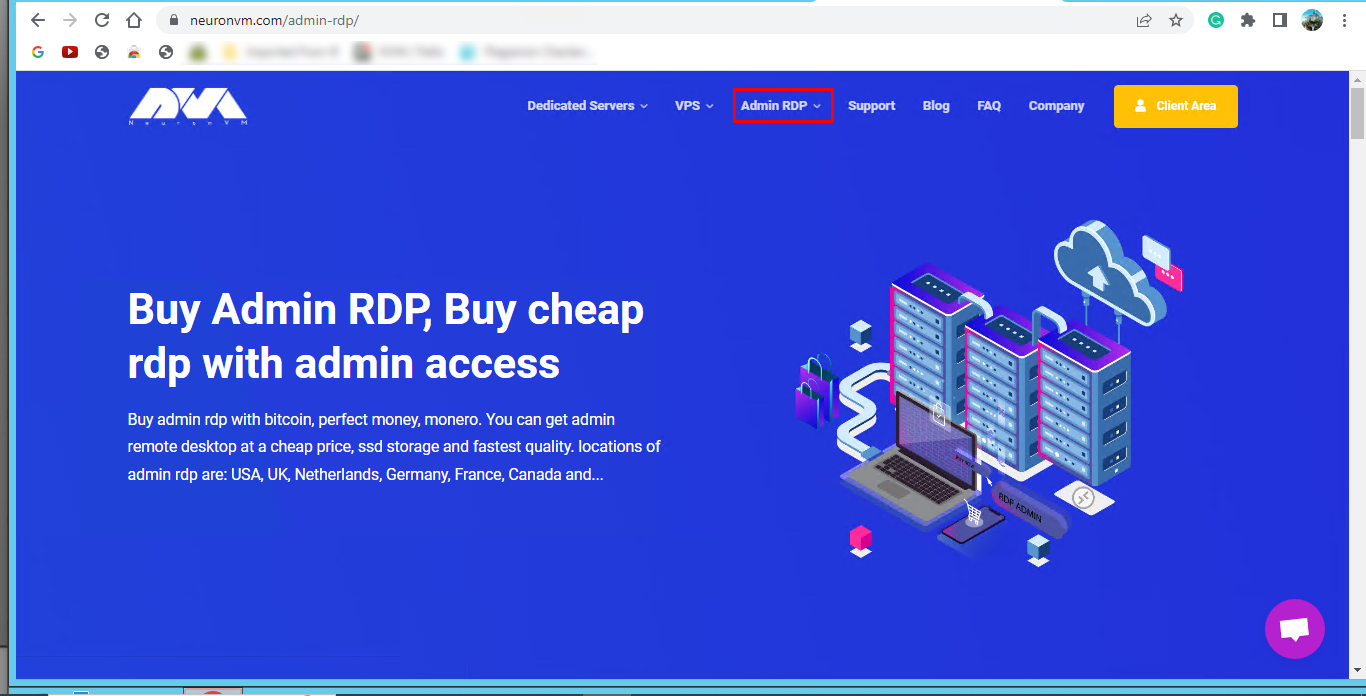
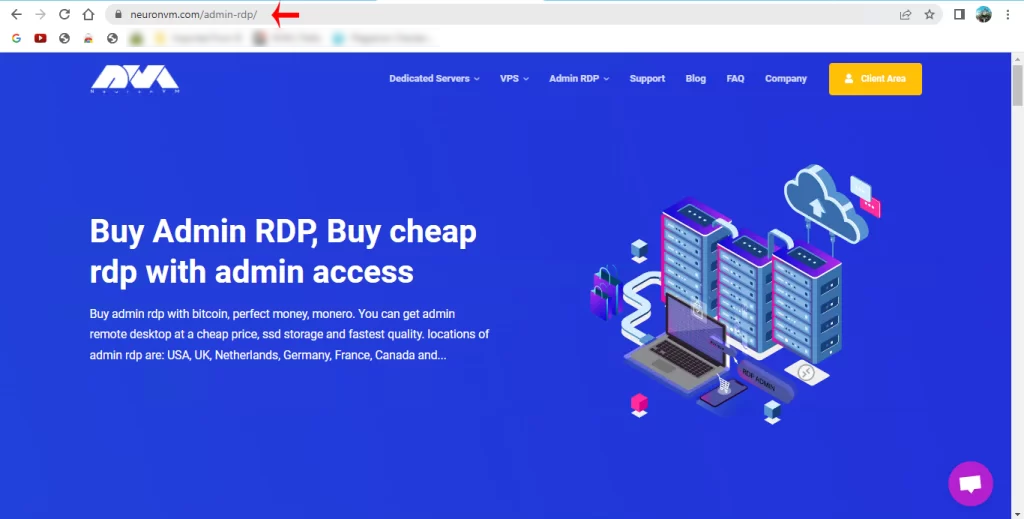
– First, you should go to the main page of our website and click on theAdmin RDP tab or directly refer to the Admin RDP page.:
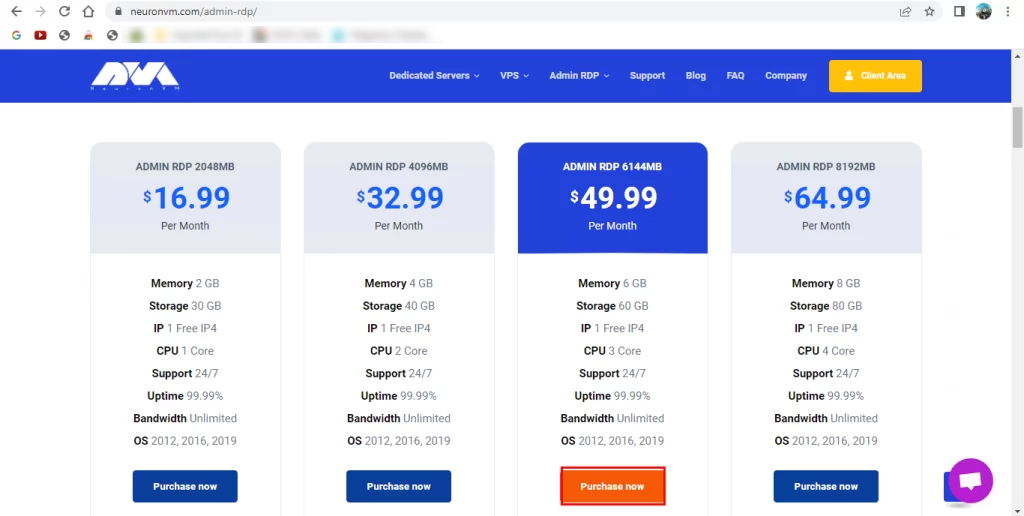
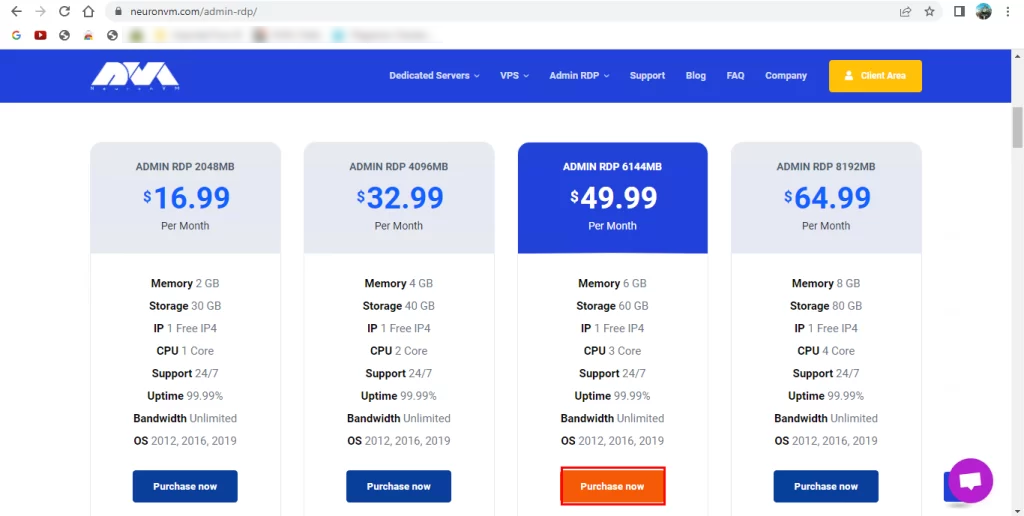
– Scroll down to see the plans. Here, you can choose the desired plan for Admin RDP to purchase:
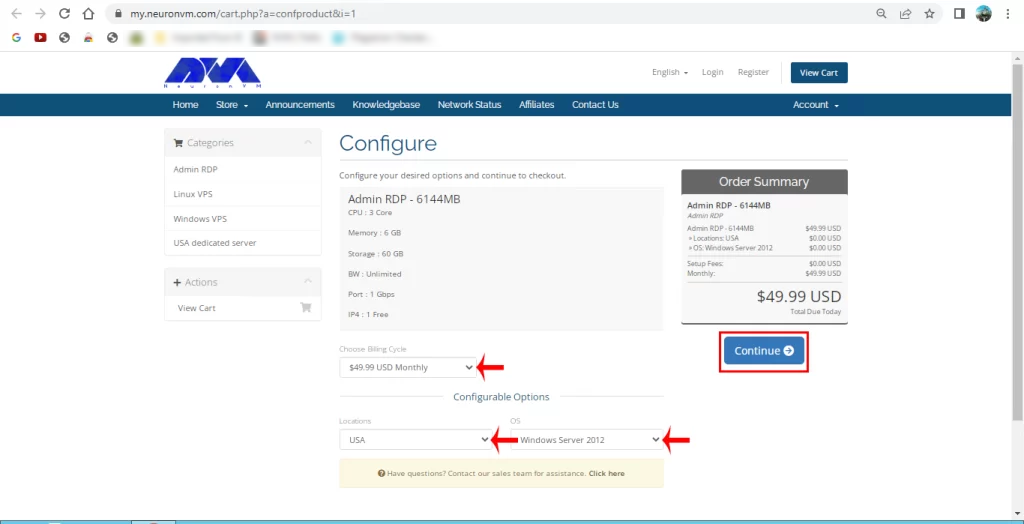
– This section is related to the configuration part. In this part, you can choose the proper Operating System, the desired server Location, and the cycle of your payment and press Continue:
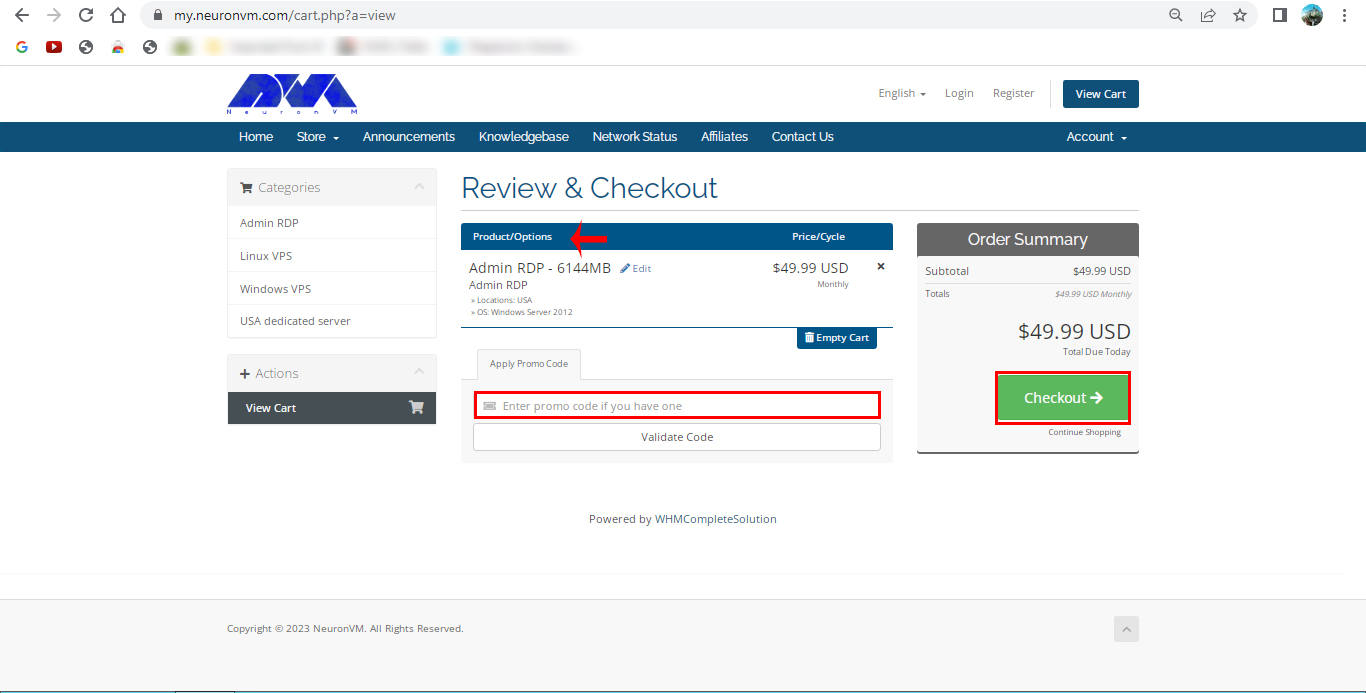
– Then, you will redirect to the Review & Checkout section. Review the details of the chosen plan and click on the Checkout button.
Tip: If you received any Promo Code for a discount. Enter the code inside the box below:
On this page, you should sign up and insert your personal information, or click on the Already Registered button, if you created an account before:
– The next step is related to the payment details. Select the All Cryptocurrency icon and add notes or extra information if it is requiring, and select the Complete Order button:
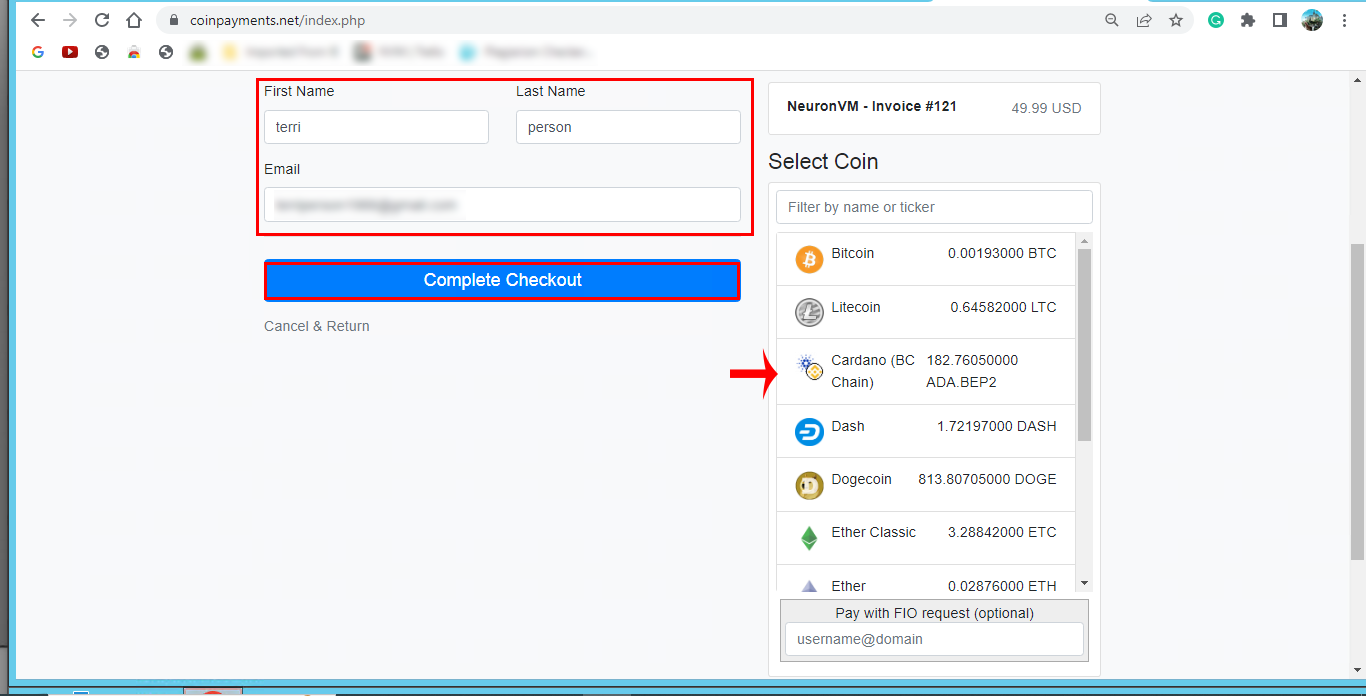
– Here, you can enter the needed Billing information. So scroll to select the Cardano cryptocurrency and press Complete Checkout to finish the purchase process:
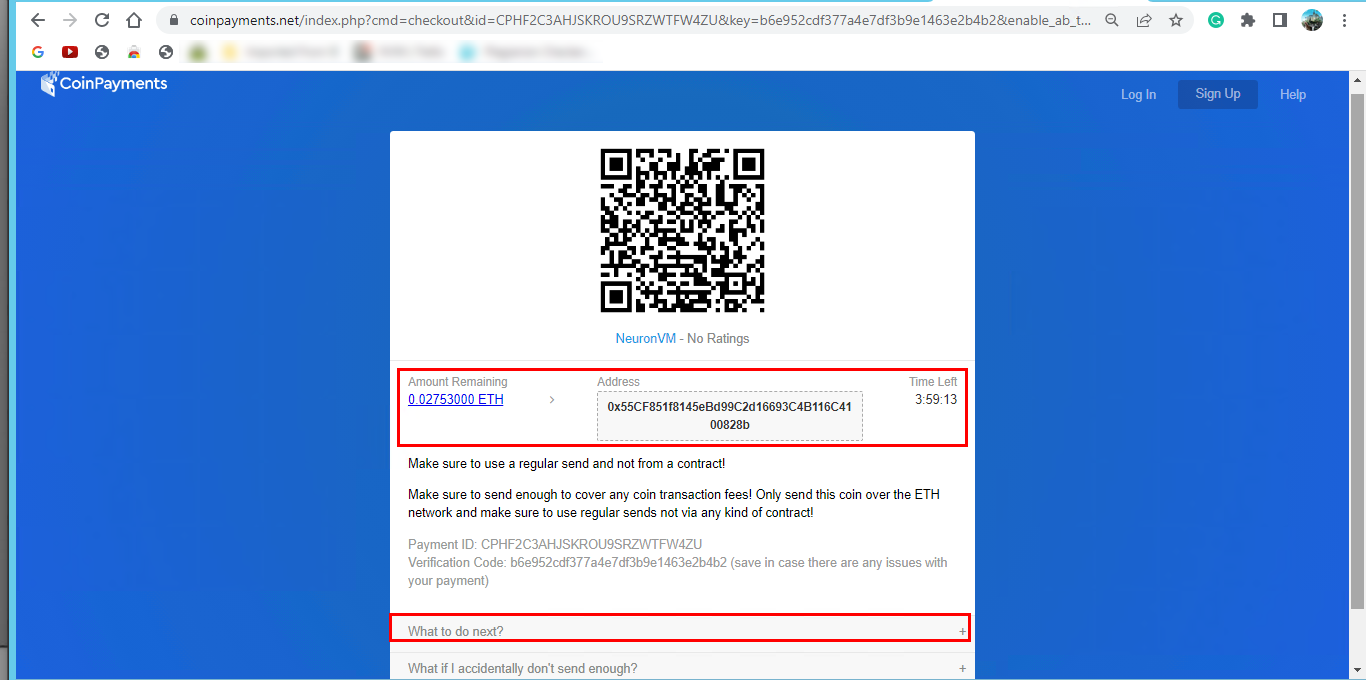
The last step is to identify the crypto Payment ID and Verification Mode. To achieve more information about your payment refer to the What to do Next Icon and click to see the information and confirm the payment:
The purchase details will be sent to you by email.
Conclusion
This tutorial was prepared to help you learn the way of purchase Admin RDP with Cardano. Use the instructions and have an easy payment process. Admin RDP would be a great choice for you. Get this practical server for a more reasonable price and feel the difference. If you need any help or have any questions, just leave a comment.
FAQ
What is important about buying Admin RDP?
It is very important to understand the legal implications and ensure that the purchase is on the way of applicable laws and regulations.
How many users allow to access RDP?
As a default, just 2 users are allowed to access Admin RDP, and if you want to connect more than 2 at the same time, then you have to install the RD session host role on your virtual machine.
CWP or Control Web Panel is an application software for server management in Linux systems, which was previously known as a Linux panel. This system has many features for managing servers, which makes learning easy for beginners who don’t have much experience in using the command line. So, here we will analyze and try to give a full introduction to CWP.
What is CWP?
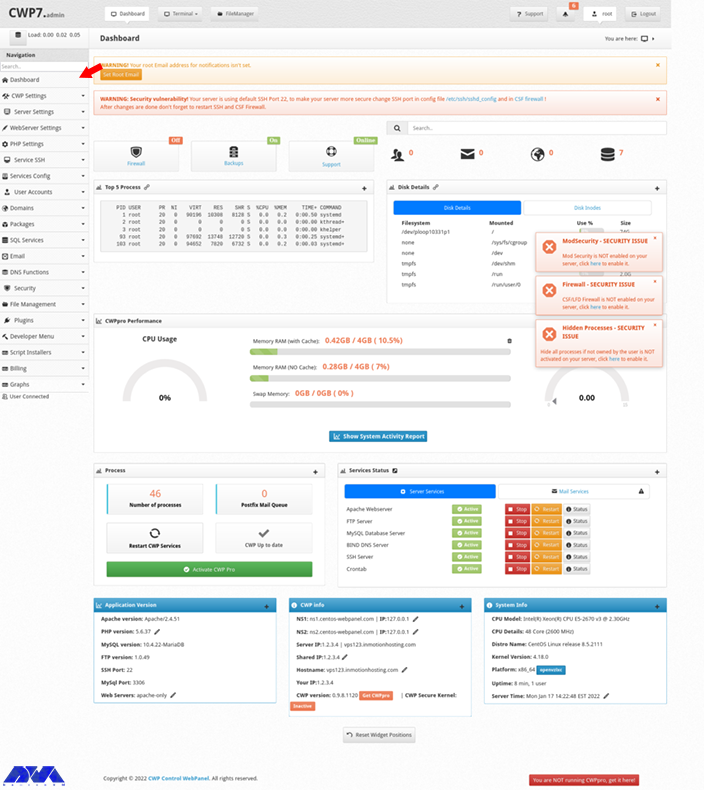
As we mentioned before, CWP is a management system that is created for Linux distributions specifically AlmaLinux. It is produced to allow users to manage, edit, and maintain website content without requiring advanced technical knowledge. This control panel has a simple and understandable area where the navigation menu is in the form of a sidebar with other subsections. We suggest that you choose and buy from the cheap but high-quality Linux VPS server plans offered on our website to set up the CWP control panel.
The dashboard is like the image below:
Important Features of CWP
CentOS Web Hosting servers or the CWP has many features. In this section, we try to analyze the most notable ones for you:
– CWP is equipped with user-advanced features and makes it possible to easily manage websites with modern and advanced user interfaces.
– This control panel provides complete support for the automation of processes. You can set a billing software to help with the creation of user accounts or run user backups or cronjobs, etc.
– It contains a powerful file manager. Also, you can manage FTP users and user limits with CWP.
– The advanced file manager is equipping with a code editor that makes it easy to manage your websites.
– This control panel contains many security and safety features that are dedicating to you. These security functions are integrating into CWP:
– CWP has several monitoring tools. These tools are NetData, Live monitoring of MySQL process, an AI bot, and so on.
– An advanced backup system with daily, weakly, and monthly backup options in all fields.
– CWP helps you configure client packages and service plans so easily.
– Multiple billing systems are supporting by CWP. These systems are WHMCS, Hostbill, Wisecp, and Blesta.
What Is the difference between Free and CWPpro?
As the name suggests, you can get the free version of CWP and use it without any payment, but it has features that require a premium version. These features are:
– The ability to create unlimited CWP users
– Having sales agents
– Immediate update of CWP and ModeSecutity
– Using multiple versions of PHP simultaneously
– Migration tools for Cpanel
– Providing additional system security solutions
Note that, these are all for use in the CWP interface and you can log into the terminal to update the software or install your web security.
Conclusion
This article is prepared to introduction to CWP or Control Web Panel and makes a clear understanding of it for you. By studying the features and analyzing this control panel, you can see how useful and applicable is CWP. We hope you enjoyed the content.
FAQ
How secure is CWP
The security in this control panel depends on various factors like implementation, authentication mechanisms, regular updates, and secure coding practices that are completely effective in this field.
Cpanel or CWP; Which one is better?
CWP provides a completely free package, whereas, Cpanel is a paid version.
If you aim to install Xubuntu on VirtualBox, you are on the right pass. In this context, we will introduce you to the best way to install this beautiful and user-friendly operating system. Xubuntu is designed for those who want to get the most out of their services and is derived from the Ubuntu operating system.
What is Xubuntu?
As we mentioned in the introduction part, Xubuntu is a user-friendly and lightweight distribution based on Ubuntu which is used Xfce as its graphical desktop and is a stable desktop environment for users. a good feature of this distribution is its satisfactory performance on old hardware. Xubuntu is developed by Canonical Ltd. The noticeable point is that this operating system only includes GTK+ applications.
Prerequisites
In this section, we will examine Xubuntu installation step-by-step on VirtualBox. But before starting the installation process, it is better to provide the necessary prerequisites. You must first install VirtualBox on the system. We suggest that you visit the plans offered in NeuronVM to buy a Windows VPS server.
Download and Install VirtualBox
1- As the first step you should download the VirtualBox from the VirtualBox official website, so that, you can run Xubuntu on it and click on Windows hosts.
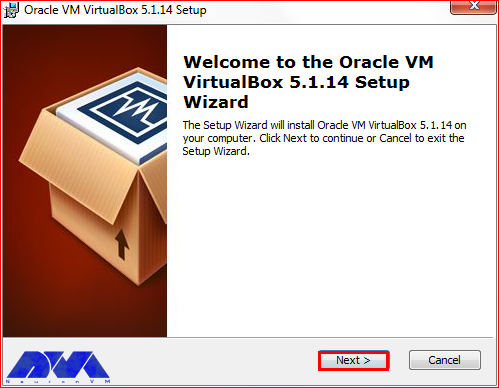
2- As you finished downloading the .exe file. You can start the installation process using the VirtualBox wizard. Press Next to continue:
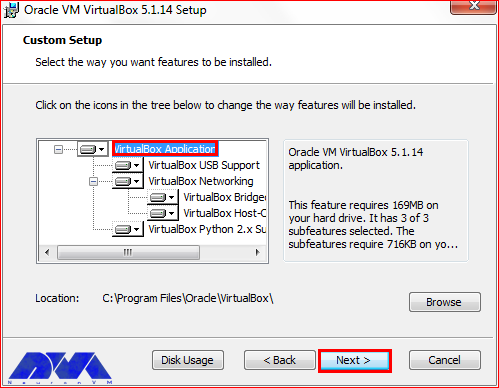
3- In the custom setup, choose the VirtualBox application and select the location of your installation file by pressing the Browse button. Now press Next:
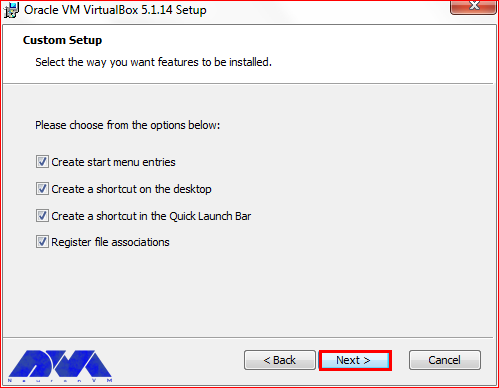
4- You can choose the way you want features to be installed and press Next:
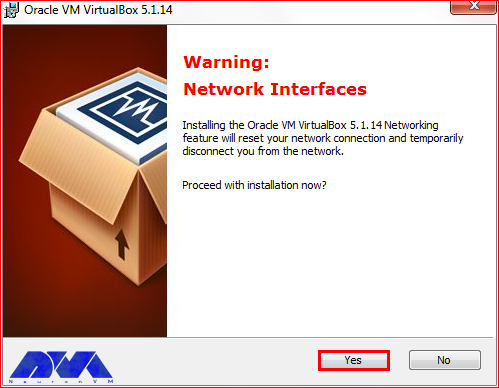
5- In this section, by pressing the Yes button you will accept the installation:
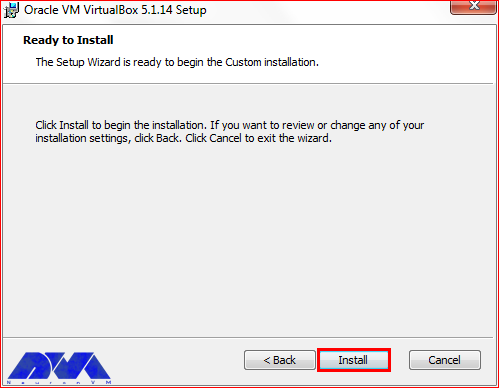
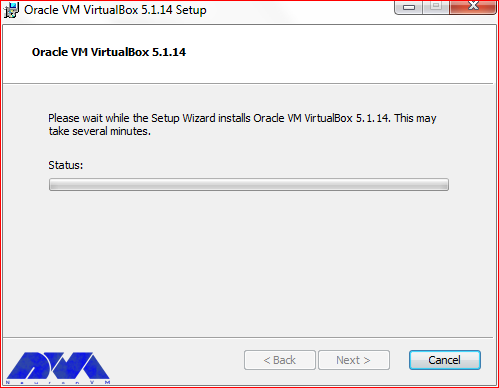
6- At the last window, you can pressthe Install button and start the installation:
***
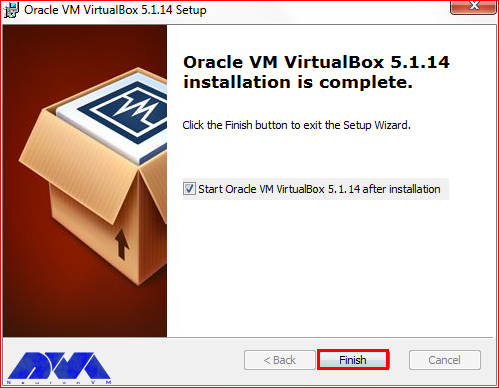
8- As you finished the installation part, press the Finish button:
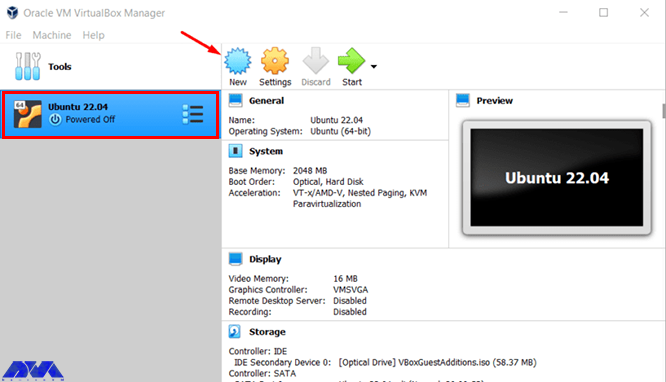
Now that you have VirtualBox on your system, it’s time to create it. For this reason, open the VirtualBox manager from your desktop shortcut and click onthe New button, which will look like this:
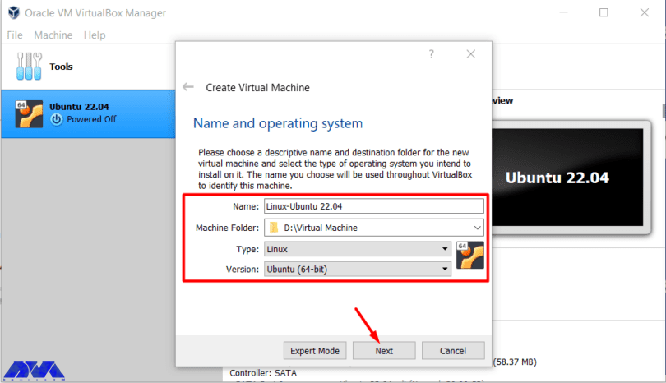
Here, you should choose a Name for your VirtualBox and set the type on Linux, and the version on Ubuntu:
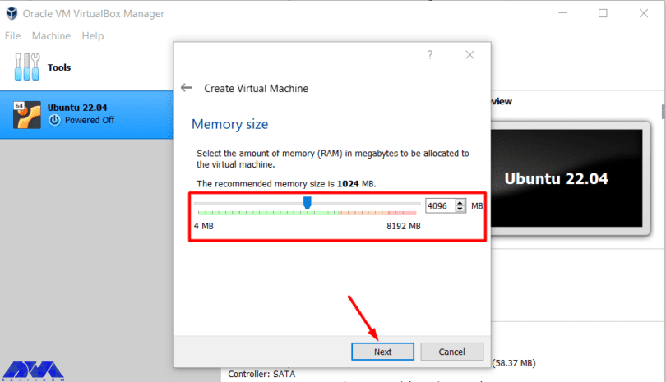
Now, choose the proper Memory size and press Next:
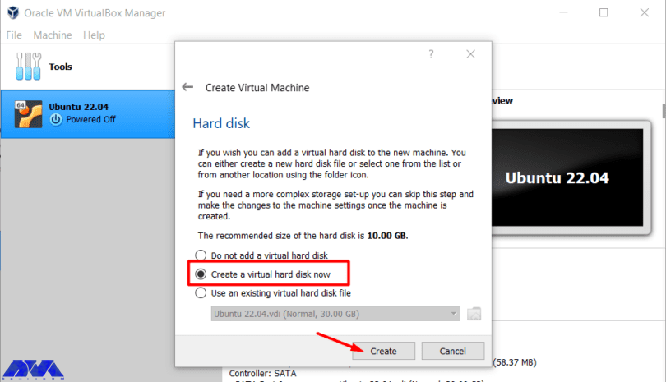
On the created virtual machine window, check the Create a virtual hard disk now option and Create to add a hard disk to your virtual machine:
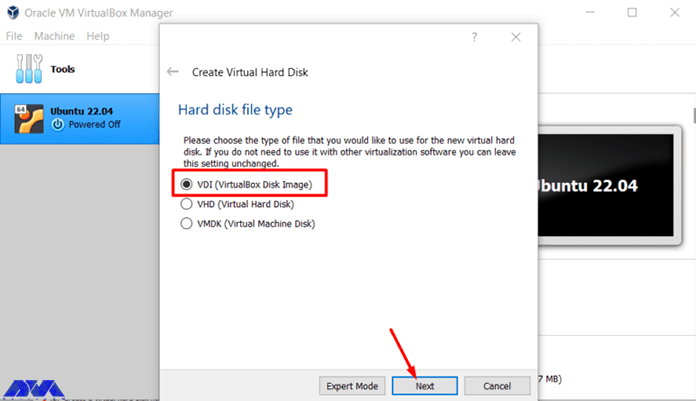
Here you should choose the type of file you want for your hard disk:
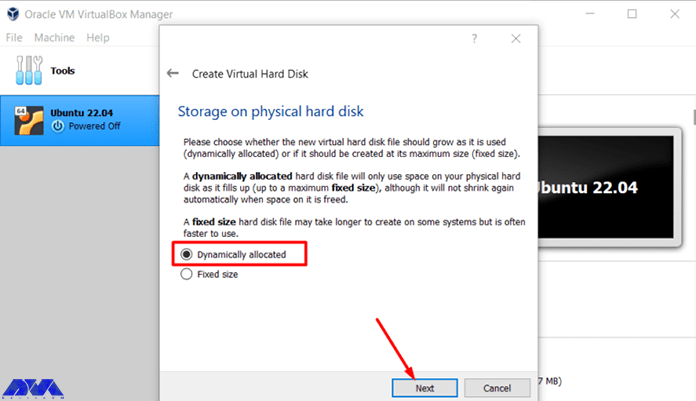
Choose the storage of your hard disk. It is better to check the Dynamically allocated option and press Next:
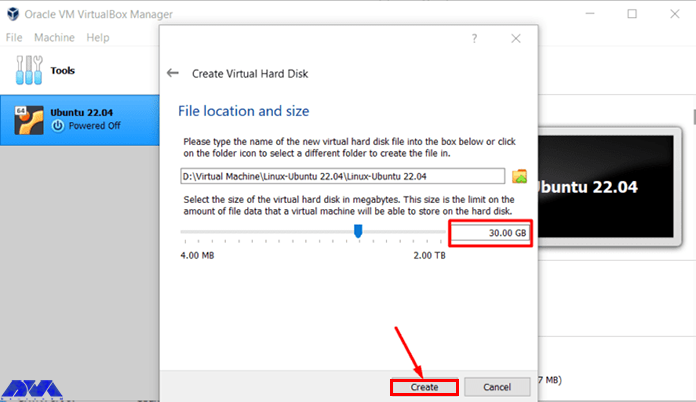
Here, in the first box, you should type the name of your virtual machine and specify the size of the virtual hard disk. At last, press create:
Now, you can see the created VirtualBox and it’s time to add the Xubuntu operating system.
How to Install Xubuntu on VirtualBox
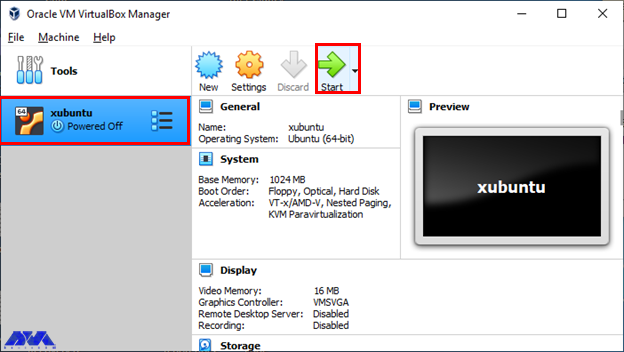
After downloading the iso file, save the desired file in a specified path. Open VirtualBox and click on the Start button to boot the virtual machine and go to the browse part to put the Xubuntu file. Like the image below:
As you created the virtual machine, let’s do the instruction below to add Xubuntu. Notice that you should download the iso file of Xubuntu on a 64-bit operating system. For this reason, go to the official page of Xubuntu.
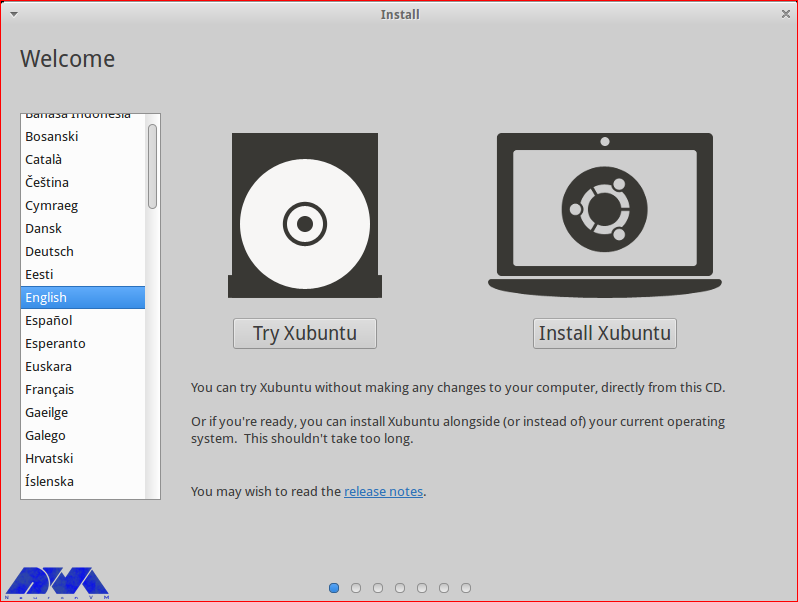
Here, you will see the Welcome page. Choose the preferred language and click on Install Ubuntu:
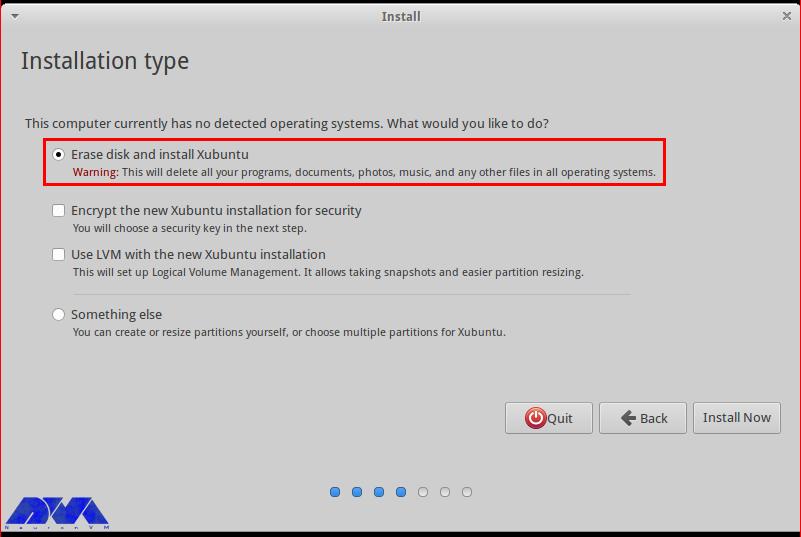
In this section, choose the Erase disk and install Xubuntu and click on Install Now:
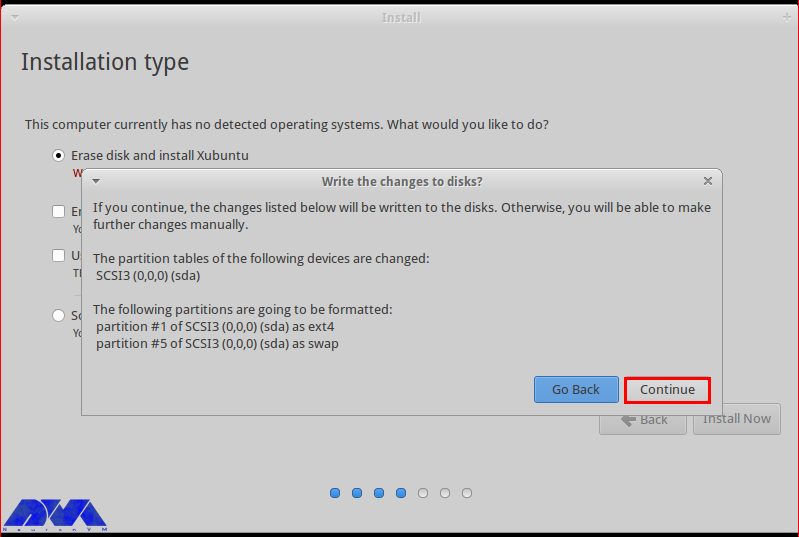
There will appear a pop-up window. Press Continue to confirm the changes you did to the disk:
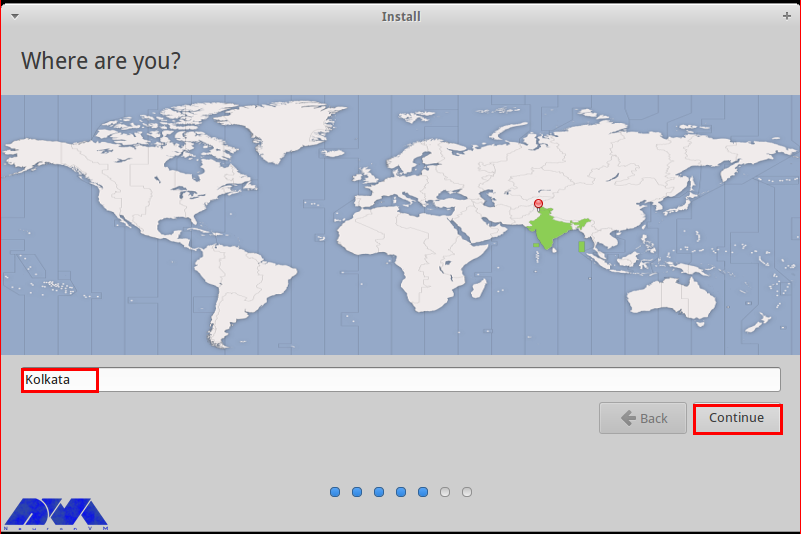
Choose the proper location and go to the next part:
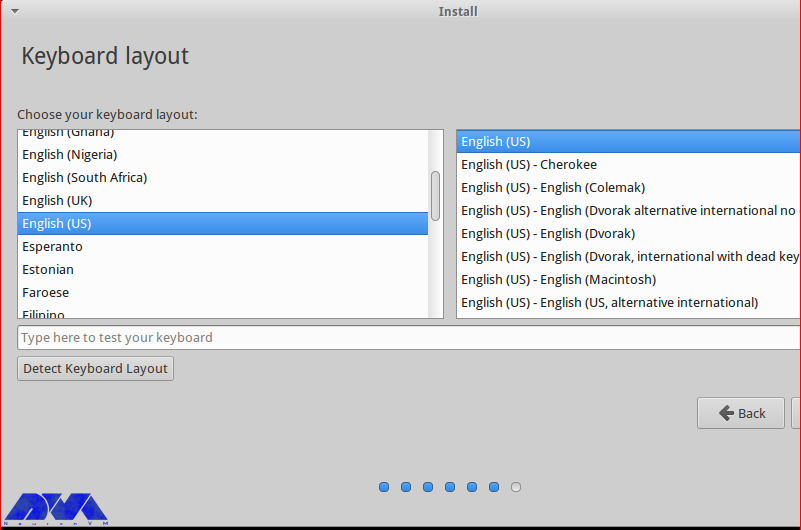
Choose the language of the keyboard layout and continue:
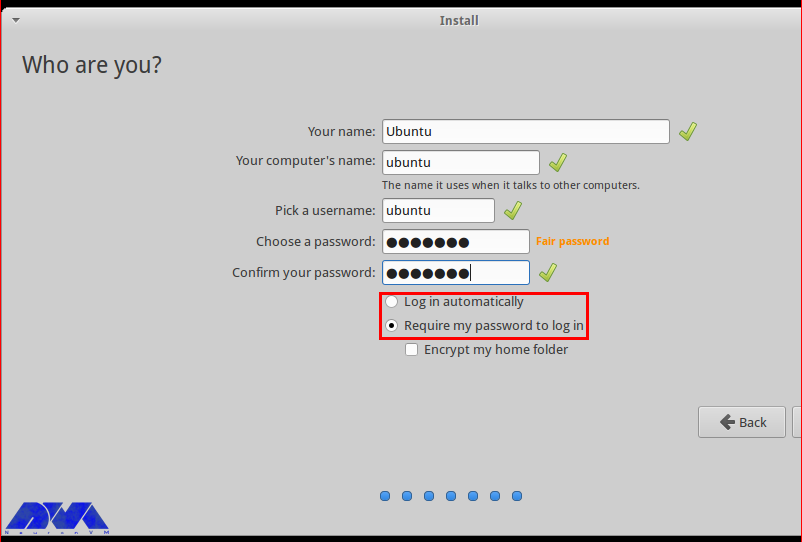
In this section, fill the related details and determine the login way:
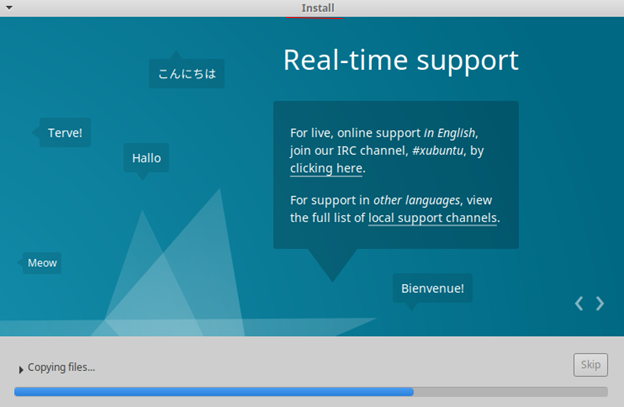
As you continue the process, here you will encounter the Xubuntu Welcome page and the installation process will begin:
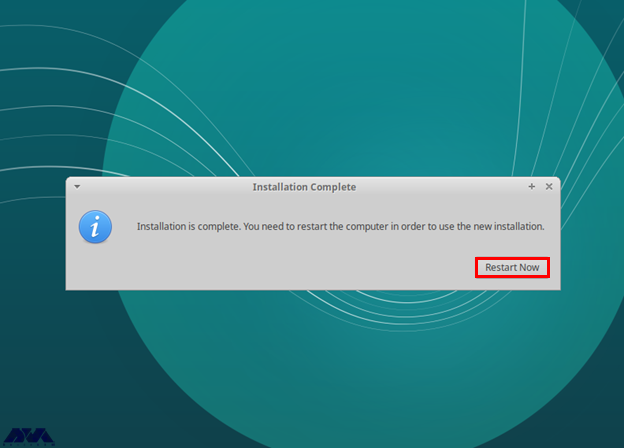
Well done. The following image shows that you successfully finished the installation part. You will restart the system to confirm the changes:
As a result, you have Xubuntu on your VirtualBox. Enjoy using this applicable operating system.
Conclusion
Xubuntu is an operating system, based on Ubuntu and if you decided to use it on your system, you should use a virtual machine. Also, as we mentioned in this article, you should download the iso file. We tried to guide you to install Xubuntu on Windows using a VirtualBox and hope it was helpful for you. If you have any questions, leave a comment.
FAQ
Is Xubuntu a stable version?
In fact, Xubuntu is the LTS version which means it has been supported for a long time. LTS versions are also provided as stable.
How much RAM is needed for Xubuntu?
As a minimum, you should allocate 512 MB RAM for Xubuntu but the recommended amount is 2 GB.
After reading this article, you will be completely familiar with Create a FTP Account with SSH on Dedicated Server. To be able to setup a functional and fully secure FTP server with key components in minutes without wasting time, follow the given instructions:
Steps to Create a FTP Account with SSH on Dedicated Server
Before starting work, we recommend you visit the Cheap Dedicated Server plans presented on our website and choose a plan. Then you will easily be able to Create a FTP Account with SSH on Dedicated Server.
In this section, we will examine step by step how to create an FTP account using SSH.
1- In the first step, to access FTP you should install the vsftpd package. But if you have installed that before then skip this part:
sudo apt-get install vsftpd
2- Your second step, will be to change the configuration setting for vsftpd. For this, you need to open /etc/vsftpd.conf with your favorite text editor which here is nano:
Sudo nano /etc/vsftpd.conf
3- Here, in this file, you should change the setting below:
Listen=YES
By this action, you order vsftpd to run as a standalone daemon (the simplest way to run).
Anonymous-Enable=NO
This function prohibits anonymous FTP users. These users are preferred for security reasons.
Local-Enable=YES
This function also allows the user’s accounts defined in the /etc/passwd file to access the FTP server.
Write-Enable=YES
This one is given by default. But removing the hash (#) will cause the files to be uploaded to the FTP server.
Chroot_Local_User=YES
It causes users to be selected to the main directory and is also set by default.
If you want to test your setting and make sure that everything is working well, make the following setting for the above parameters:
Now you have to save the vsftpd.conf file and then you can run the vsftpd service again with the commands in this section:
sudo service vsftpd restart
Add a FTP User on Server
Here, you should add a user using the below command:
sudo adduser testes
Now you have to permit the user that you have created, so use the following command:
sudo chown root:root /home/testuser
You can assign the directory to the user here:
usermod --home /var/www/html/test-dir/testuser
Use this command to restart vsftpd service:
sudo service vsftpd restart
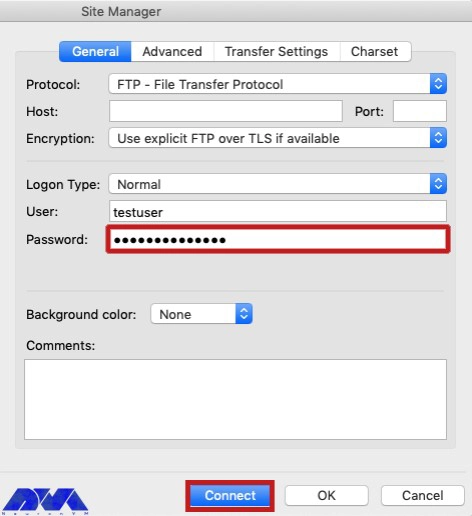
Now you create a user, open FileZilla, and connect the user as you see in this image:
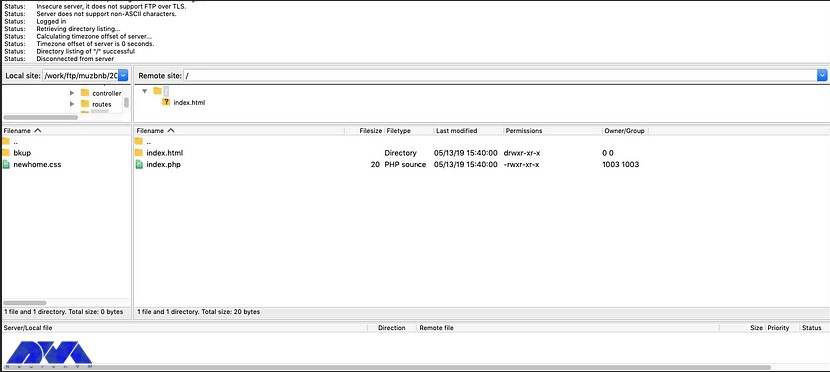
In this part, you can check if the user has been connected to the folder assigned or not:
And if you are about to update the user folder again use the command below:
usermod -d /var/www/html/test-dir testuser
sudo service vsftpd restart
Updating FTP User Password on Dedicated Server
To update your FTP user password, you have to apply this command:
passwd testuser
You can permit the folders for the new user by running the following command:
chmod -R 755 /var/www/html/test-dir
Delete FTP User on Dedicated Server
Here you will learn how to delete an FTP user on a dedicated server:
userdel testuser
Deleting User with the Directory
And the last command shows how to delete a user with a directory:
userdel -r testuser
That’s it. Now you are able to add or configure any FTP user on a dedicated server.
Conclusion
Now that you find out how to add a FTP user with SSH on a dedicated server, you are able to add extra users. Also, you learned how to delete users here. Hope this article will help you. If you have any questions or ideas, please add a comment.
FAQ
Which type of FTP allows users without any account on the server?
Anonymous FTP, which is the most basic form of it. It provides support for data transfer without encrypting data or using a username
RDP Admin is a great service and helpful feature that can bring many features. Fortunately, there are many sites like NeuronVM, that give you the possibility to purchase this service using cryptocurrencies. So, the purpose of this tutorial is to prepare a comprehensive and practical guide. You can learn how to buy USA Admin RDP by crypto and become familiar with this service.
Reasons to Buy USA Admin RDP
As mentioned, you can get Admin RDP from different locations, one of which is the United States. This state which is one of the strong providers in the field of server and hosting brings benefits like full server access, dedicated RDP, unlimited bandwidth, High speed, and full support for the users.
Admin RDP has an easy-to-use panel that ultimately aims for high-quality hardware and software, and provides at a low price.
Steps to Buy Admin RDP by Cryptocurrency
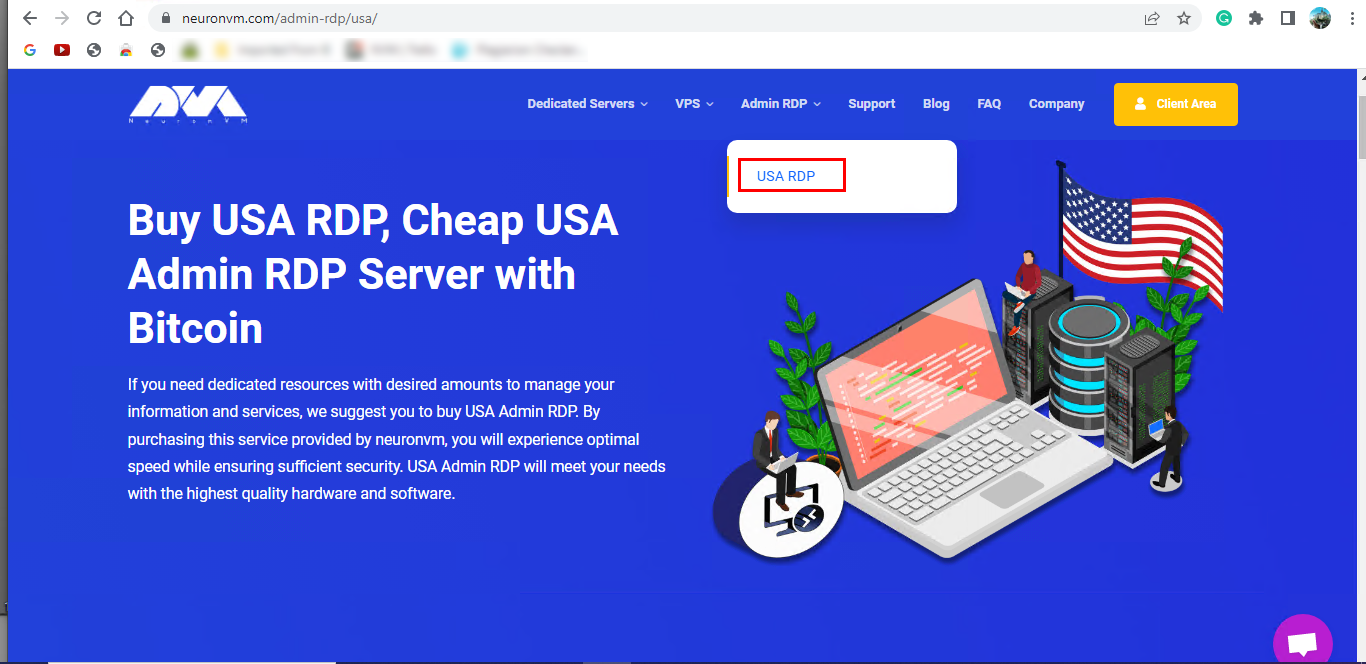
If you are willing to buy Admin RDP using Crypto, the first step is to go to our website and click onUSA RDP on the Admin RDP tab:
– The next step, is to choose the plan you desire to purchase. You can see these plans in the image below:
– In this section, you will enter the configuration part. Here, you can choose the operating system, your server’s location which should be the USA, and the cycle of your payment then press Continue:
Now, you will encounter the Review & Checkout section. Check the details of the chosen plan and press the Checkout button. Also, If you have any Promo Code for Discount, you can enter it in the box below:
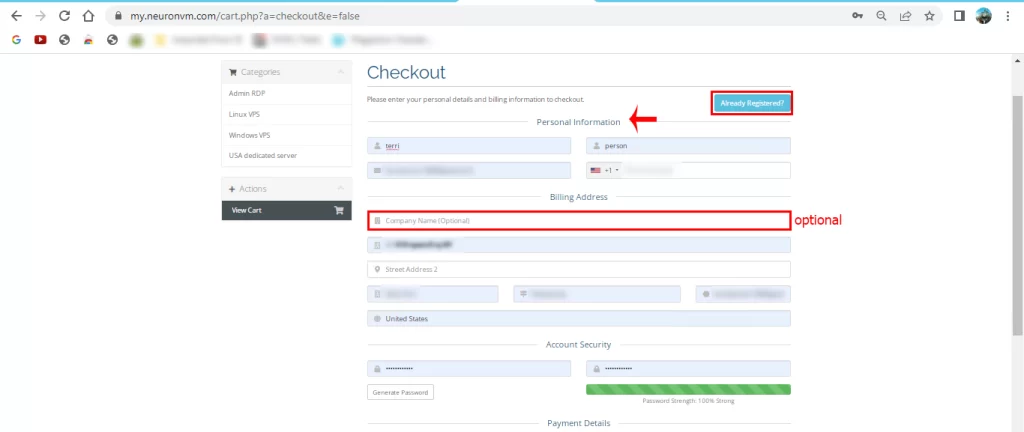
As you choose your plan for Admin RDP, it is time to sign up for NeuronVM and fill in the personal information which is required. But, if you created an account before, click on the Already Registered button:
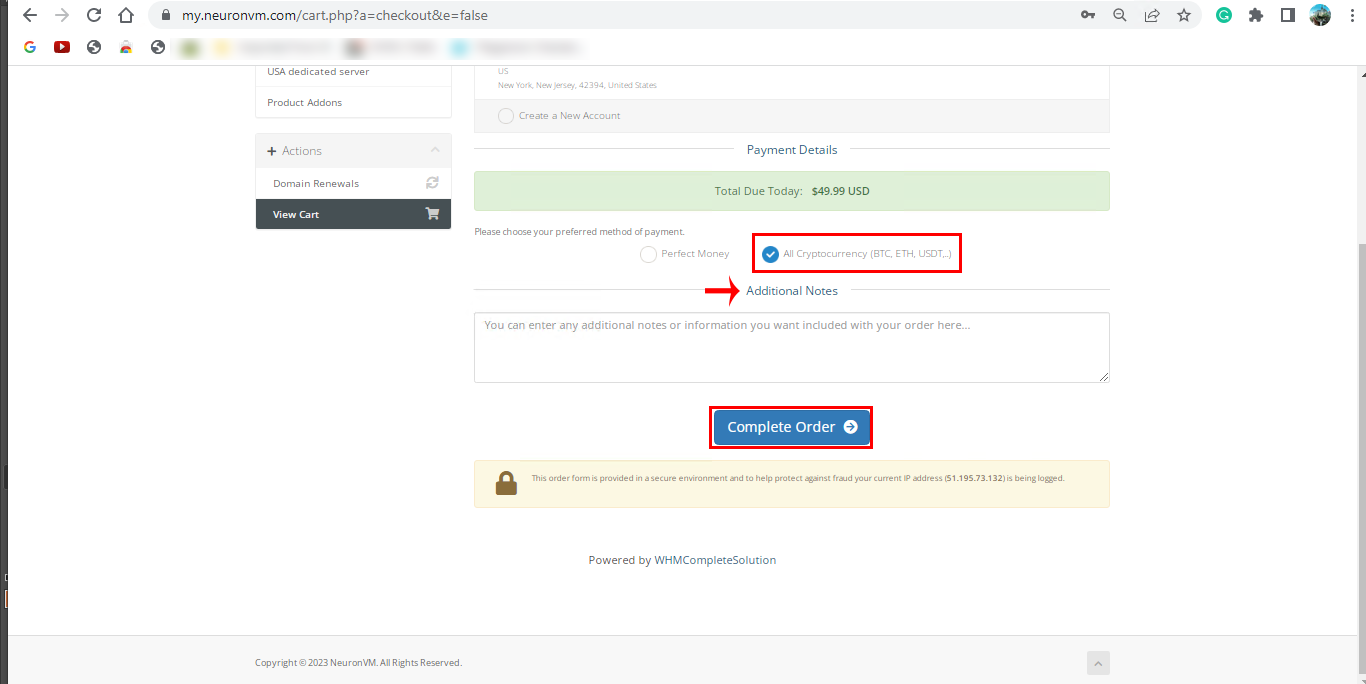
This section is related to the payment details. Check the All Cryptocurrency icon and add notes or other information if it’s required and click on the Complete Order button:
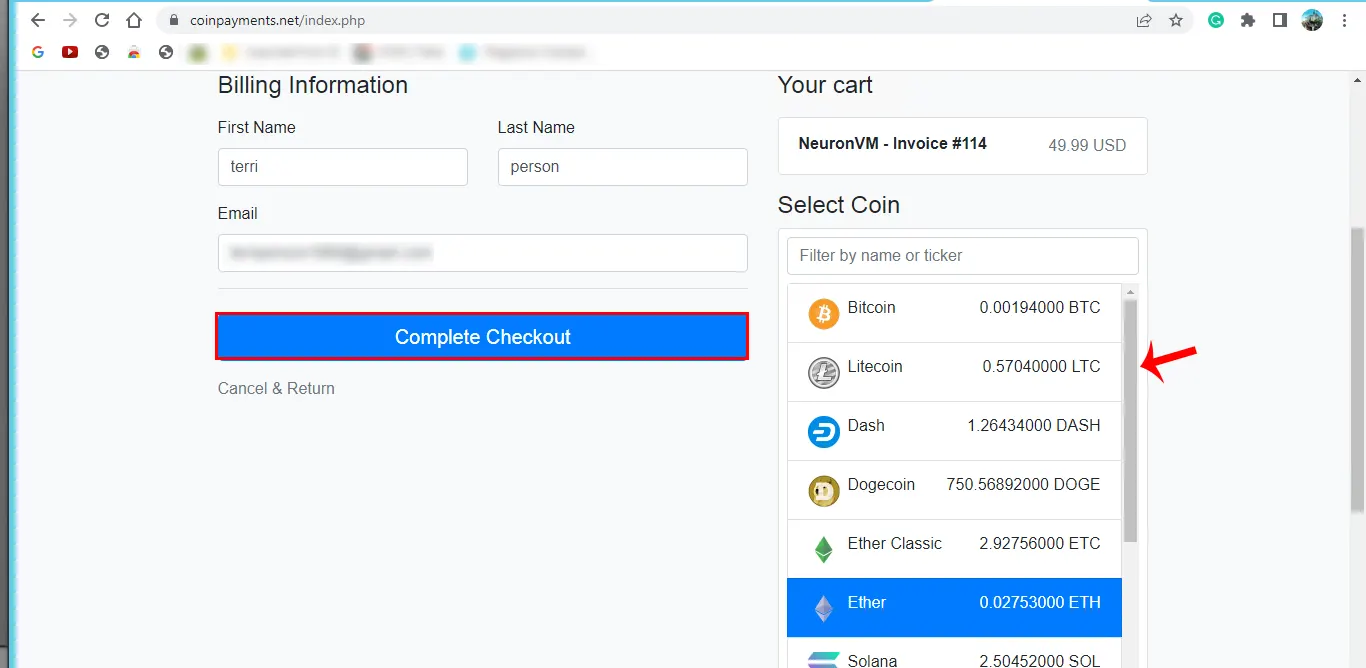
Here, you can view your personal information. You can scroll and select the desired crypto and press Complete Checkout to finish your process:
Your Crypto Payment ID and Verification Mode will be shown in this window. To get more information about your payment refer to the What to do Next icon and click to see the information and confirm your payment.
Conclusion
By reading this article, you will have a clear vision of the steps to purchase USA Admin RDP using crypto. Get it now and you will see how easy and practical this service is, as it is secure and delivered to you with convincing speed and quality. If you have any problem or question, just comment here.
FAQ
What is the benefit of buying RDP?
The most brilliant feature that encourages users to buy Admin RDP is that everything you do is private and you have full access to the server.
If you want to know how to configure a DNS server on admin RDP, the following article will be a helpful guide for you. You can use two practical methods for this. Also, this article contains the installation process in two ways, configuration of the DNS server and removing the DNS server role.
How to Configure DNS Server on Admin RDP
Before we start to explain the way to install and configure DNS, there are some requirements that you have to prepare. So let’s analyze them first. Then we will discuss how to install and configure DNS Server using PowerShell and GUI and we will teach you step by step.
We can install and configure admin RDP in two different ways. These two methods include a graphical user interface and PowerShell. Now let’s examine each one.
If you prefer to install Active Directory Domain Services and use the installation wizard, you have the automatic install option and configure a DNS server. In this way, the DNS zone is merged with the AD DS namespace. But if you decided to do the installation manually (as a standalone server), go through the steps below:
How to Install DNS Server Using PowerShell
You can use the install-Windowsfeature command below to install the DNS server role.
First, in an elevated session, Run PowerShell on your system by searching for PowerShell from the Start Menu.
Second, apply the following command to install the DNS role. Here you don’t need to reboot:
Install-WindowsFeature -Name DNS
How to Install DNS Server Using GUI on Admin RDP
Use the server manager of your Windows desktop to install the DNS server role and follow the instructions:
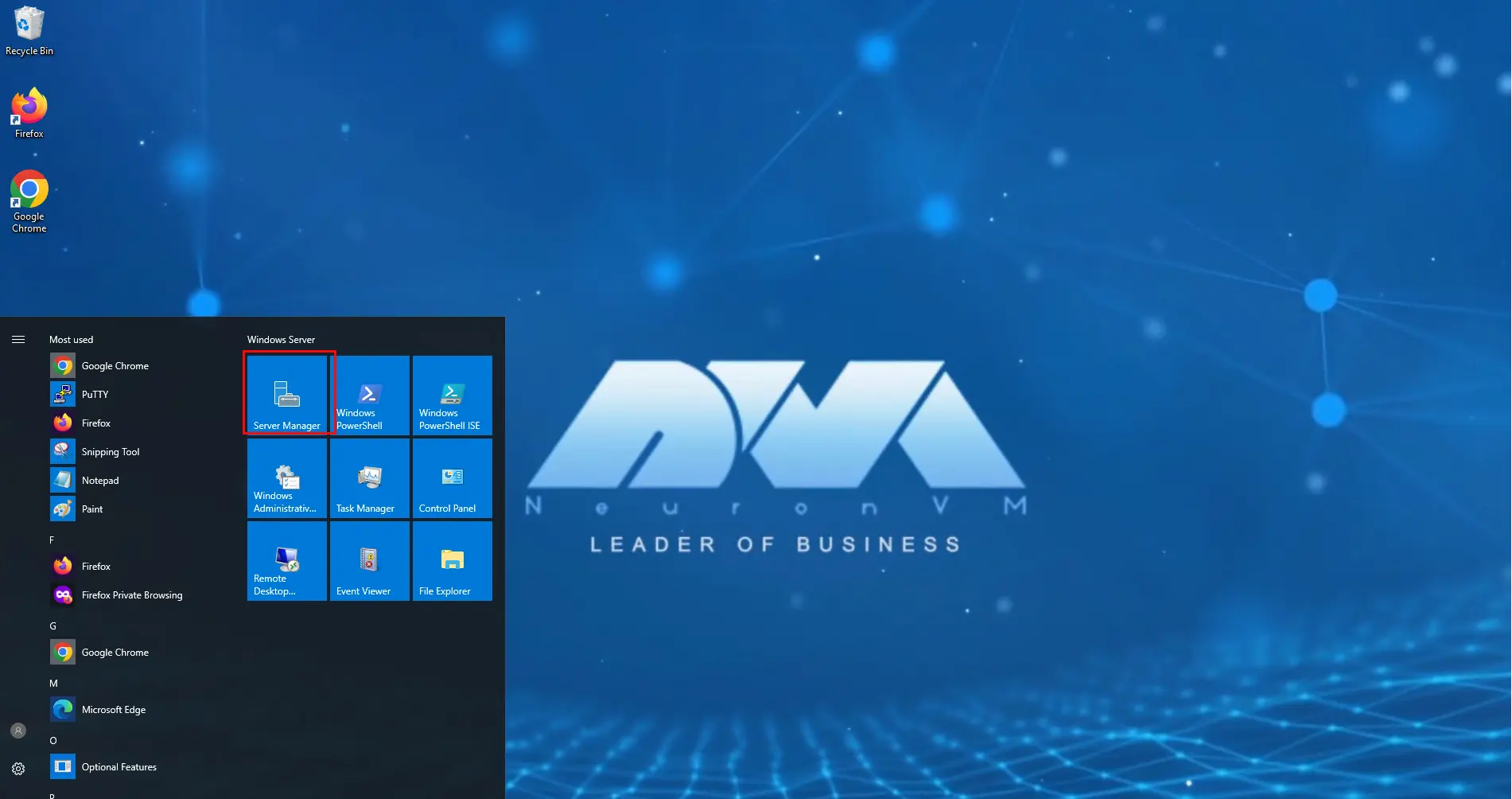
– The first step here is to click on the Start Menu on the desktop and select the Server Manager option.
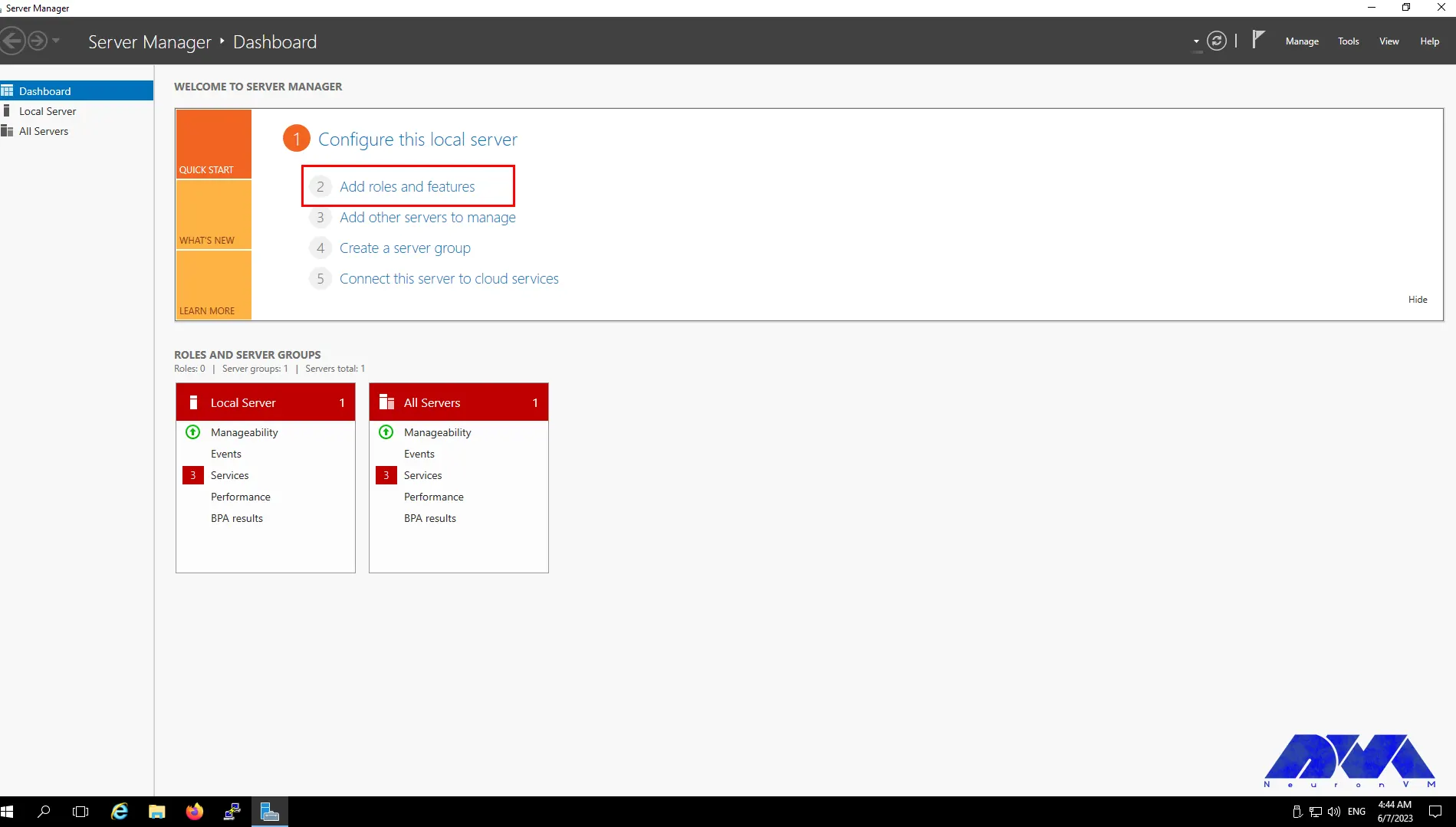
– Then go to the Manage part and choose to Add Roles and Features option.
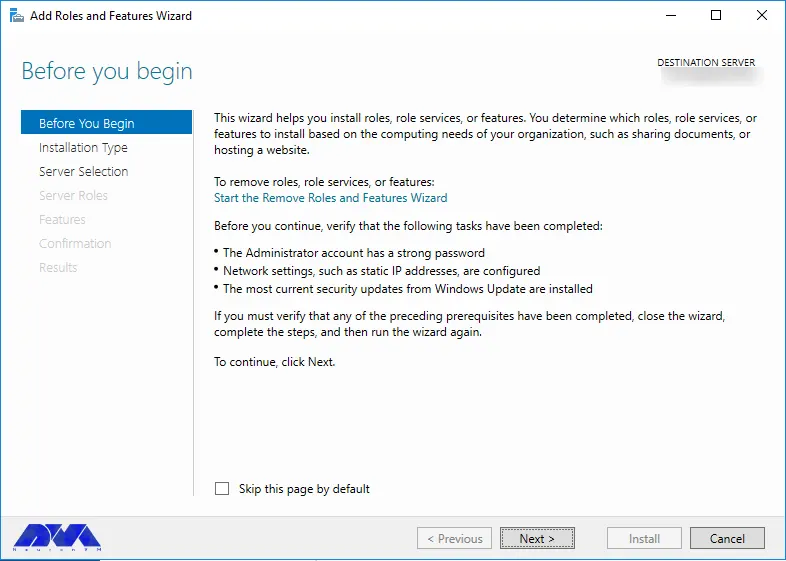
– Now you will visit the Before You Begin and click on Next to begin.
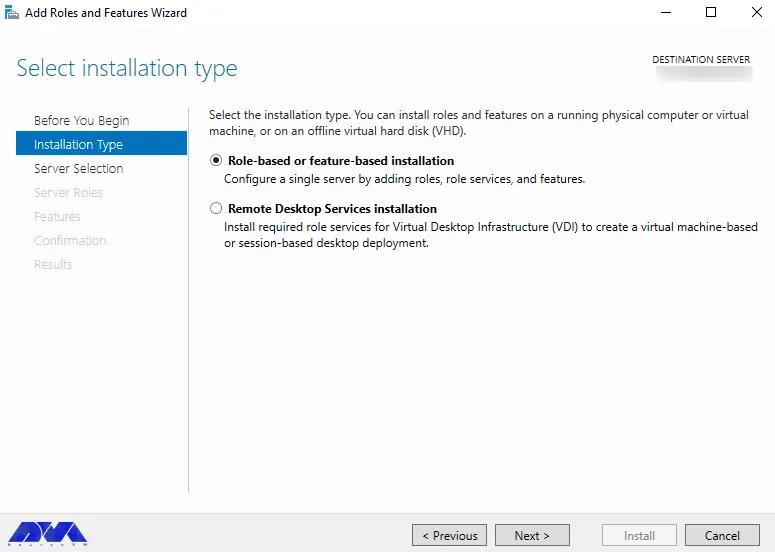
– On this page, go to the Select Installation Type, select the Role-basedor featured-based option, and press on the Next button.
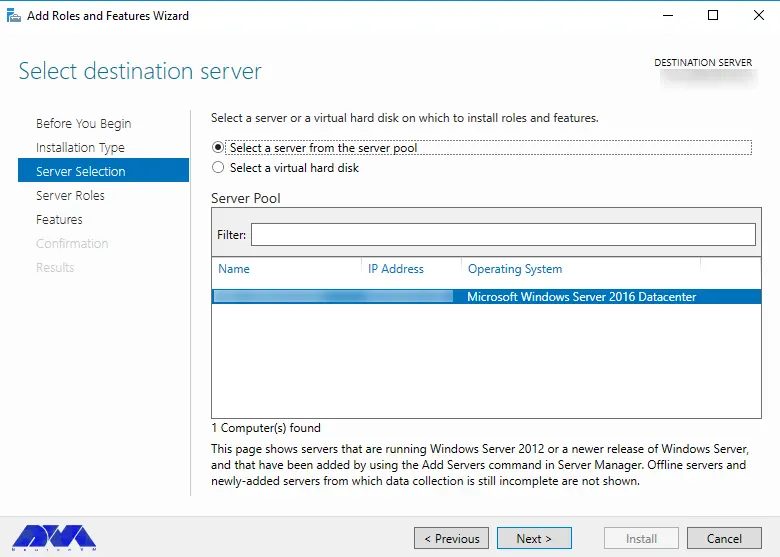
– Here, you can select the destination. Go to the Select Destination Server and leave it as default, then press Next.
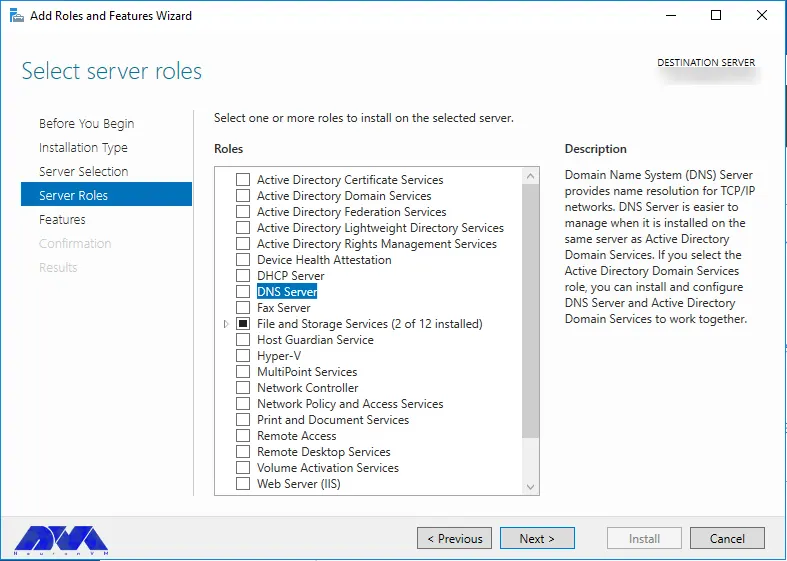
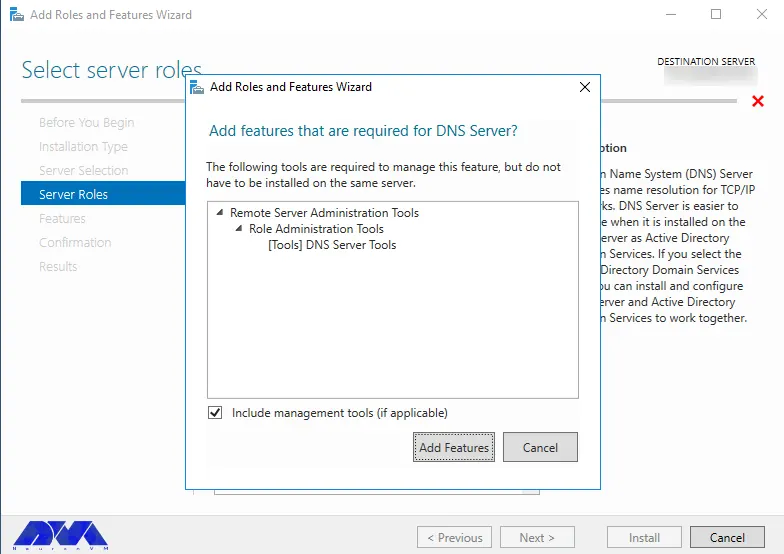
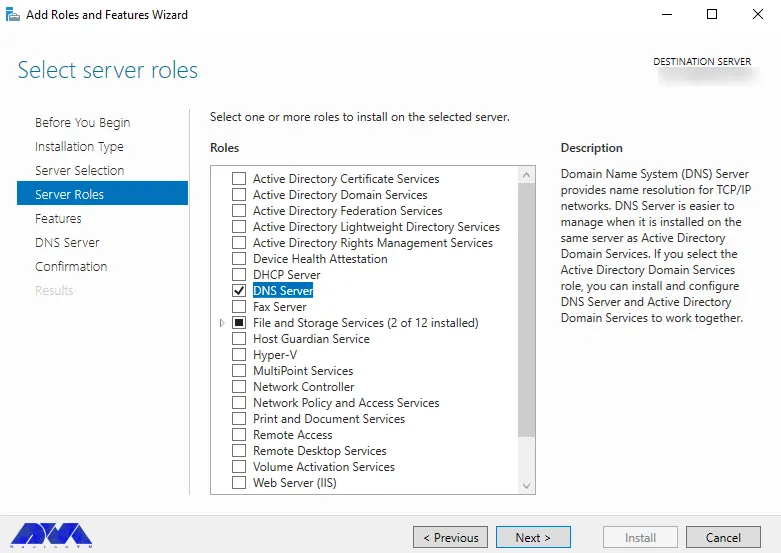
– To select server roles, you can go to the Select Server Roles option, then mark the DNS Server checkbox and click Next. In this part, you should add features that are required for DNS. If the default setting is acceptable to you, press Add Features.
###
###
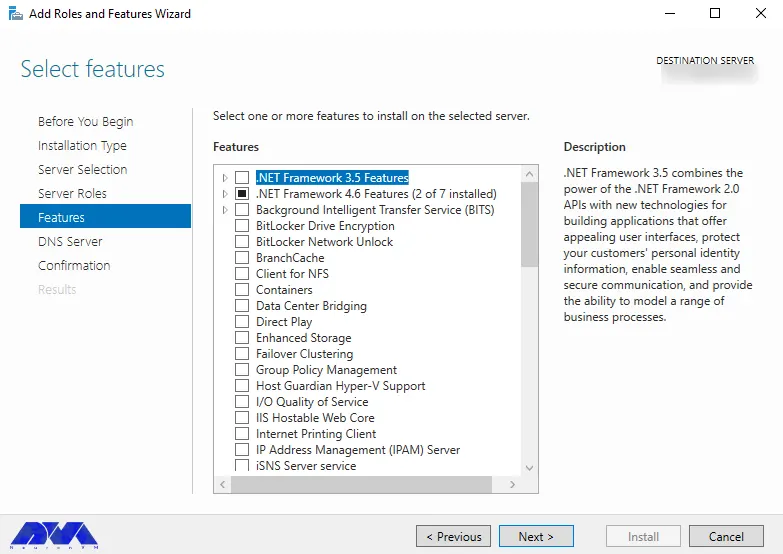
– On the next page, you can leave the setting as default and select next.
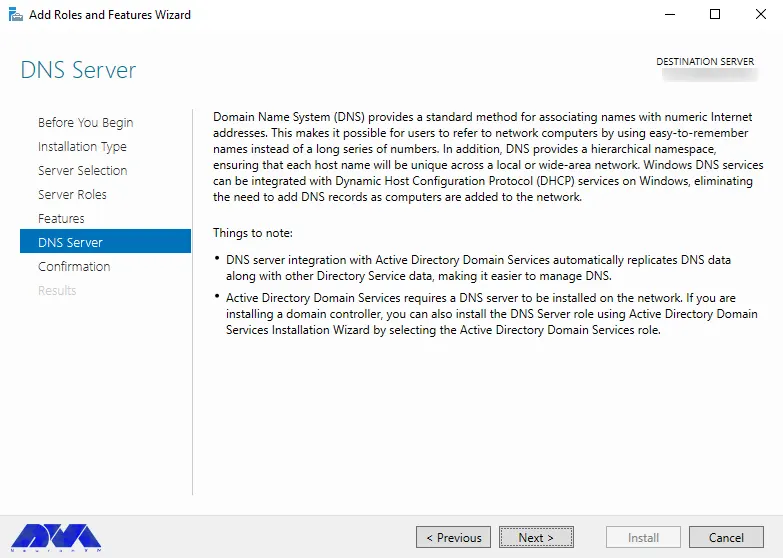
– Now you can see the DNS server page, review the descriptions carefully and press next.
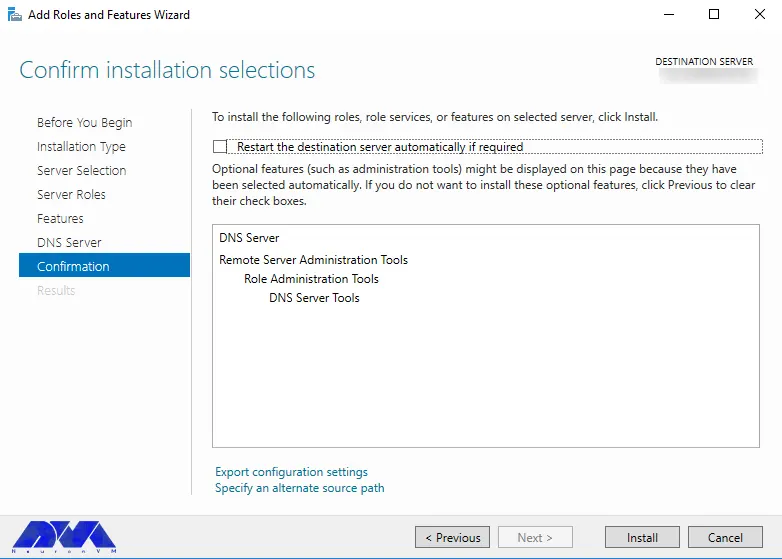
– Here, you should confirm your installation selections by reviewing the selected roles and features, and at the end select the Install button to begin the installation.
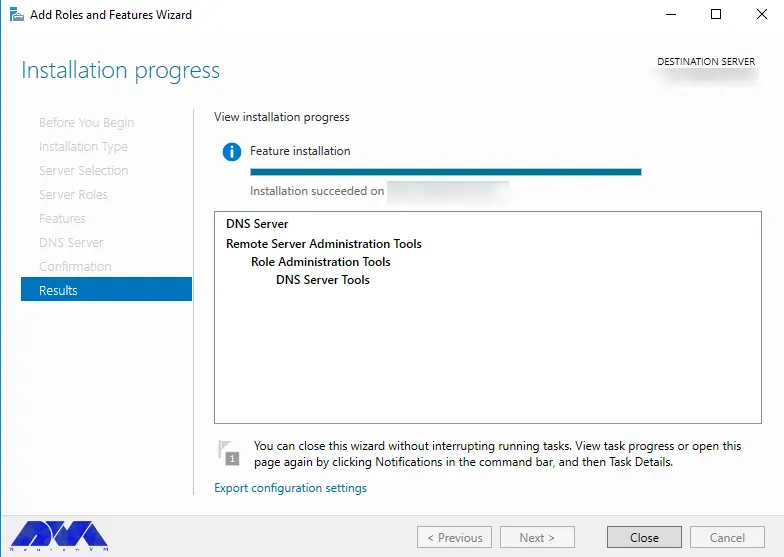
– When you complete the installation press the close button, and take note that there’s no need to reboot.
Configure DNS Server on Admin RDP
As you finished the installation part, it’s time to set the configuration for your DNS server. A DNS server can listen for requests on all IP address interfaces. But you can configure the DNS server to listen for a specific interface using PowerShell or GUI.
Configure DNS Using Powershell
If you want to set the configuration using PowerShell, follow the instructions here:
– First, you should go through set-DNSServerSetting.
– In an elevated session, run PowerShell on your system.
– Apply the related command to find your system’s exciting IP address and make a note of that:
Get-NetIPAddress | fl IPAddress,InterfaceAlias
– Here, you should store the current setting in an impermanent variable and adjust the ListeningIpAddress. Then apply your new settings using the following command. Replace the <IP_Address> with the IP you stored before:
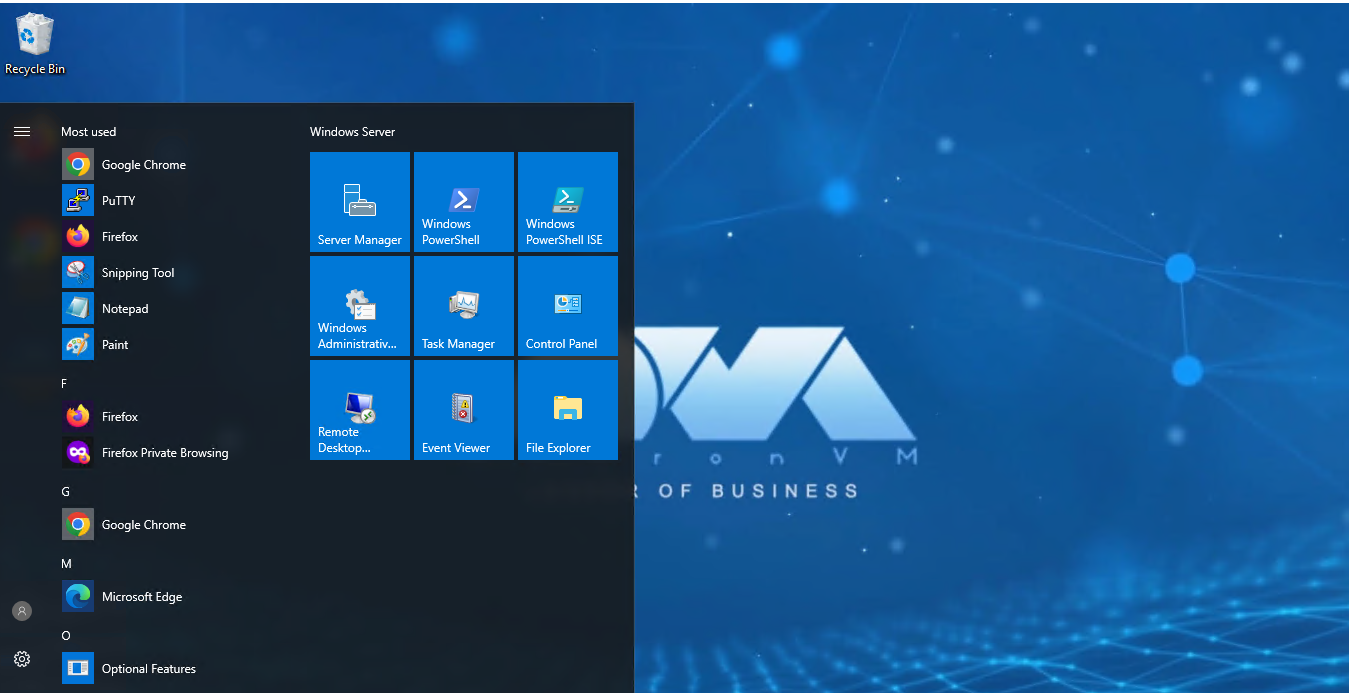
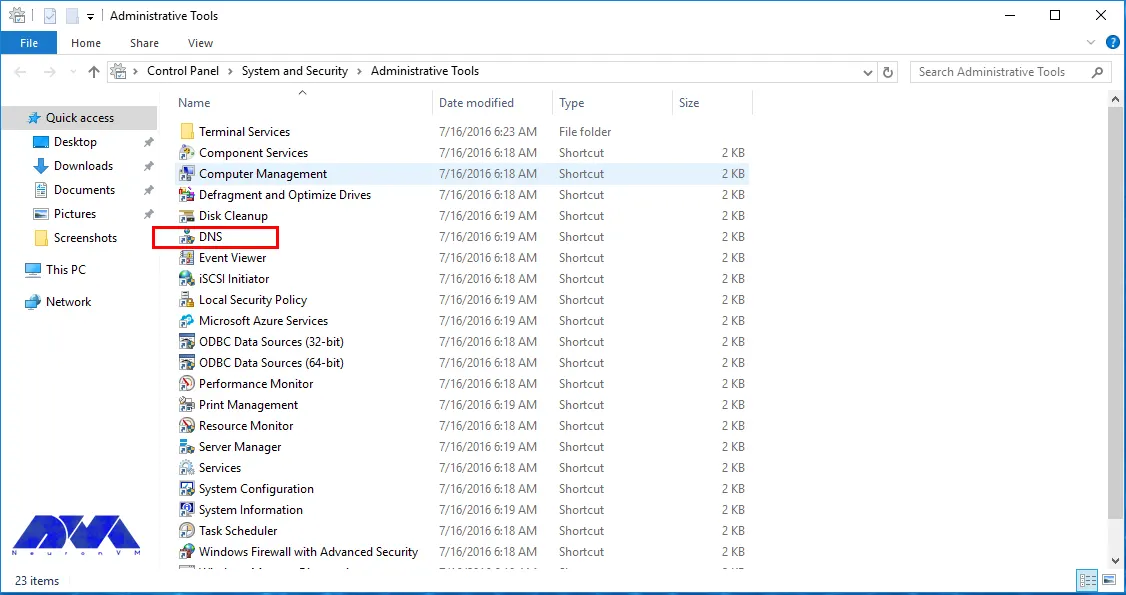
– The first step is to open the Start Menu and go to the Windows Administrative Tools then DNS.
###
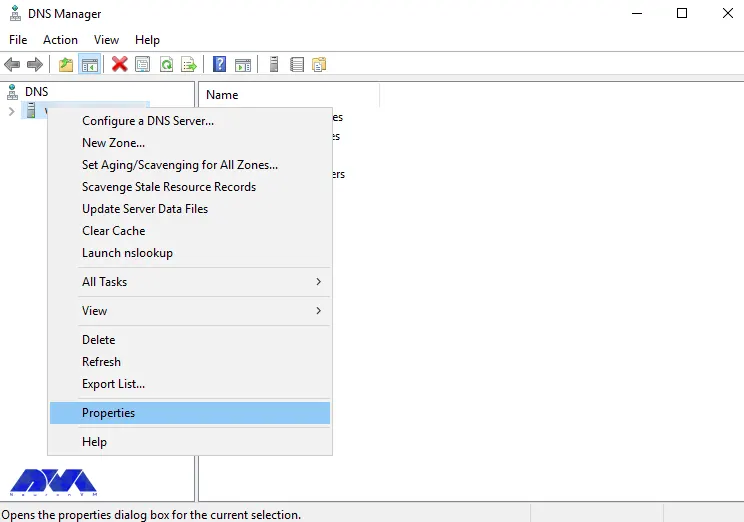
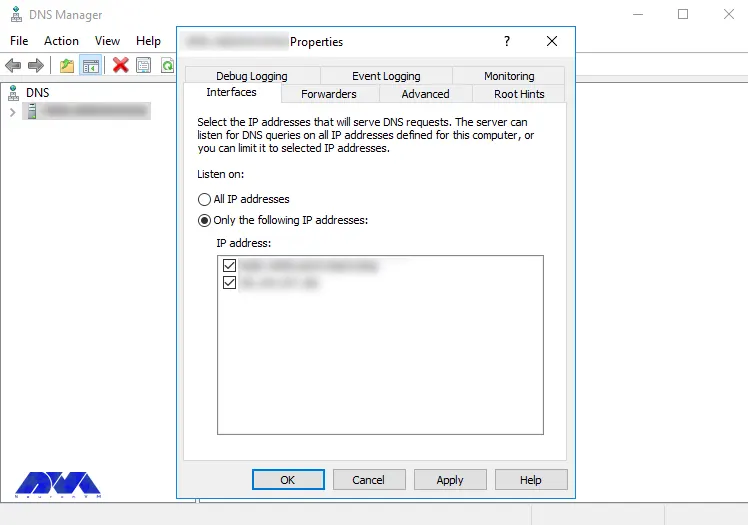
– Next, you can Right-click on your server and choose Properties.
– By selecting Only the following IP addresses and choosing the IP address you wish to use, you can limit the DNS server to use a specific IP address.
Configuring Root Hints Server on Admin RDP
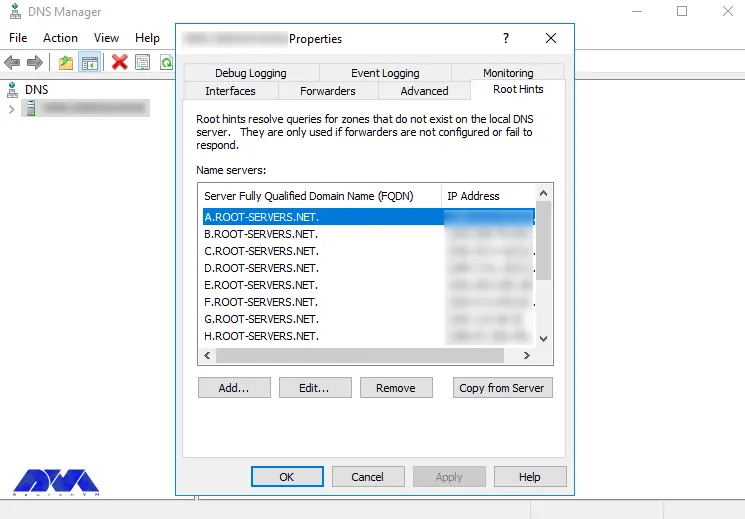
You can use Root hints servers for resolving DNS address information, for the time when the DNS server is unable to resolve the query locally from a hosted zone or DNS cache. The root hint name server is populated by default in your new installations. Again you can use PowerShell or GUI to edit the list of root name servers.
Actually, you can not remove all root hint servers, But you can go through this pass to disable it.
Configure Root Hints Using PowerShell
Go to the DNS manager console and choose advanced tab. Select the disable recursion server option. This act will disable any configured forwarders.
To start the instruction to configure root hints server, you should apply the Set-DnsServerRootHint command. Now follow the steps below:
– Execute PowerShell on your system In an elevated session.
– Run the Get-DnsServerRootHint cmdlet command to find your system’s IP address. Notice that you should save the name server:
Get-DnsServerRootHint
– Use the following command to save the current DNS server setting in a variable and put the placeholder of <root-hint-name-server> instead of the stored root hint name server.
– Use the command below to insert the updated record:
Set-DnsServerRootHint $RootHintServer
– At last, if you want to check the updated root hints, use the following command:
Get-DnsServerRootHint
Configuring Root Hints Using GUI
Here, you can use the Manager console to root hints:
– Go to the Start Menu and then Window Administrative Tools, and select DNS.
– Right-click or select on your server and choose properties.
– Choose the Root hints tab and select your item and choose edit.
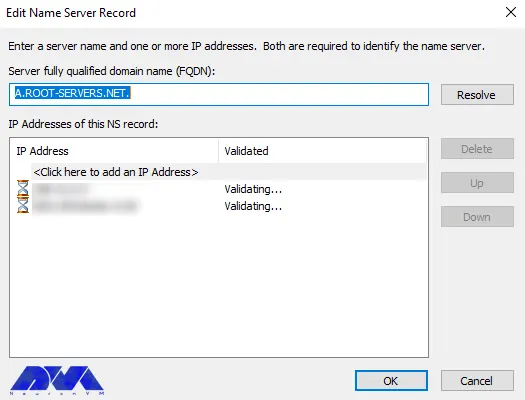
– Now you should enter the domain name and click on Resolve. You should verify your IP address and edit if necessary.
– Click on Ok button.
– As the last action, check the updated root hint server in the list and when your done, click on ok.
Configuring Forwarders on Admin RDP
This part is optional and it is to configure a forwarder to resolve DNS address information. You can use PowerShell or GUI for this reason.
Tip: You should use the DNS root hints Just the time your forwarders fail to response.
Configure forwarder using PowerShell
By using Install-WindowsFeature command, you can install DNS server role. In the same direction follow the instructions below.
– In an session, execute PowerShell on your system.
– Put the placeholders <ip_forwarder_1> and <ip_forwarder_2> instead of IP address of the DNS server, to be used as your forwarders and run the command below:
Here, we will show the way of configuring forwarder using GUI. So follow the steps:
– Go to start menu and select Windows Administrative Tools then DNS.
– Right-click on your server and select Properties.
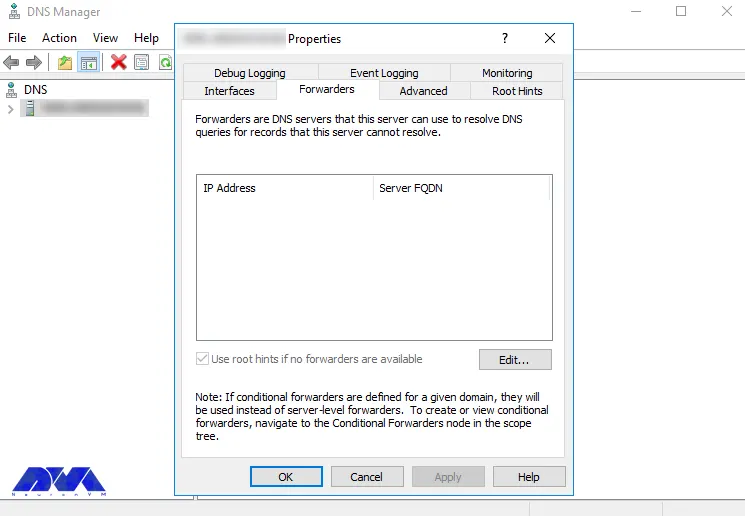
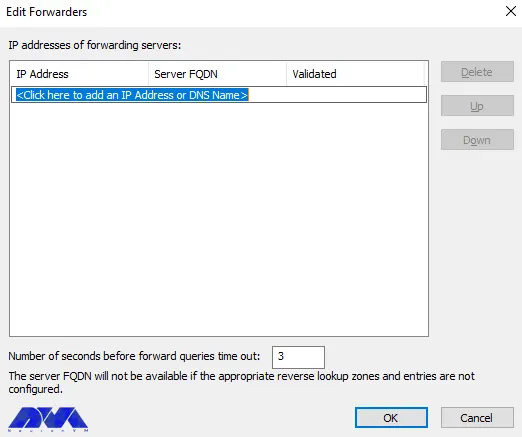
– Choose the forwarders tab and click on Edit.
– Enter DNS IP address to forward requests to. You should repeat this action as many time as it is needed and select Ok.
– As the last action, check the DNS server in the list. Select Ok and confirm configuration.
Remove DNS Server Role
Follow the instruction in this section to remove DNS server:
Remove DNS Using PowerShell
Use the following command in an elevated prompt:
Uninstall-WindowsFeature -Name DNS
Remove DNS Using GUI
– Go to the Start menu and select the Server Manager.
– Go to the Manage part and select Removes roles and features .
– Here, you will encounter Before you begin page and select Next.
– On Destination page, choose the serer that you want to remove DNS server role service from and click Next.
– On the list, you should clear the DNS server checkbox . In this part, you should remove features that requires DNS server. Select Remover Features and click on Next button.
– Here, on the Remove Features page, Leave the default setting and press Next button.
– Then you will see Confirm Removal Selections page, check the selected roles and features and choose Remove.
– As you removed the roles and features, select Close.
– At last, restart your system and complete the uninstallation process.
Tip: Pay attention to these points as you are removing the DNS server role service:
– If a DNS server is hosting AD DS-integrated zones, the saving or deleting action will be done according to their storage type.
– If a DNS server is hosting standard DNS zones, the zones file will be stayed in the %systemroot%\System32\Dns directory, but you can reload them if the DNS server is reinstalled.
Conclusion
This article tried to show you the way to install and configure DNS server on Admin RDP. Also we tried to give a complete explanation of DNS server configuration steps, so that, you will encounter no problem during the installation. If you have any questions or if you know any other method please share.
FAQ
Which one is faster; DNS or VPN?
A smart DNS is faster than VPN because it only changes your DNS address while a VPN encrypts data traffic and spoof the location by changing your IP.
Can DNS effects your internet speed?
DNS is not related to internet speed in a direct way, but it can influence the speed of appearing individual webpage on your computer.
This tutorial proposes to give a complete guide for whom needs to know to troubleshoot WampServer problems on Windows 10. These problems may occur during the working process or running this server on your system. Read this article, if you have any problems on WampServer and solve them yourself.
How toTroubleshoot WampServer on Windows 10
It is possible that you will encounter problems during various stages such as the installation, startup, or working process of WampServer on Windows VPS or Windows 10. So, we will deal with some of these problems and show how to solve them in this section.
Problem 1. Why WampServer Icon Is Not Turning Green?
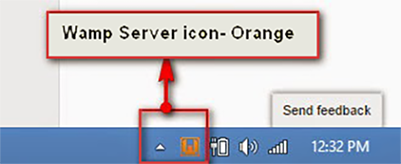
As you have installed WampServer, you will see the Icon in the trey. In a normal process, this icon goes red, then orange, and after that green. But it may stuck on orange. So you can not enter the MySQL console. As a result, you can not go to the phpMyAdmin site too:
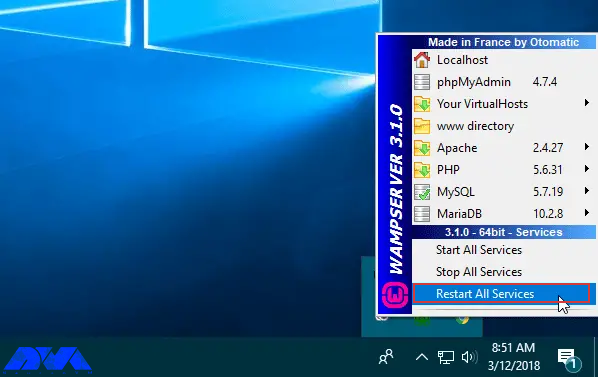
One of the solutions is to right-click on the WampServer icon in the tray and select Restart All Services to be sure that all of the services are running in the right way:
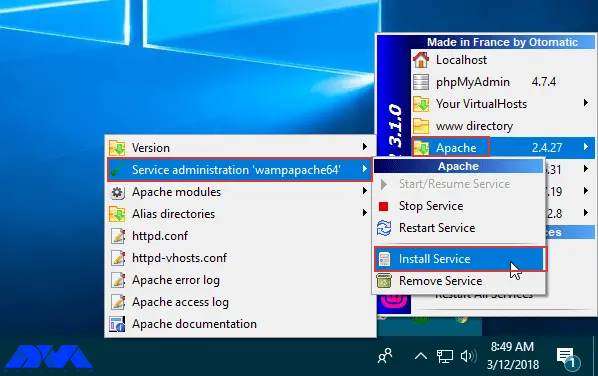
Another reason may be that the Apache service doesn’t start. So, click on the icon and select Apache. Then choose service administration ‘wampapache64’ and Install service:
Then you will see the command prompt. Close it and go through the same pass to press the start/resume service. Now it will turn green.
If non of the solutions worked for you. Then, you should check the error log in the logs folder of the WampServer installation part, to find the exact problem.
Problem 2. Why WampServer is not Working Well?
One of the reasons for this problem can be insufficient system resources. These resources can be your computer’s memory, CPU, and so on. If you have enough resources then Wampserver will run smoothly. So, if your system is working slowly, it will affect your server’s performance.
Problem 3. How to Solve Port 80 problem?
If localhost/PHPMyAdmin is not accessible in the browser, it means that it is in use by another service and requires Apache to function. Apache is set on port 80. So, the solution is to change the port number instead of disabling or removing any other service. Go through this way:
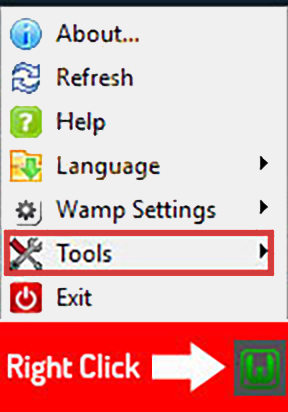
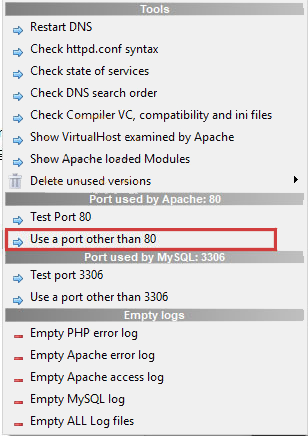
– Right-click on the wamp icon and select on Tools option. So, you will be able to change the port number:
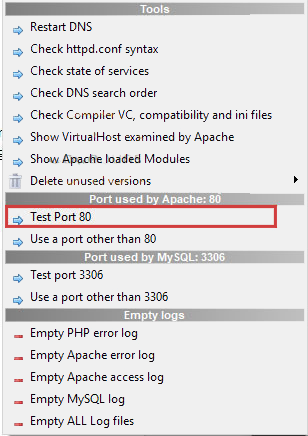
– Now, choose Test Port 80 option for Apache:
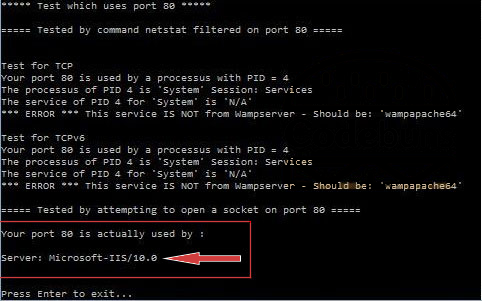
– Here, you will see the command prompt. It will show which program is using the port:
– Then, go to the option again and choose the Use a port other than 80 option:
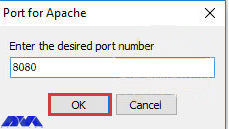
Here, enter the desired port for Apache. E.g. 8080:
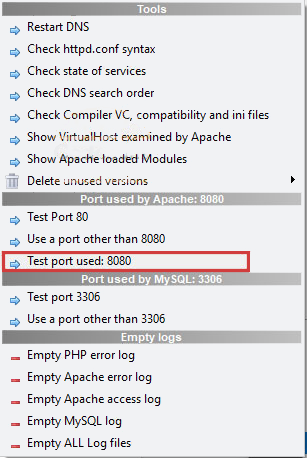
In the end, test the port to confirm that Apache is using it:
Problem 4. Why the WampServer Is Blocked?
There may be a verification problem with the firewall section. A firewall or antivirus may block WampServer for security issues. So, you should disable them for a short period and see if your problem is solved. If the problem is with the firewall, then add rules and exceptions to let the WampServer through the firewall or antivirus.
Conclusion
Here, we tried to focus on some common Wampserver problems on Windows 10. Also, we analyzed the issues and give some solutions for these problems. So, it can be a helpful guide for you. If you encounter any other issues or have any questions about WampServer, please share in a comment.
Ethereum is one of the most popular and well-known digital currencies that is used all over the world and in many fields. We provided a definition of Admin RDP in previous articles. This service is a remote desktop system and allows you to connect to other devices or Windows services using a browser and manage them. NeuronVM has provided various ways to buy RDP services. One of these ways is through Ethereum which is a popular digital currency. Read this content to get more information about the buying process.
Reasons toBuy Admin RDP with Ethereum
Now we would like to point out some positive factors about the purchase of Admin RDP. As mentioned before, it allows you to manage the remote system from everywhere you want. Providing RDP services by our site is fast and continuous. It’s also very affordable in price and boosts your business. Access as an admin user should also be added to the benefits of this applicable operating system.
Admin RDP Locations
Another advantage to buying Admin RDP is the variety of locations that provide this service. You can have this server from different locations like the US, Uk, Germany, Netherlands, France, Canada, and so many other regions.
Steps to Buy Admin RDP Using Ethereum
As you figure out what is Admin RDP server and the good points of using this operating system, it’s time to learn how to buy it in step-by-step guidance using Ethereum digital currency.
1- To buy Admin RDP the first step is to visit the Admin RDP page:
2- In this section, as you scroll down the page you can see different plans for this service. choose the proper one and click on the Purchase Now button:
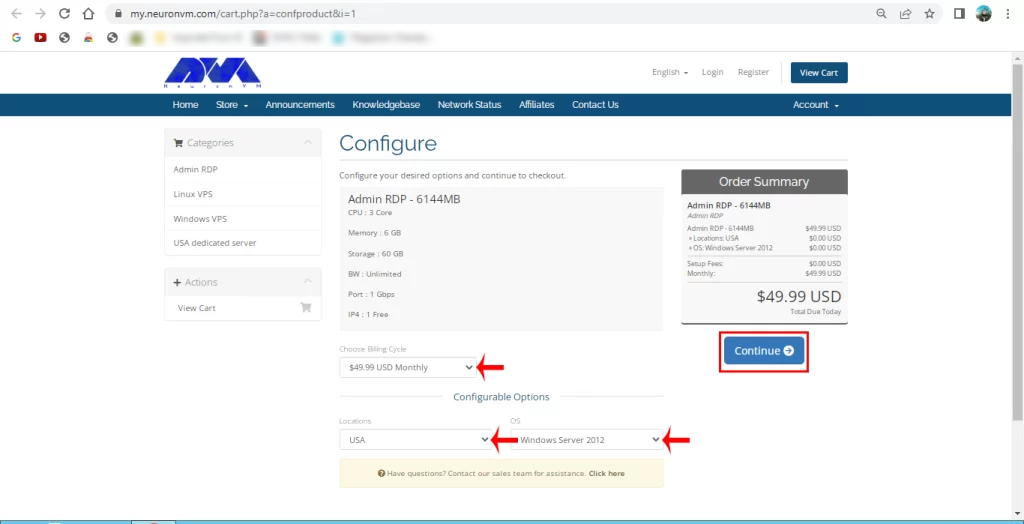
3- Now, it’s time to do the configuration part. As indicated in the image below, choose the Billing Cycle of your payment, the Location of the server you want, and the suitable Operating System then click on the continue button:
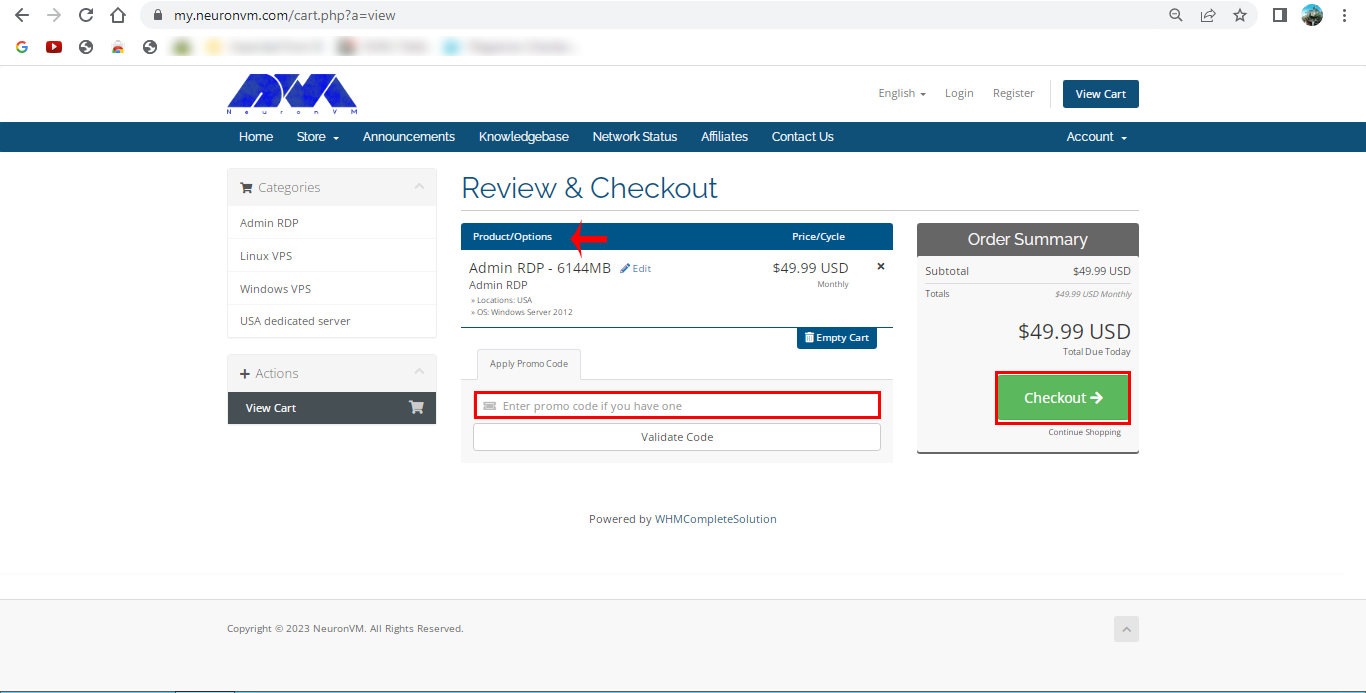
4- Then, you will get the Review and Checkout section. Here you can review the details of the desired product and if you have any Promo Code enter it in the related box. Go to the next part by clicking on Checkout:
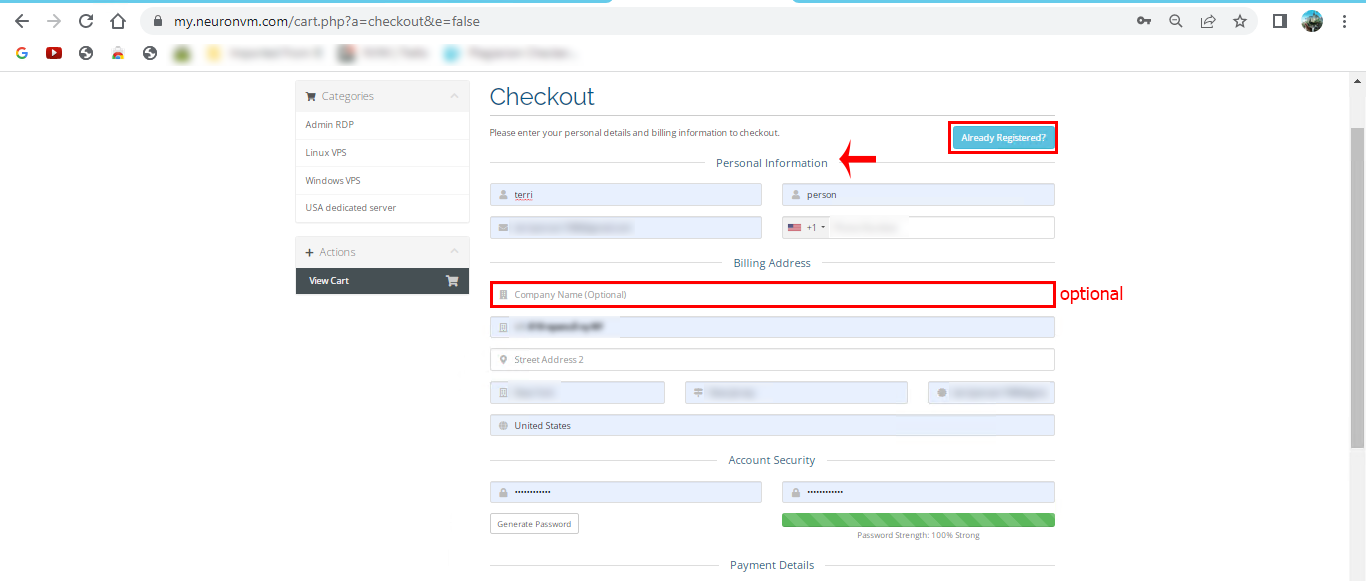
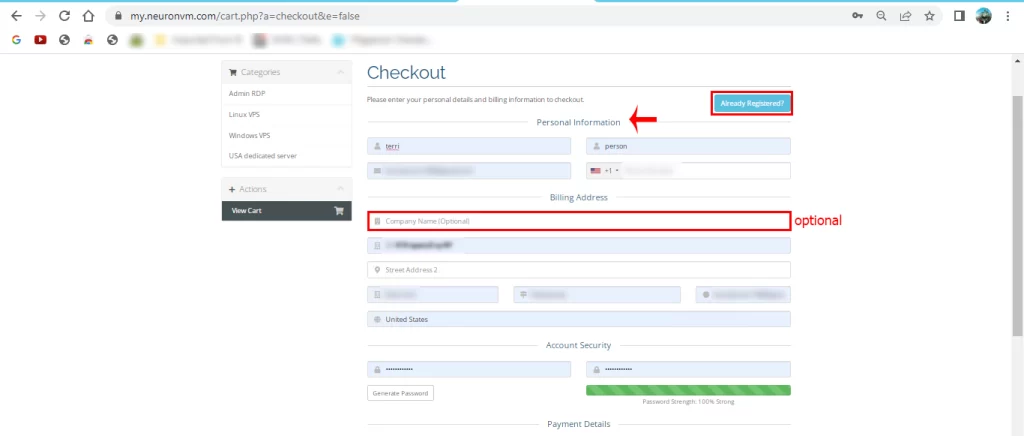
5- This part is related to Personal Information. Fill in the related boxes, so that, you can continue the steps. Notice that, if you have registered before, just press on Already Registered and enter the next part by inserting your email and password:
Tip: You don’t need to fill company name as it is optional.
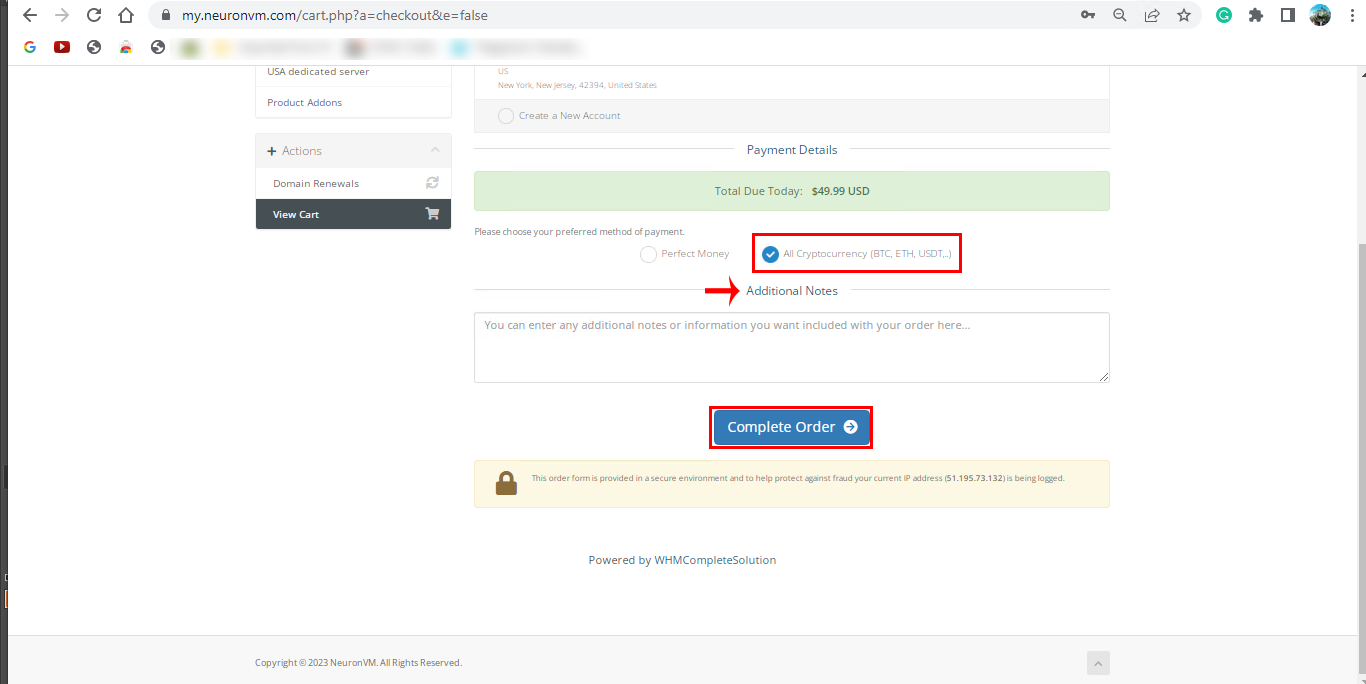
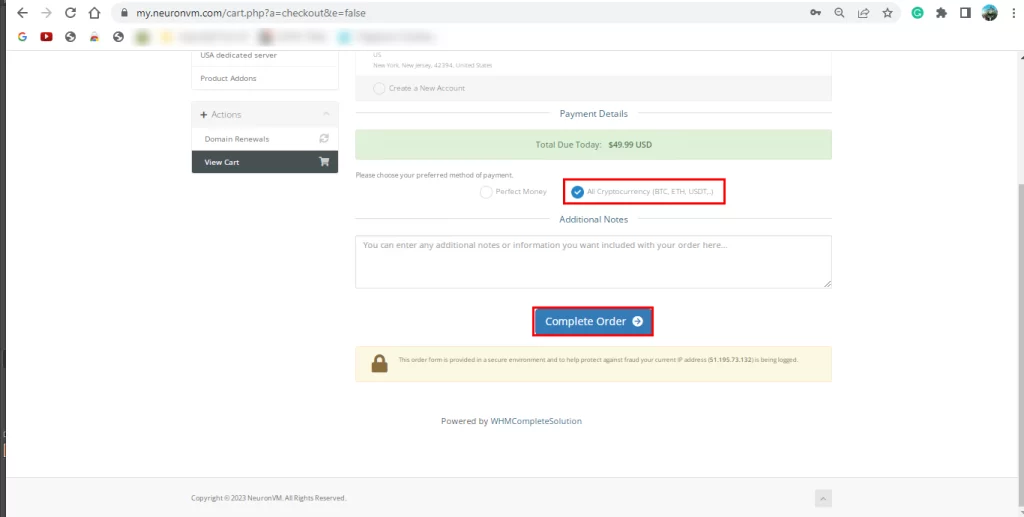
6- Scroll down to choose the Payment Method. Here, you should select the All Cryptocurrency option and if you need to add extra information write in the Additional Notes box and click on Complete order:
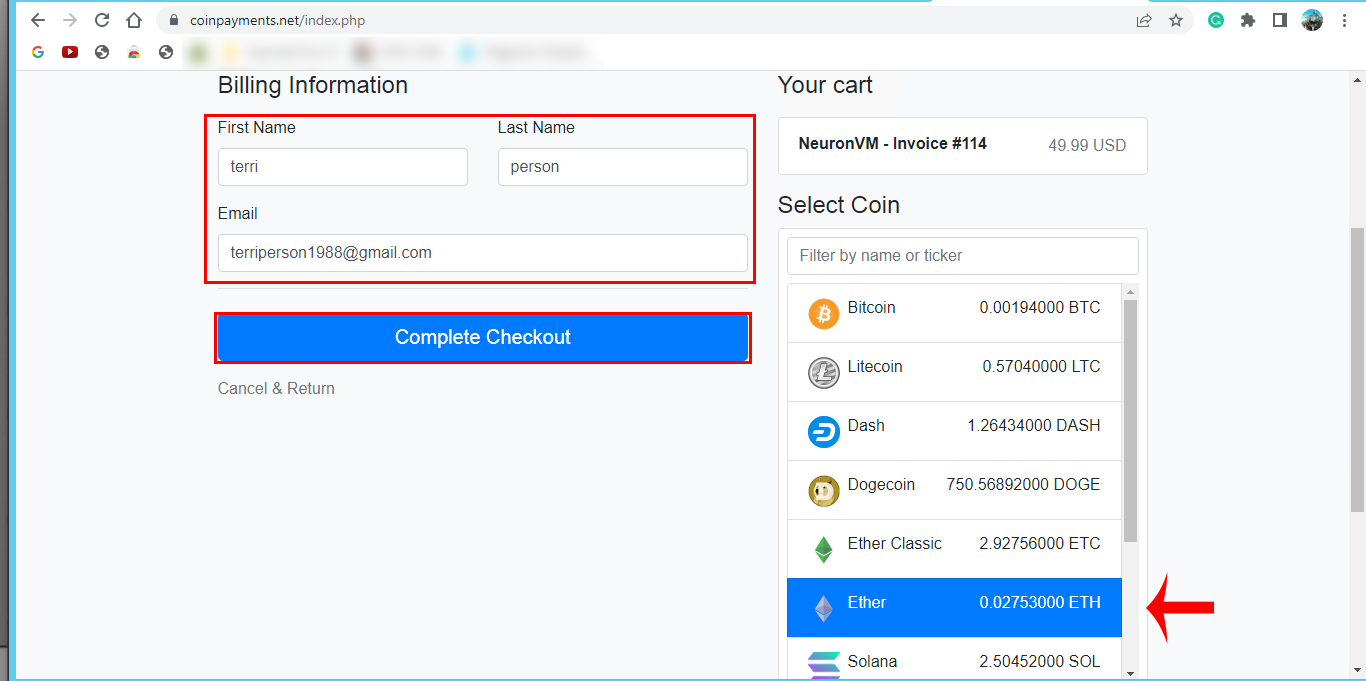
7- The last part is related to the payment process. Here, you can see your personal information filled out automatically, as you signed up before. Also, you can choose your cryptocurrency in the Select Coin section (Ether) and click on Complete Checkout.
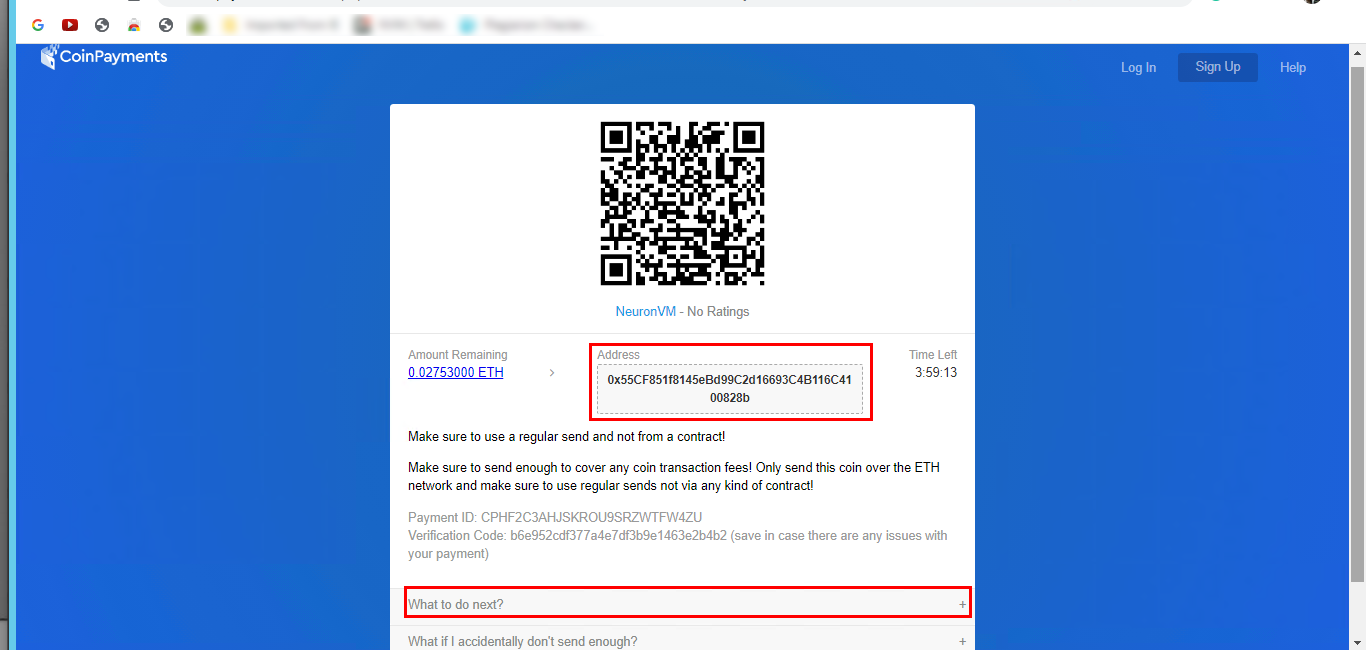
As the last step, you can see your Eth payment ID and Verification Code. For more information about your payment, you can click on What to do next option. Here, you will find out all the needed information to confirm your payment.
Conclusion
Now that you got familiar with the steps of purchasing Admin RDP using Ethereum, you can easily buy it from the NeuronVM website and use this affordable and user-friendly server on your system to manage remote devices. If you have any questions, please share them in the comments.
FAQ
Does Admin RDP offer full admin access?
Yes, all of the RDP plans are privately owned and give full access to users.
Is it possible to use RDP for free?
Free remote desktop software is possible but users should connect to a device in a different location than their own.