When considering a Windows VPS for AI applications, it’s important to evaluate your specific needs, such as processing power, storage, and any dependencies your AI software may have, to ensure the chosen proper Windows hosting solution meets your needs. Windows VPS offers several benefits for AI applications. So let’s analyze them and use the power of Windows VPS for AI applications.
Supercharged Computing Power
In the digital age, the source of any successful investment that works online is its hosting solution. Windows VPS hosting is considered a powerful choice with unique features such as dedicated resources, customizable options, and strong hardware.
The impact of supercharged computing power, especially when hosted on Virtual Private Servers (VPS), on AI applications is significant and multifaceted.
The supercharged computing power provided by VPS enhances the capabilities of AI applications, enabling faster processing, more complex models, real-time capabilities, and increased accessibility for a wide range of users and organizations. However, careful consideration of security and scalability is crucial for realizing the full potential of VPS in the context of AI.
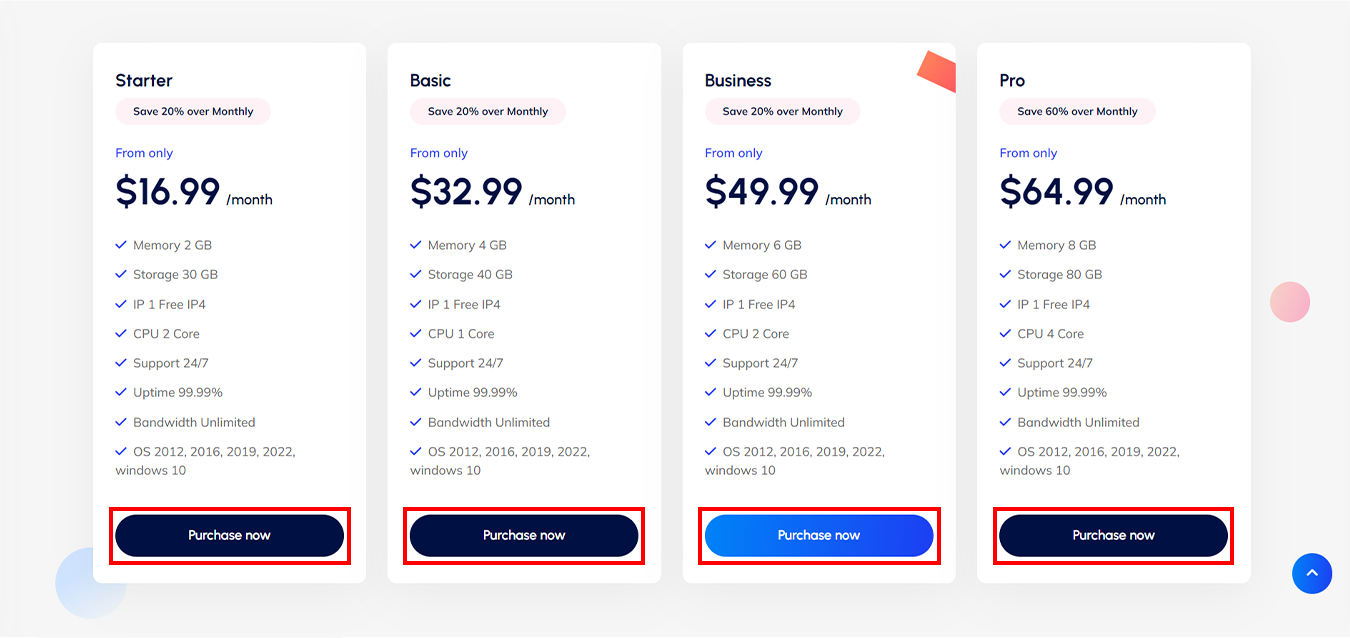
NeuronVM is one of the most reliable and powerful providers of Windows VPS. So, move and purchase a VPS service to enjoy artificial intelligence and ease your work.
Enhanced Security and Privacy
Windows VPS providers often implement strong security measures that help protect your AI applications and data from potential threats.
VPS servers generally provide strong security and protection measures for users’ data and resources. It is also possible to provide compliance certificates on these servers, which is important for businesses in regulated industries.
Therefore, the security of these servers provides users with confidence and the use of artificial intelligence can be done safely.
Cost-Effectiveness and Scalability
One of the beauties of working with Windows VPS is its flexible environment, which can be easily expanded or reduced according to your needs. This advantage is very significant for artificial intelligence applications because these applications have different computational requirements.
So, Windows VPS allows you to easily scale your computing resources as needed and meet the computing needs of different AI applications. Also, VPS hosting is often more affordable than maintaining physical servers, especially for small to medium AI projects. You can choose a hosting plan that fits your specific resource needs.
Seamless Integration with Windows Ecosystem
Seamless integration with the Windows VPS ecosystem can offer several benefits for AI applications, but developers should carefully assess the specific needs and considerations of their applications to make informed decisions. It’s essential to strike a balance between leveraging the advantages of the Windows environment and addressing any challenges that may arise during development and deployment.
Also, integration with Windows services and APIs (Application Programming Interfaces) can provide AI applications with additional functionalities, such as accessing file systems, databases, and other Windows-specific features. This can enhance the overall capabilities of the AI application.
The Windows ecosystem offers a variety of development tools and frameworks that can facilitate the development and deployment of AI applications. Familiar tools such as Visual Studio and support for popular AI frameworks can streamline the development process.
Accessibility and Remote Collaboration
You can access your resources from anywhere by purchasing Windows VPS and an internet connection. In this way, it becomes easier to manage and monitor artificial intelligence programs. Even if you don’t have a physical presence in the data center. With a Windows VPS, you can remotely access your AI environment from anywhere, facilitating convenient management and monitoring of your applications.
Conclusion
Artificial intelligence, which is advancing rapidly, has attracted the attention of many users and has a lot of use. Considering the factors mentioned in this post, we can conclude that Windows VPS is a wonderful host for AI programs. So, by purchasing a Windows virtual server, benefit from this professional and practical assistant without any problems. Contact us with a comment, if you have any questions.
A dedicated server is a hosting service that provides an entire physical server exclusively to one client or website. In contrast to shared hosting, where multiple websites share server resources, a dedicated server offers complete access to all the server’s resources, such as processing power, RAM, storage, and bandwidth. By using a dedicated server, the client gains full control over server configuration, software installations, and security settings. This level of control allows for superior customization, flexibility, and performance, making it ideal for resource-intensive applications like high-traffic websites, online gaming, large e-commerce platforms, or other demanding tasks. In this article, we will examine the benefits of buying a dedicated server, which we recommend you follow us until the end.
Reasons for using a Dedicated Server
Reasons why someone might choose to use a dedicated server:
Optimal Performance: Dedicated servers excel in performance compared to other hosting options, like shared hosting. The server’s resources are exclusively available for your website or application, enabling efficient handling of high traffic volumes and resource-intensive tasks.
Tailored Customization: Enjoy complete control over the server’s configuration with a dedicated server, allowing customization according to your specific needs. This flexibility allows installation and operation of any required software or applications for your website or business operations.
Enhanced Security: Dedicated servers offer heightened security compared to other hosting services. As the sole user of the server, you have full control over security protocols and can implement your own measures to protect your data.
Easy Scalability: Dedicated servers provide effortless scalability, allowing seamless upgrading or downgrading of server resources as your business needs evolve. This flexibility ensures your website or application can handle increased traffic without any slowdowns or downtime.
Improved SEO Ranking: A dedicated server contributes to better search engine optimization (SEO) performance for your website. Search engines favor fast-loading and reliable websites, and dedicated servers meet both criteria, resulting in improved search engine rankings.
Exclusive IP Address: Dedicated servers come with a unique IP address solely dedicated to your website or application. This benefits applications affected by shared hosting’s IP reputation, like SSL certificates or email marketing.
What are the most important Advantages of a Dedicated Server?
High-performance computing power and resources that are solely dedicated to a single user or organization enhance performance and reliability. This ensures optimal performance without the need to share resources with other users.
Full control over security measures, including firewalls, antivirus software, and data encryption, increases security. This provides a higher level of protection against potential security breaches compared to shared hosting environments.
Greater flexibility and customization options are offered by dedicated servers. You have complete control over the server’s hardware, software, and operating system, allowing you to tailor it to your specific needs and optimize performance according to your requirements.
Scalability is a key advantage of dedicated servers. They are highly scalable, allowing you to easily expand resources such as CPU, RAM, and storage as your business grows. This scalability ensures that your server can accommodate increasing demands without experiencing performance issues.
Website loading speed is improved with dedicated servers. They often offer faster website loading times and response rates compared to shared hosting. There is no congestion caused by other websites since the server resources are dedicated to a single user, resulting in a quicker and smoother user experience.
Better control and management is provided by a dedicated server. You have complete administrative access, allowing you to install and configure software applications, customize settings, and manage server resources. This level of control simplifies server management, making it easier to troubleshoot issues and optimize performance.
Dedicated server provides a unique IP address for your website, unlike shared hosting where multiple websites share a single IP address. This offers advantages such as better email deliverability and improved search engine rankings.
Cost-effective and efficient hosting of multiple websites on a single server is possible with a dedicated server. This is beneficial for businesses or individuals that manage multiple online properties.
Who is a Dedicated Server suitable for?
Dedicated servers cater to a variety of individuals and businesses, including:
1. Large businesses and corporations benefit from dedicated servers due to their provision of ample storage, processing power, and control over the server environment. This makes them ideal for organizations with high traffic websites, complex applications, and extensive databases.
2. E-commerce websites find dedicated servers advantageous as they ensure reliable performance, fast loading times, and enhanced data protection. This is especially important for online stores with high volumes of transactions and demanding security requirements.
3. Dedicated servers are commonly used by gaming enthusiasts and communities to host multiplayer games. This facilitates better performance, lower latency, and an improved user experience.
4. Web hosting providers utilize dedicated servers to offer greater flexibility, scalability, and customized solutions for their clients.
5. IT professionals can make use of dedicated servers to exercise complete control over server configurations, software installations, and security settings. This enables them to leverage their expertise for specific project requirements.
6. Media and streaming platforms, such as streaming services, content delivery networks, and media platforms, require dedicated servers to handle large amounts of data traffic. This ensures smooth streaming and downloads for their users.
Overall, dedicated servers are suitable for individuals and businesses in need of high-performance, secure, and customizable hosting solutions that cater to their specific requirements.
How to buy a Dedicated Server from NeuronVM
Buying a dedicated server offers numerous advantages, including improved security, performance, and customization options. It allows you to have full control over your hosting environment while benefiting from professional management and support from the hosting provider.
Buying a dedicated server, in conclusion, is a worthwhile investment for businesses and individuals. It offers numerous advantages such as improved performance, reliability, security, and customization options. This exclusive hosting solution ensures optimal website or application performance, meeting specific requirements effectively.
Nowadays, businesses are constantly seeking ways to stand out from the competition and enhance their online presence. One effective strategy that has gained significant traction is the use of Windows Virtual Private Servers (VPS) in digital marketing. Windows VPS offers numerous benefits and features that can empower businesses to achieve their marketing goals more efficiently and effectively. In this article, we will explore the various ways in which Windows VPS can bolster digital marketing efforts and help businesses stay ahead in the rapidly evolving online landscape.
Introduction to Windows VPS in Digital Marketing
Before delving into the benefits of Windows VPS, let’s first grasp the concept behind it. A Virtual Private Server is essentially a virtual machine that provides dedicated resources and a unique IP address. This allows businesses to control their online operations seamlessly. Windows VPS, specifically designed to run on Windows operating systems, offers enhanced compatibility and familiarity to businesses already using Windows-based software for their digital marketing campaigns.
The Benefits of Windows VPS for Digital Marketing
Digital Marketing Windows VPS offers several advantages that can significantly boost marketing strategies. Firstly, by utilizing a VPS, businesses gain complete control over their hosting environment, ensuring maximum uptime and stability. Additionally, Windows VPS allows for easy scalability, enabling businesses to adapt to fluctuating demands and accommodate sudden spikes in website traffic or marketing campaigns.
Moreover, Windows VPS offers robust security features, protecting sensitive data and customer information, essential in the age of cyber threats and data breaches.
Windows VPS offers numerous benefits and features that can empower businesses to achieve their marketing goals more efficiently and effectively.
Enhancing Website Performance with Windows VPS
One of the most crucial aspects of any digital marketing strategy is a well-optimized website. Windows VPS can play a vital role in enhancing website performance. With dedicated resources and lower server load compared to shared hosting, businesses can experience faster page load times, smoother user experience, and decreased bounce rates. This improved website performance not only leads to higher conversion rates but also positively impacts search engine rankings, contributing to better organic visibility.
Harnessing SEO Capabilities through Windows VPS
Search Engine Optimization (SEO) is integral to any digital marketing campaign. Windows VPS offers businesses additional tools and resources to improve their SEO efforts. With dedicated IPs, businesses can build a strong backlink profile without the risk of sharing an IP with potentially malicious websites.
Windows VPS also enables businesses to run SEO tools and software continuously, ensuring comprehensive analysis, optimization, and monitoring of their website’s SEO performance.
Leveraging Windows VPS for Social Media Marketing
Social media marketing has become an indispensable part of digital marketing strategies. Windows VPS provides businesses with a reliable and controlled environment to execute their social media initiatives seamlessly.
By utilizing Windows VPS, businesses can automate social media scheduling, manage multiple social media accounts simultaneously, and leverage powerful social media management tools. Such capabilities enhance productivity, consistency, and engagement, enabling businesses to reach and connect with their target audience more effectively.
Windows VPS: A Powerful Tool for Email Marketing
Email marketing remains one of the most potent channels for customer engagement. Windows VPS offers exceptional support for email marketing initiatives. With dedicated resources, businesses can send large volumes of emails efficiently without the risk of being classified as spam.
Windows VPS also provides businesses with enhanced deliverability, improved tracking and reporting capabilities, and the ability to efficiently manage email lists and campaigns. These features contribute to a more effective and successful email marketing strategy.
Conclusion
In the vast digital marketing landscape, businesses must empower themselves with the right tools and technologies to stand out and succeed. Windows VPS offers a wide array of benefits, from enhancing website performance, harnessing SEO capabilities, leveraging social media marketing, to optimizing email marketing efforts. By embracing Windows VPS, businesses can strengthen their digital marketing strategies, drive growth, and establish a strong online presence. Digital Marketing Windows VPS has become an indispensable tool for businesses aspiring to thrive in the ever-evolving online world.
Linux Mint is one of the popular open-source Linux distributions. One of the positive points of this operating system is its adaptability. It also has an intuitive and user-friendly environment that makes users who move from systems like Windows to Linux not get confused. We will also try to review the Linux Mint operating system for you and guide you on how to get started.
A Brief Explanation of Linux Mint
As we mentioned here, Linux Mint is a popular open-source operating system (OS) based on the Linux kernel and can be installed on Linux VPS. This operating system is built on top of the Ubuntu distribution, which itself is based on Debian. This means it inherits much of Ubuntu’s stability and package management system.
It is a powerful system with full multimedia support out of the box, suitable for moderate and advanced users. Having an impressive user interface, stability, and powerful software center has made it popular.
Starting Linux Mint is a straightforward process, So let’s learn how to start this amazing distribution:
Step 1- Choosing the Proper Linux Mint Edition
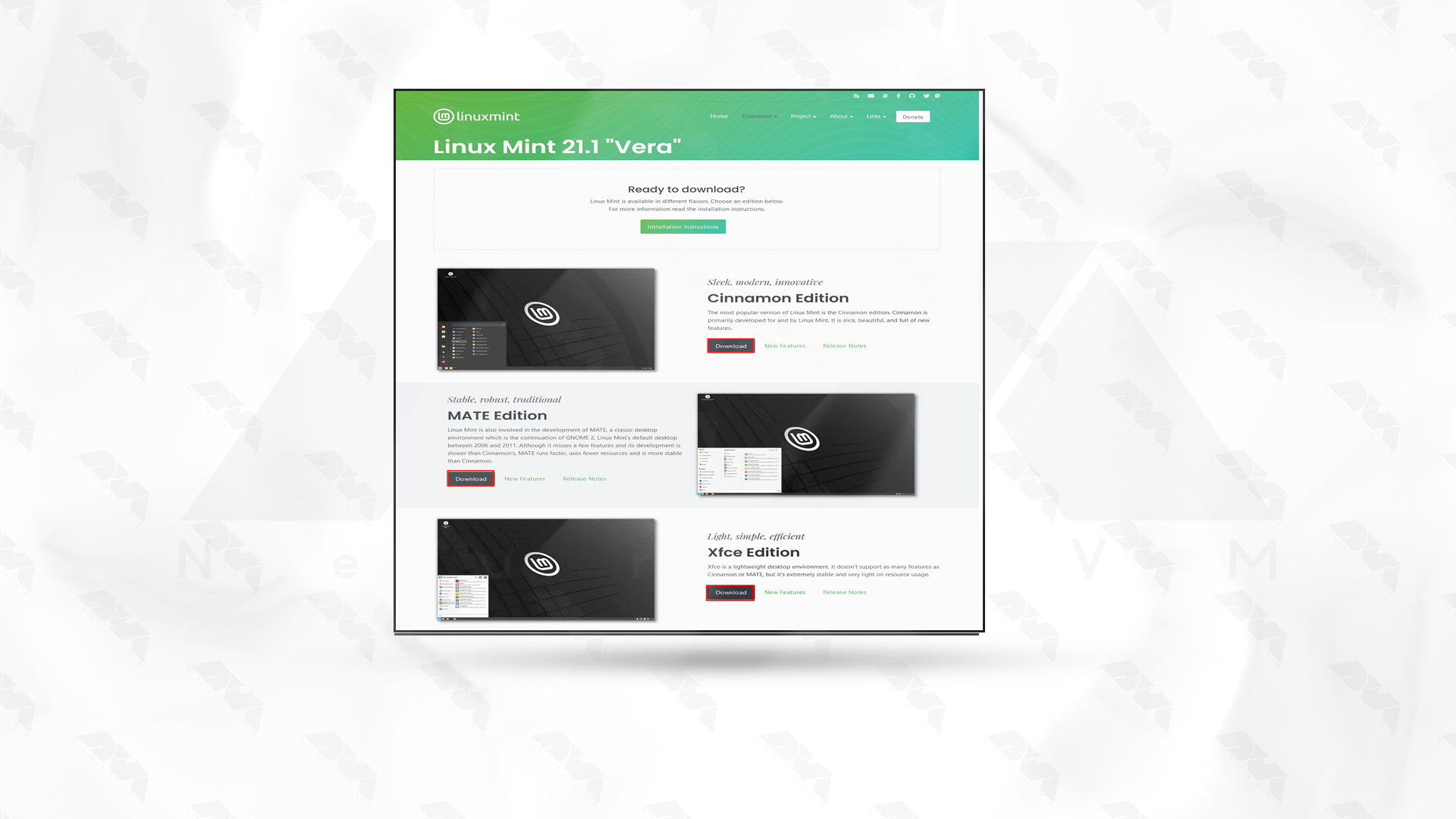
Linux Mint has three different versions, including Cinnamon, Mate, and XFCE. The difference between these three versions is their desktop environment, which defines the functions and user interface. Let’s examine these three editions of Linux Mint:
Cinnamon: It is the most modern version of Cinnamon Mint, which has the most features. At the same time, it offers a balance between speed and features and has an intuitive and comfortable feel.
Mate: This version has a classic desktop environment and is lighter than Cinnamon. If you have limited hardware capabilities, Mate is the best choice.
XFCE: The lightest version of Linux Mint is XFCE. This version is very suitable for old systems because these systems may have problems with the previous two versions.
So, choose the best edition which is suitable for your system.
Now, download the version from there. To be able to do this faster, choose a mirror that is closest to you. Select it, and you will see that the iso file will start downloading:
Step 3- Verifying the ISO file
It is not mandatory to do this step, but you can make sure of the security and integrity of the downloaded ISO file. MD5 checksums are provided for each ISO file. Therefore, after downloading, you can confirm the ISO file with the checksum tool.
Step 4- Creating a Bootable USB or DVD
To be able to install Linux Mint, you need to create a bootable USB or DVD. To do this, you can use tools like Rufus or Balenaetcher. The USB drive used must have at least 2 GB of free space. Or if you want to use a DVD, make sure it is empty.
Step 5- Installing Linux Mint
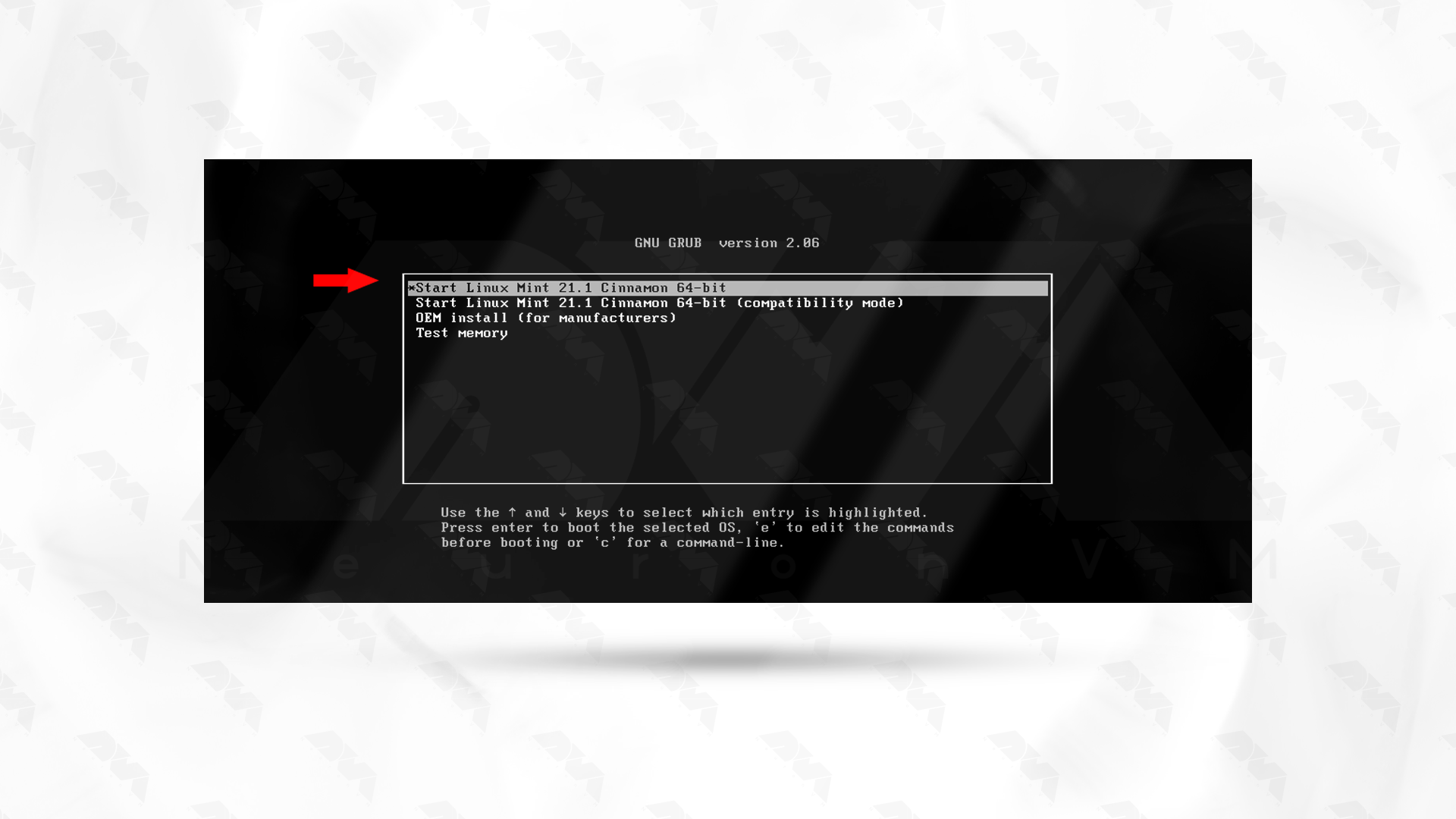
In this section, to start the installation, you need to reboot the DVD or USB file on the computer. Meanwhile, make sure your bios settings are set to boot from USB or DVD. You should now see the Linux Mint logo loading.
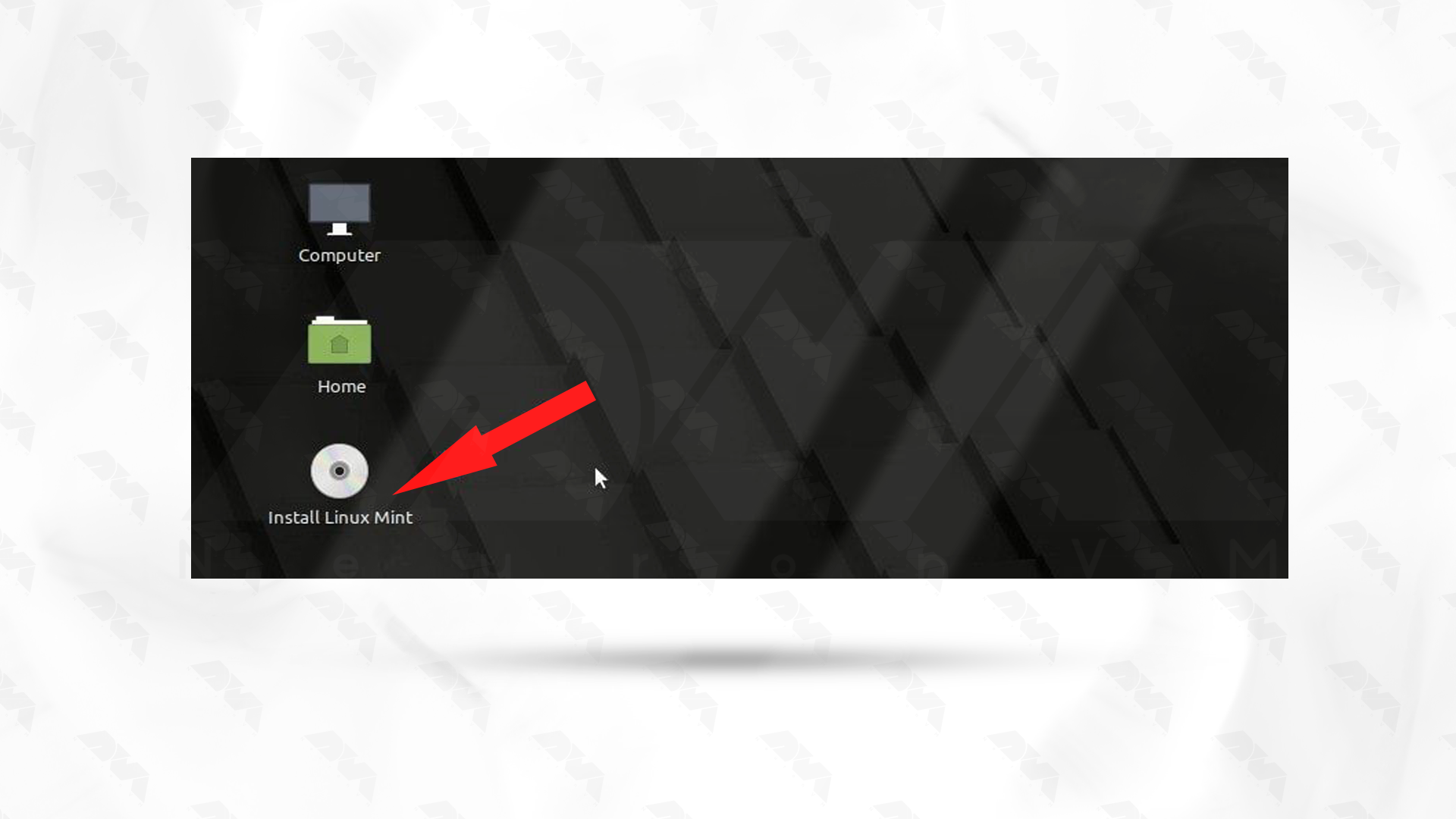
After downloading this operating system, you can see the test or installation option. If you need to test, click the corresponding option; otherwise, choose the Install Linux Mint option to continue the installation.
***
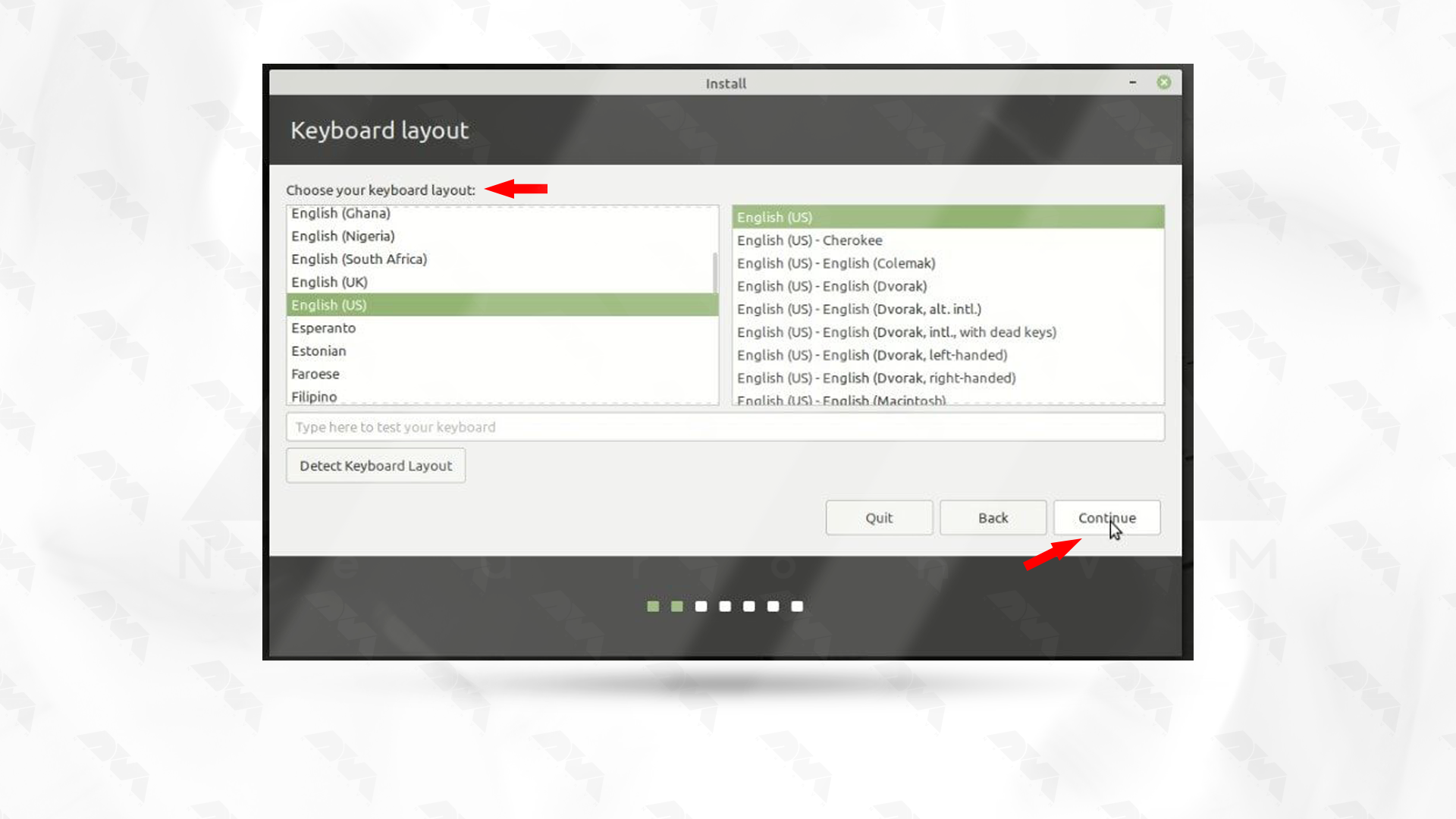
Follow the next instructions on the screen in order and select your appropriate language. Then select your keyboard layout:
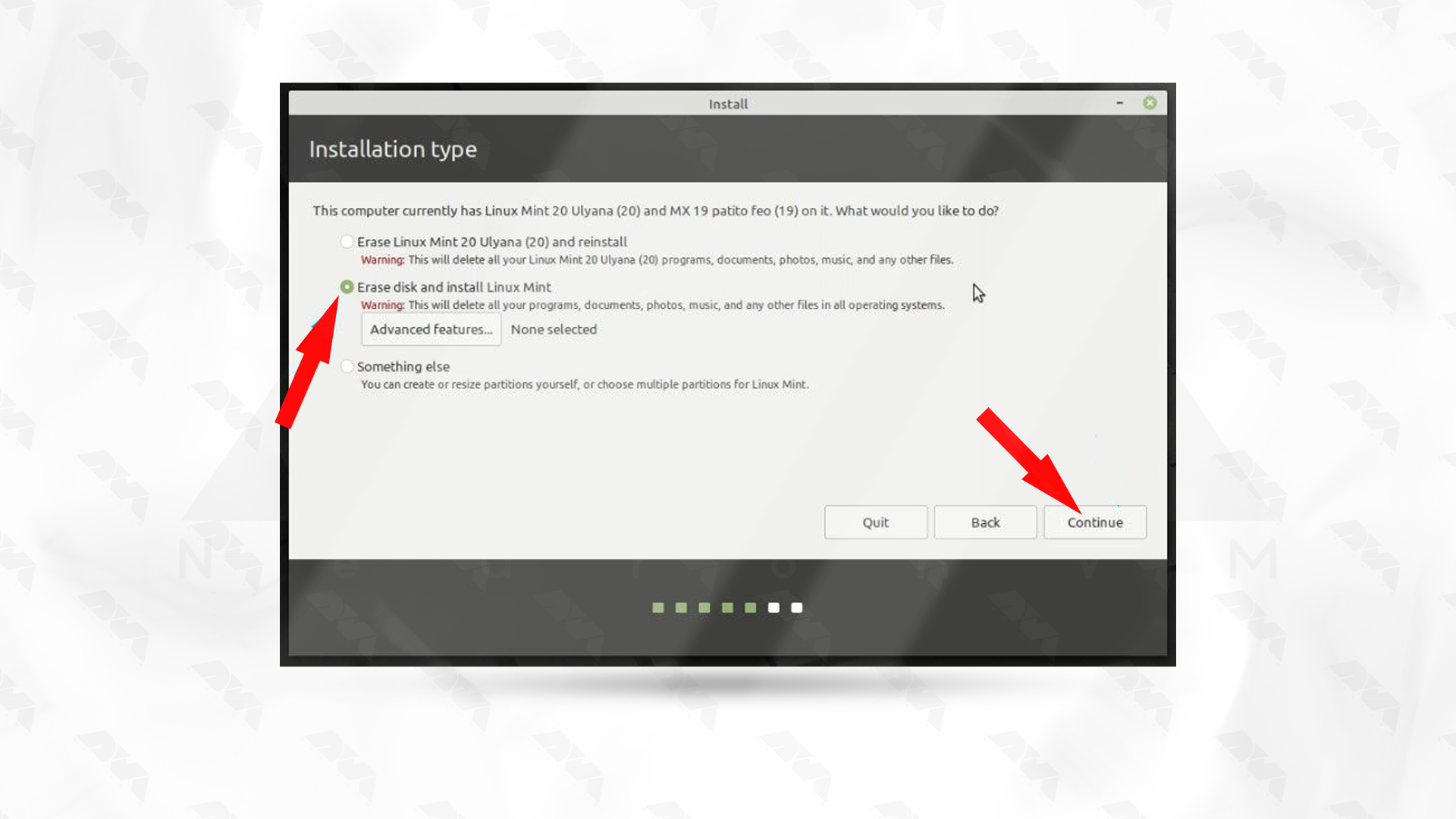
Now, decide your installation type. In this section, Erase disk and install Linux Mint is usually selected:
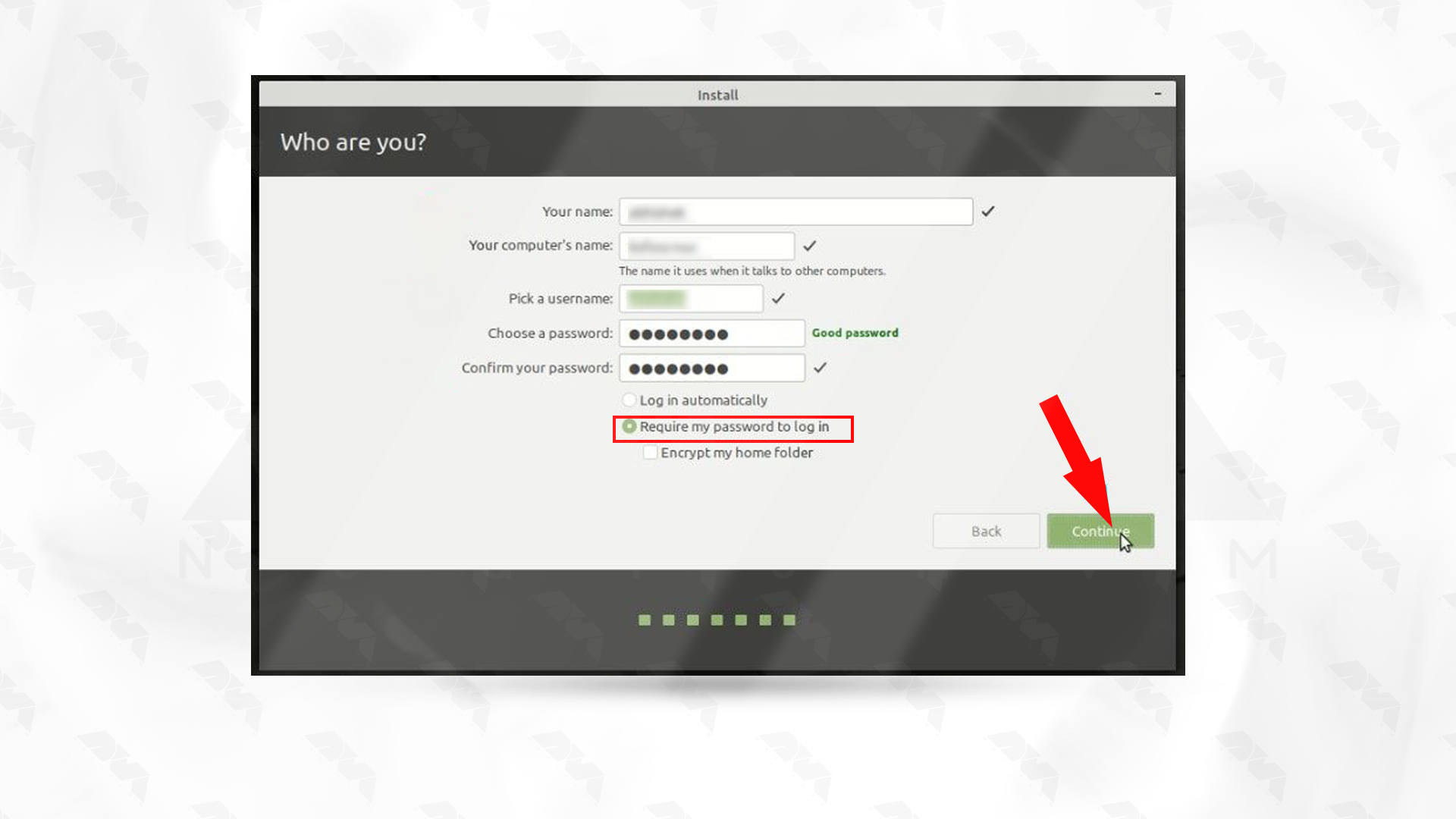
Finally, create your account and start the installation by giving your username and password.
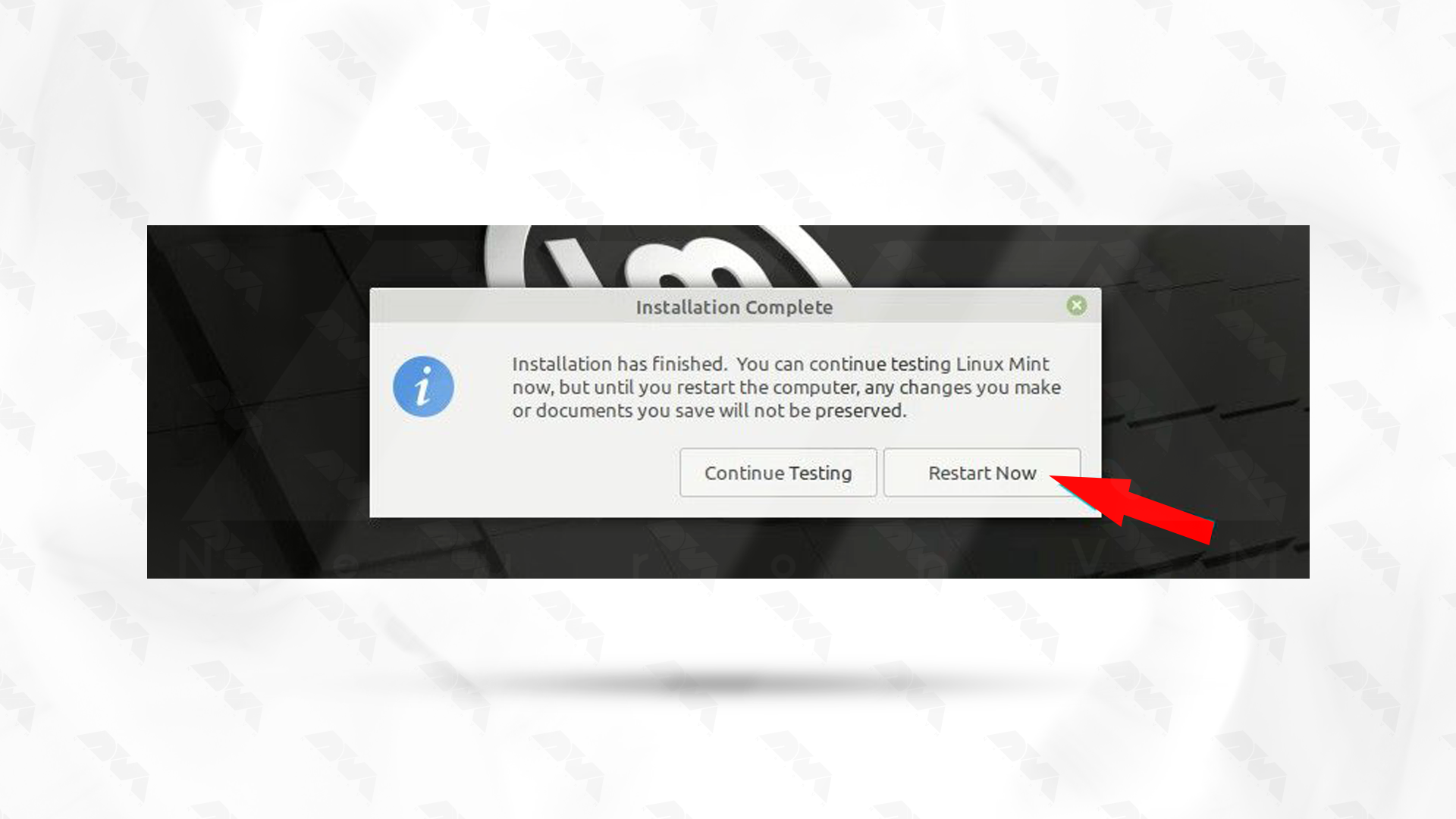
The installation process will take some time, so be patient. Restart your system to apply changes:
Note: After restarting, the system will prompt you to remove USB and press Enter.
This is it! As you get more familiar with the system, you can explore advanced features, customize your desktop, and get the most out of your operating system experience.
Troubleshooting Issues about Booting Linux Mint
Boot issues with Linux Mint can be caused by various factors, including hardware compatibility, configuration problems, or software issues. Here are some common boot issues and potential solutions:
1- Incompatible or missing graphics drivers can cause boot problems, especially if you’ve recently updated your kernel or graphics drivers.
Solution:
Boot into recovery mode, uninstall or reinstall graphics drivers, or try using the open-source drivers. You can also edit the GRUB configuration to add kernel parameters like nomodeset to temporarily disable the kernel mode setting.
2- GRUB is a common boot loader used in many Linux distributions, including Linux Mint. If there’s an issue with GRUB, it may prevent the system from booting.
Solution:
You can try reinstalling GRUB or repairing it using a live CD/USB. Boot into a live environment, open a terminal, and use commands like grub-install and update-grub to reinstall and update GRUB.
3- Filesystem corruption or errors can prevent the system from booting successfully.
Solution:
Boot from a live CD or USB, open a terminal and run filesystem checks. For example, for an ext4 filesystem, you can use the e2fsck command.
sudo e2fsck /dev/sdXY
Replace /dev/sdXY with the actual partition device.
Conclusion
As mentioned in this section, the Linux Mint operating system is a versatile and user-friendly system that everyone from beginners to professionals can use. The installation process is also very simple, and you can do it successfully in a few simple steps. So install Mint with this guide and enjoy it.
In the ever-evolving world of gaming, where multiplayer experiences dominate, nothing can enhance your gaming journey more than a dedicated server specifically tailored for this purpose. Dedicated servers for gaming not only guarantee impressive performance but also streamline online interactions, ensuring seamless gameplay. This article will explore the importance of servers in gaming, how they enhance gaming experiences, their advantages such as uninterrupted performance, low latency, customization options, and powerful hardware specifications. Additionally, we will guide you on where to purchase top-quality dedicated servers for gaming.
Why Dedicated Servers are Crucial for Gaming?
Dedicated servers play a crucial role in providing an exceptional gaming environment. Unlike shared servers, dedicated servers exclusively allocate resources to a single user or group of users. This level of exclusivity translates into numerous benefits, such as enhanced control, reduced instances of lag, and improved security. Dedicated servers eliminate the inconvenience of relying on peer-to-peer connections, ensuring a stable and reliable gaming experience.
How Dedicated Servers Can Help Your Gaming Experience?
Dedicated servers immensely contribute to improving your overall gaming experience. By hosting games on a dedicated server, players gain increased control over various aspects, ranging from rules and regulations to game modifications and expansions. Moreover, these servers facilitate faster and smoother gameplay by reducing latency and optimizing bandwidth allocation.
Consequently, gaming enthusiasts can enjoy faster and more responsive interactions, resulting in an immersive and enjoyable gaming atmosphere.
Uninterrupted Gaming Performance
One of the most significant advantages of dedicated servers for gaming is uninterrupted performance. These servers are specifically designed to handle the intense demands of modern multiplayer games, ensuring minimal downtime and a seamless gaming experience.
By removing the risk of server overload due to other users’ activities, dedicated servers provide the ideal infrastructure to support heavy gameplay while maintaining consistent performance levels.
Low Latency and High Bandwidth Network
Dedicated servers offer low latency and high bandwidth network capabilities, essential for reducing delays and ensuring quick response times in online gaming. When utilizing a dedicated server, data travels directly from the server to the players, eliminating the need for data to pass through multiple intermediate points. This means faster and more precise gameplay, giving gamers a competitive edge in highly dynamic and fast-paced games.
Customization and Flexibility Options
With dedicated servers for gaming, customization and flexibility options are plentiful. Gaming enthusiasts can tailor server settings to suit their preferences, ranging from choosing specific game modes and implementing mods to controlling player access and security measures. This freedom to customize ensures a unique gaming experience and allows players to establish communities, fostering an inclusive and engaging environment for fellow enthusiasts.
Powerful Hardware Specifications
Top-tier gaming servers feature powerful hardware specifications aimed at delivering optimal gaming performance. With cutting-edge processors, ample storage, and high-performing graphics cards, players can immerse themselves in graphics-intensive games without worrying about hardware limitations. The capabilities of these servers truly unleash the full potential of the gaming experience, enabling gamers to push boundaries and explore vast virtual worlds without compromise.
Where to Buy a Dedicated Server for Gaming?
For those seeking the ultimate servers for gaming, several reputable providers cater to this specific niche. Be sure to choose a provider with a proven track record, extensive customer support, and reliable server uptime. Conduct thorough research, read customer reviews, and assess each provider’s offerings, ensuring that you select a dedicated server solution that aligns with your gaming needs and budget.
Here at NeuronVM, we offer dedicated servers tailored for professional gamers. Play different games like Minecraft, Call of Duty, CS:GO or any other games you fancy on our powerful servers. You can also get a Game VPS if you don’t need the power of a dedicated server just yet. With more than 4 years of experience, 24/7 technical support and various ways for payment, I’m sure you’ll get what you need!
Final Words
In conclusion, dedicated servers for gaming are an essential investment for enthusiasts seeking the ultimate playing experience. By providing uninterrupted performance, low latency, high bandwidth, customization options, and powerful hardware specifications, dedicated servers revolutionize the multiplayer gaming landscape. To elevate your gaming adventures to new heights, consider investing in a dedicated server that suits your requirements. Join the ranks of elite gamers and experience the full potential of these servers for gaming.
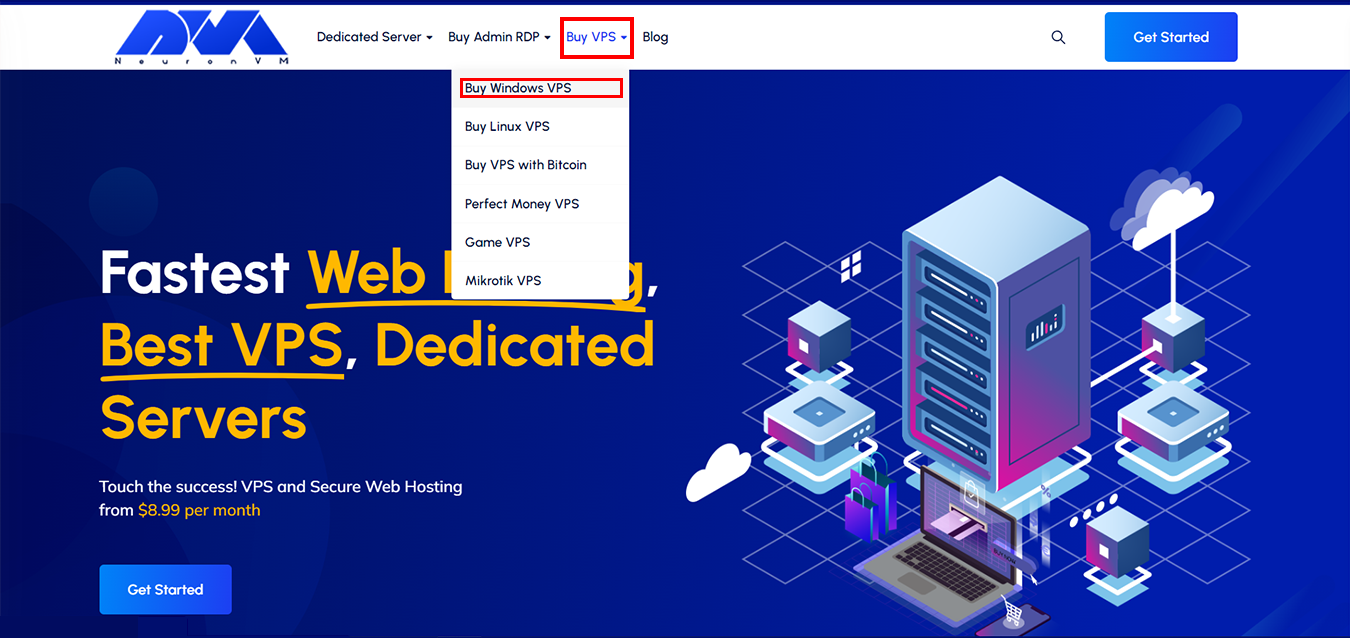
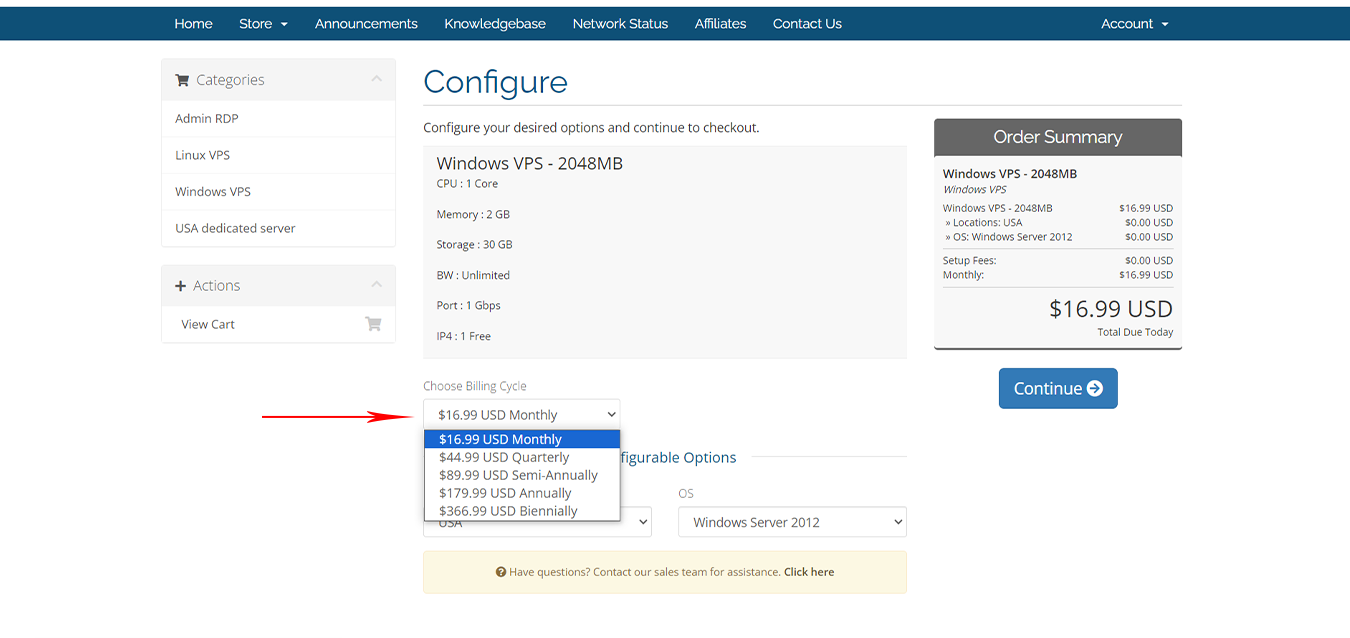
Today we gonna learn “The Clever One’s Guide to Buying Windows 10 VPS”. However, before we start this tut there are some points to remember. Whether you are a tech enthusiast, developer, or business owner, our Windows 10 virtual server is tailored to meet your specific requirements. You need a Windows VPS with an uptime % 99.99, Connection without delay, simple, scalable, customizable, and affordable prices.
Windows 10 virtual server is a virtual machine you can use as a dedicated environment to your web projects, So get ready to elevate productivity.
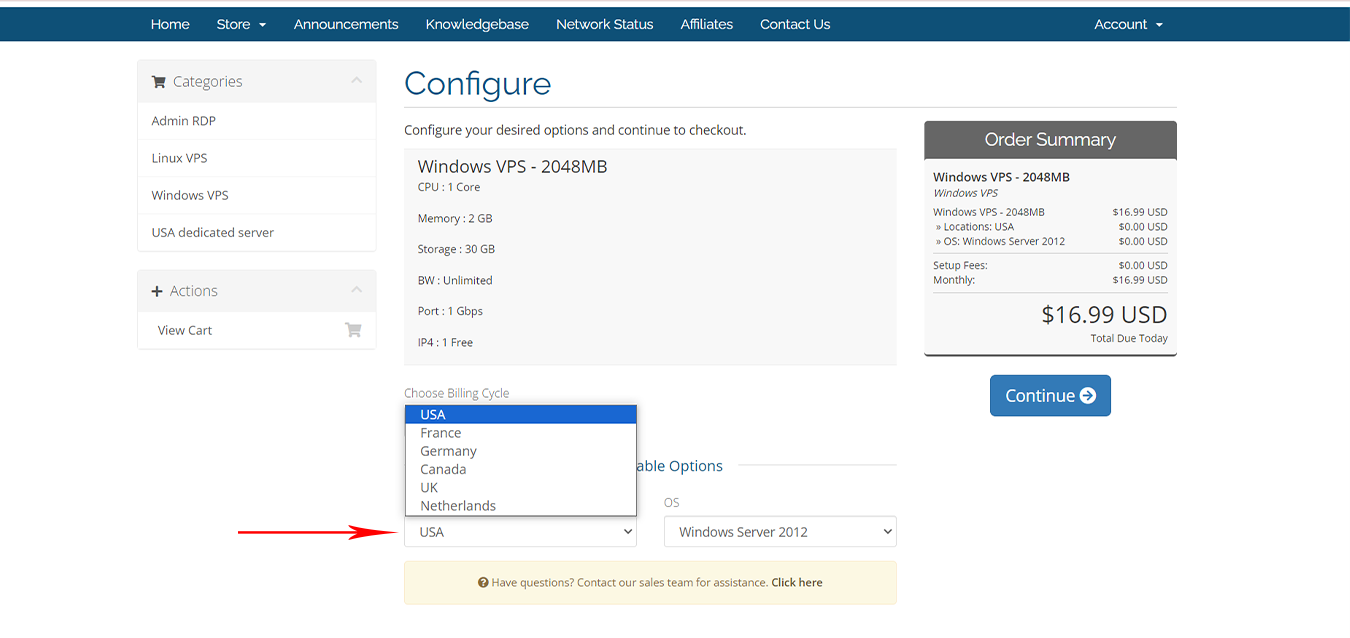
Next, choose one of the 6 available options for the location:
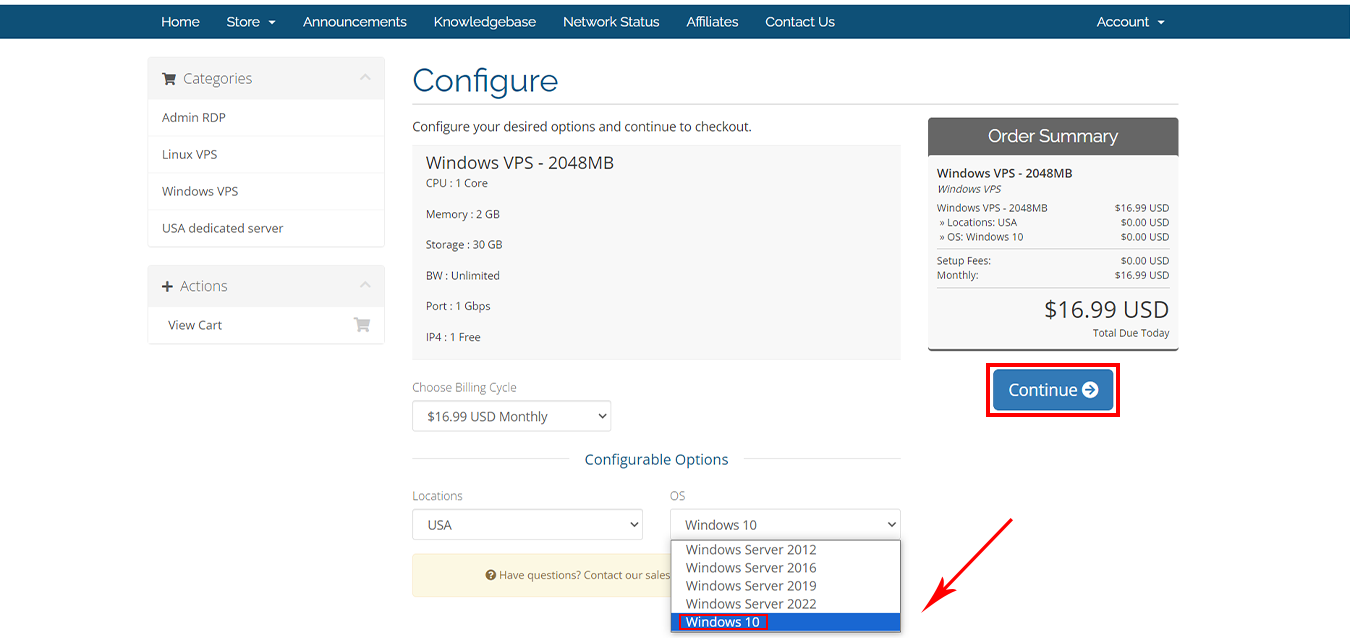
At this stage, to buy a Windows 10 VPS, select the ” Windows 10 ” option from the operating systems, And press ” Continue “:
If you have any promo code apply that and checkout:
Fill blanks with your ” Personal Details ” and scroll down for more:
Windows 10 Virtual Server Payment Methods
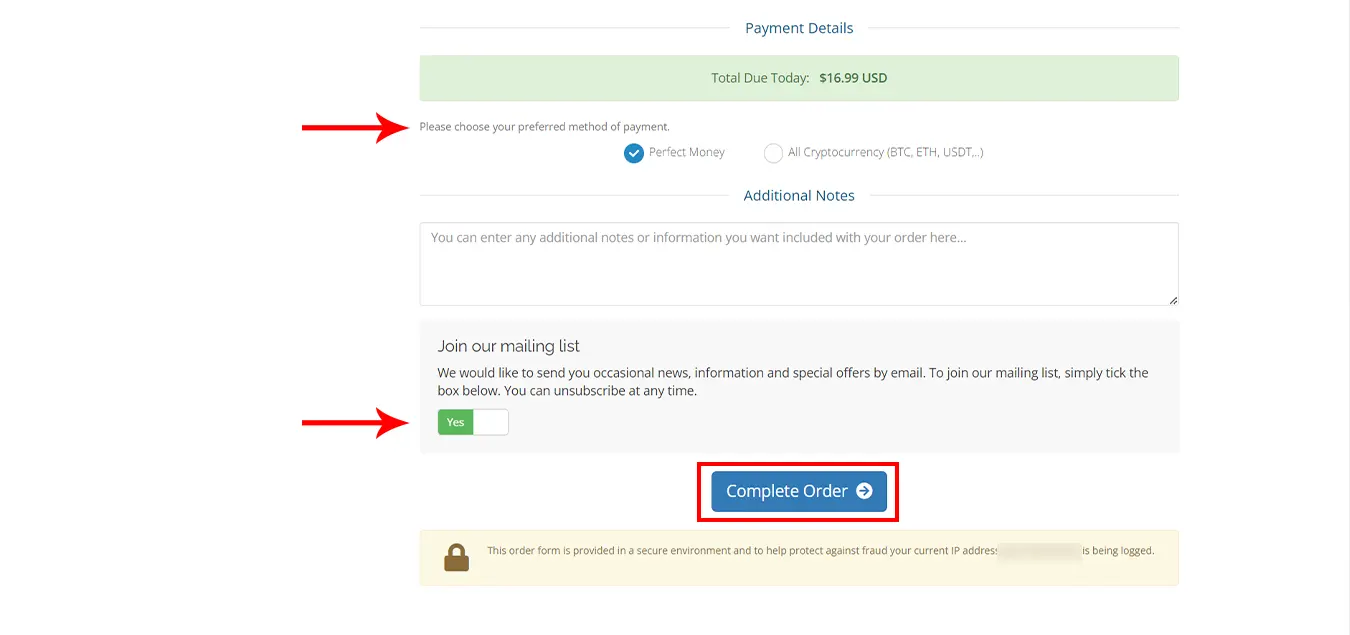
You can choose your method of payment ” Perfect Money ” Or ” All Cryptocurrency like BTC, ETH, USDT.. “:
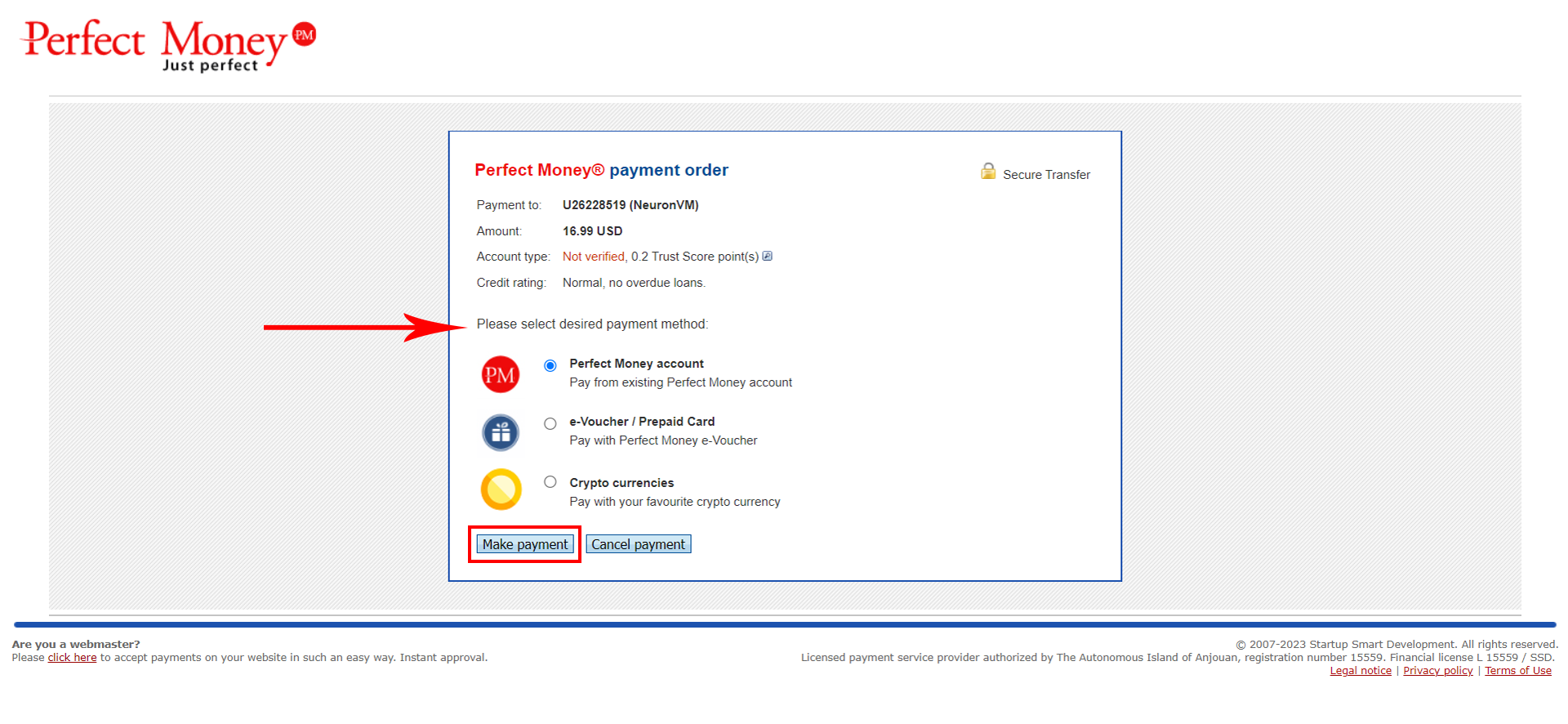
Please select the desired payment method:
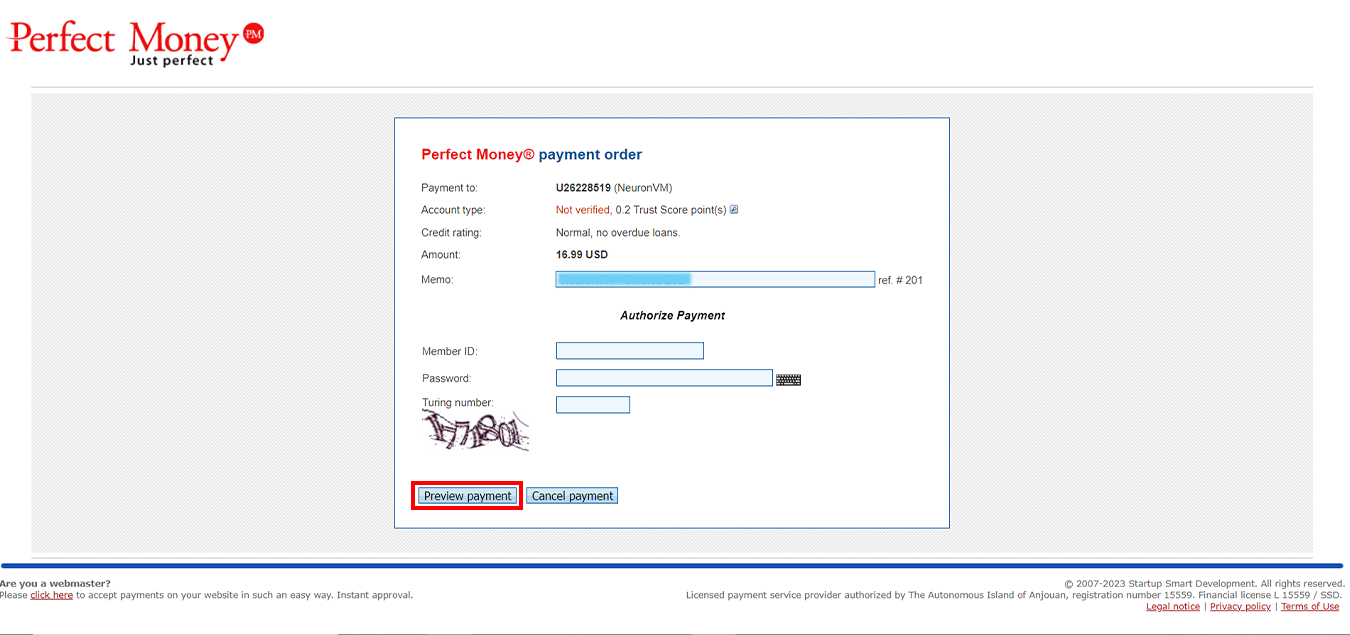
Please fill “ Member ID “, ” Password ” and ” Turning number “:
Your purchase is now completed. Your desired server information will be sent to your email after a few minutes.
Conclusion
Thank you for being with us! For more information, visit the website.
If you have a problem or question in any of the above steps, you can contact our experts 24/7 via ticket section in your user area.
USA RDP (Remote Desktop Protocol) allows users to gain control of a remote computer located in the United States from anywhere in the world. This technology provides individuals with the flexibility to access and use a computer that is physically located in the US, giving them the ability to perform various tasks remotely. In this article, we will explain to you how to Gain Control and Flexibility with USA RDP.
How can we have more control over our online activities?
Using USA RDP can provide you with increased control over your online activities and enhance your overall internet experience. Here are some steps you can take to gain control:
1. Choose a reliable RDP provider: Select a reputable provider that offers USA-based servers. Look for providers with a solid track record, good customer reviews, and affordable pricing plans.
2. Check server locations: Ensure that the provider has multiple server locations in the USA. This will give you more flexibility in choosing the location that best suits your needs.
3. Opt for dedicated resources: Consider opting for a dedicated USA RDP instead of a shared one. Shared RDPs can be more affordable, but they might have limitations in terms of resource allocation and performance. A dedicated RDP will offer you a more stable and reliable connection
4. Strong security measures: Make sure the RDP provider offers robust security measures like data encryption and two-factor authentication. This will help protect your online activities and ensure that your connection is secure.
5. Customization options: Look for an RDP provider that allows you to customize your RDP environment. This could include selecting the operating system, installing specific software, or adjusting resource allocation according to your requirements. This level of customization will give you more control over your RDP experience.
6. Reliable customer support: Ensure that the RDP provider offers reliable customer support that is available 24/7. In case you encounter any issues or need assistance, having responsive customer support will be crucial in gaining control over your RDP.
By following these steps, you can gain control and enjoy a seamless online experience with a USA RDP. Remember to also comply with the terms of service and laws in your country to ensure that your activities are legal and ethical.
Flexible Work Solutions: Discover the Benefits of USA RDP
Flexible work solutions have become increasingly popular in today’s workforce, and one of the tools that enables this flexibility is the use of USA RDP. This service allows individuals to access their work computers or servers remotely from anywhere in the world, using only an internet connection.
Here are some of the key benefits of using USA RDP for flexible work solutions:
1. Location Independence: One of the biggest advantages of USA RDP is that it allows individuals to work from anywhere, as long as they have an internet connection. This is particularly beneficial for individuals who prefer a nomadic lifestyle or need to travel extensively for work. It eliminates the need for physical office space and allows individuals to work from the comfort of their own homes or any other location of their choice.
2. Cost Savings: With USA RDP, businesses can save on various costs associated with maintaining physical office spaces. This includes rent, utilities, office equipment, and other operational expenses. Instead, employees can work remotely, reducing the need for a physical office and enabling businesses to allocate their budget to other important areas.
3. Increased Productivity: Studies have shown that remote workers tend to be more productive compared to those working in traditional office settings. USA RDP provides individuals with the flexibility to work during their most productive hours without the distractions often found in office environments. This results in increased efficiency and output.
4. Work-Life Balance: USA RDP allows individuals to achieve a better work-life balance. Remote work enables employees to spend more time with their families, reduce commuting time, and have more flexibility in managing their personal commitments. This flexibility often leads to higher job satisfaction and overall happiness.
Choosing the Best USA RDP Provider
Choosing the best provider depends on your specific needs and requirements. Here are some factors to consider while selecting a provider:
– Server Locations: Ensure that the provider has servers located in the USA to ensure low latency and reliable connections.
– Performance and Speed: Look for a provider that guarantees high-performance servers with fast network speeds, as this directly affects your browsing, streaming, and downloading experience.
– Security and Privacy: Prioritize providers that offer strong encryption protocols to protect your data and ensure your online activities remain private.
– Scalability: If you anticipate needing to scale your operations, consider providers that offer flexibility and scalability in terms of server resources and upgrade options.
– Customer Support: Look for providers that offer 24/7 customer support, preferably through multiple channels such as live chat, email, and phone, to assist you in case of any technical issues.
– Pricing and Plans: Compare pricing plans offered by different providers, considering factors such as server specifications, bandwidth allowance, and additional features like dedicated IP or DDoS protection.
Our website (NeuronVM) offers USA RDP service to users at a competitive price compared to other competitors, the highest quality and efficiency, and 24/7 support.
Buying USA RDP involves selecting a reliable service provider, comparing pricing plans, selecting the desired specifications, and making an online payment. Once the payment is confirmed, the user receives the RDP credentials to access a remote desktop located in the USA. You can learn how to Buy USA Admin RDP by Crypto from NeuronVM by referring to the article.
Conclusion
In conclusion, utilizing USA RDP provides individuals with the advantage of increased control and flexibility in their online activities. Whether it is for personal or business purposes, having access to a reliable and secure RDP can greatly enhance productivity and efficiency in today’s digital world.
In a today’s world, Remote Desktop Protocol (RDP) has become an integral part of businesses and individuals across the globe. The ability to access computers or servers remotely provides unprecedented convenience and flexibility. When it comes to purchasing RDP, opting for various locations like France can offer distinct advantages. Notably, the ability to buy France RDP with Bitcoin presents an easy and secure method to acquire this invaluable service. In this article, we will explore the benefits of using France RDP and how businesses and individuals can harness its potential.
France has a distinct internet infrastructure, with features that set it apart from other countries.
Firstly, France has achieved high broadband penetration rates, as a result of significant investments by both the government and private service providers. This has led to widespread access to high-speed internet connections.
Additionally, France has extensively deployed fiber-optic networks, allowing for fast and reliable internet access across homes and businesses. The backbone infrastructure in France is relatively centralized, particularly in cities like Paris, resulting in efficient routing and high-speed connectivity.
The country also boasts a number of established internet exchange points (IXPs), which facilitate the exchange of internet traffic between different networks and ISPs, leading to improved local and regional internet performance.
France’s regulatory environment plays a crucial role in shaping its internet landscape. The country promotes competition among ISPs, resulting in a diverse market with multiple players offering different services. This competitive environment drives innovation and enhances the quality and affordability of internet services.
Furthermore, France places a strong emphasis on privacy, with stringent regulations in place to protect users’ personal information. Notably, the General Data Protection Regulation (GDPR) applies to any entity processing personal data of individuals within the EU, ensuring data protection and privacy.
Additionally, France advocates for content localization policies, requiring certain digital content to be available in French and compliant with local regulations. This includes streaming platforms, online marketplaces, and search engines providing localized versions for French users.
How to Buy France RDP with Bitcoin?
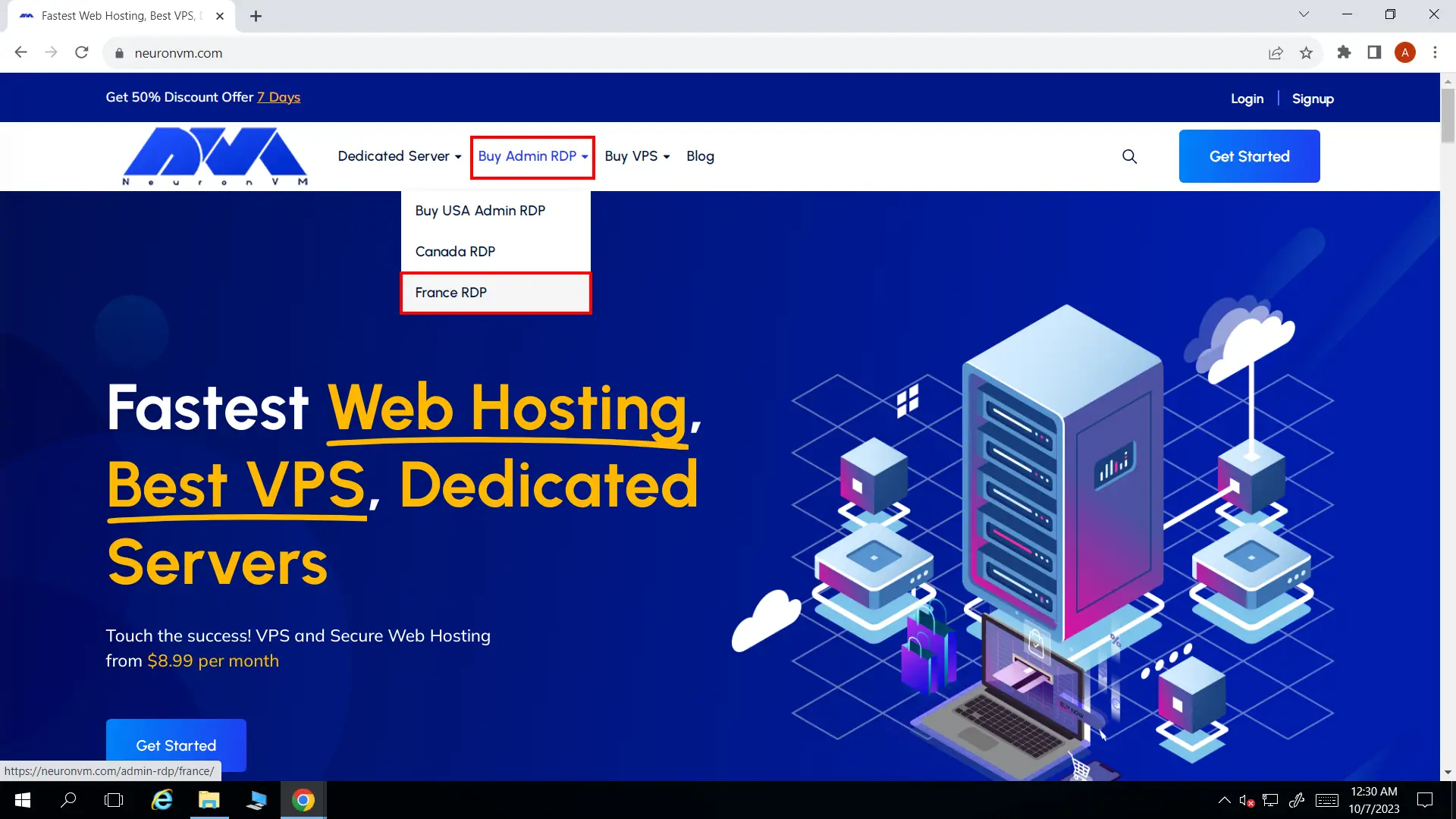
There are not many providers out there that have the bitcoin as one of their payment options, let alone selling it based on location. NeuronVM is one of the few places you can easily buy your needed services and pay with cryptocurrencies like Bitcoin. In this section I’m going to show you how you can buy France RDP with Bitcoin without facing any issues. Here we go:
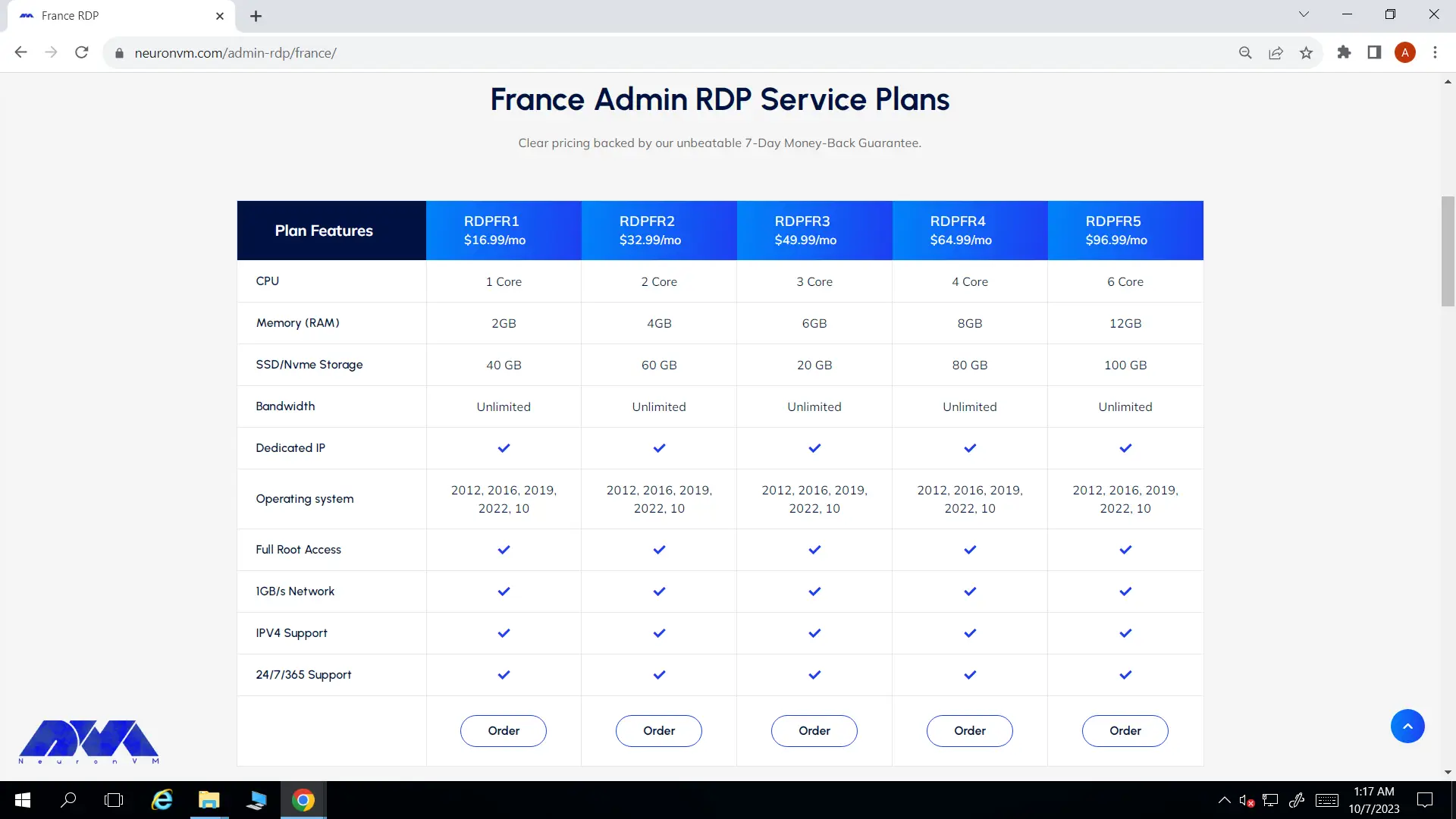
On France RDP page, scroll down and you will see the different plans listed there. Choose your preferred plan and click on Order.
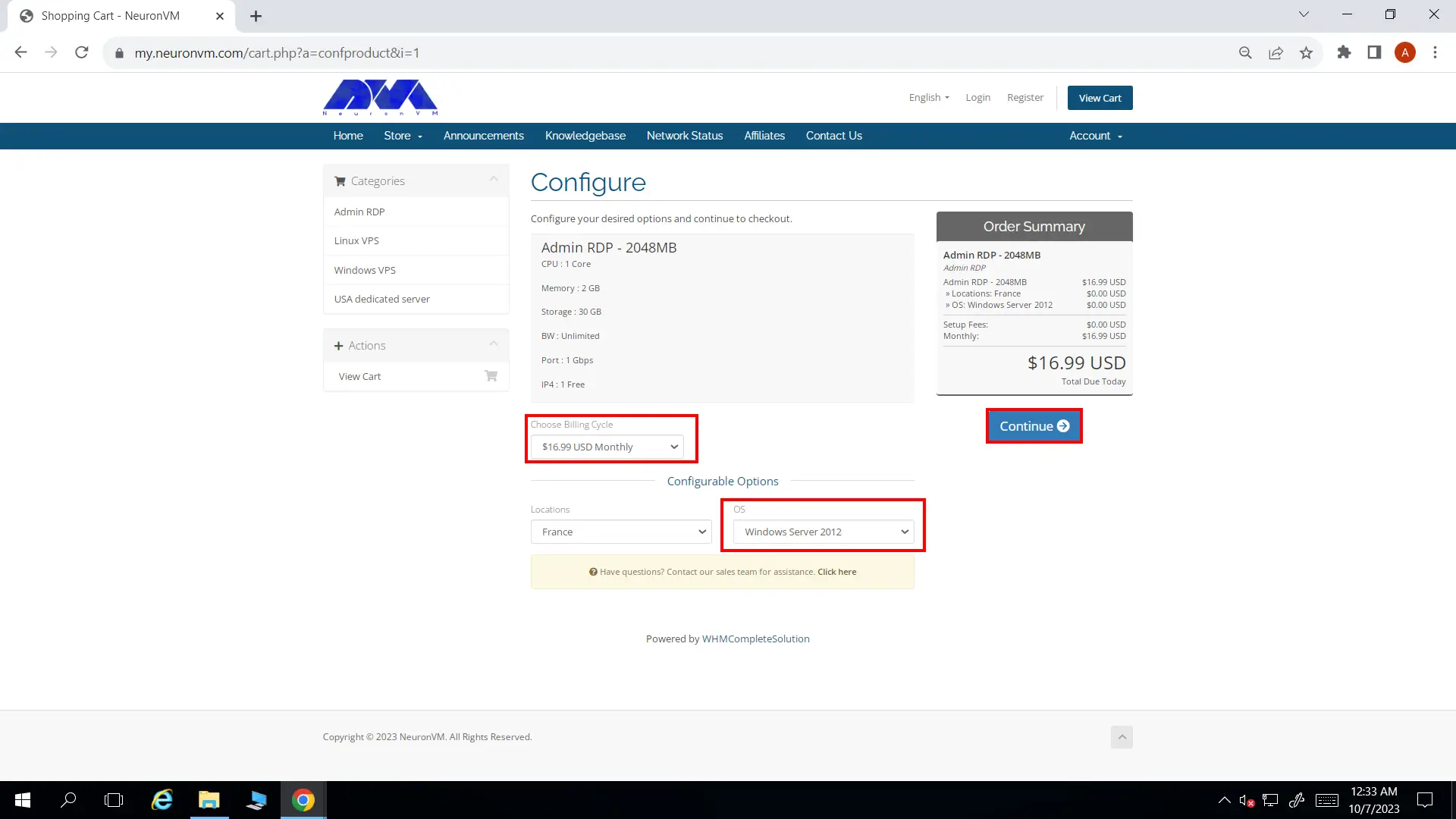
You’ll be landed on configure page. You can change a few options like Preferred OS and the Billing Cycle to your liking.
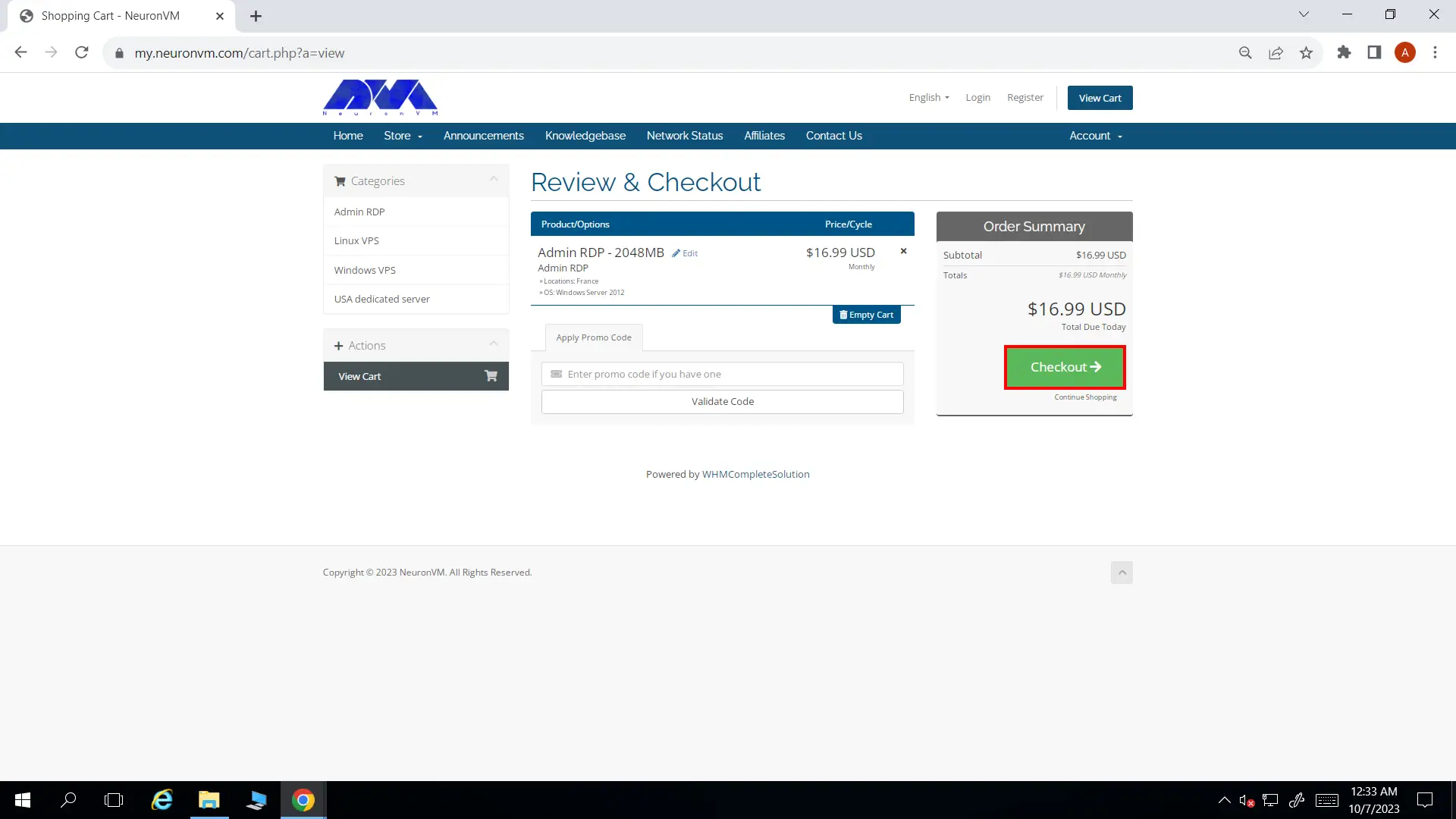
In Review and Checkout page you can enter a promo code if you have any, then click on Checkout button and proceed.
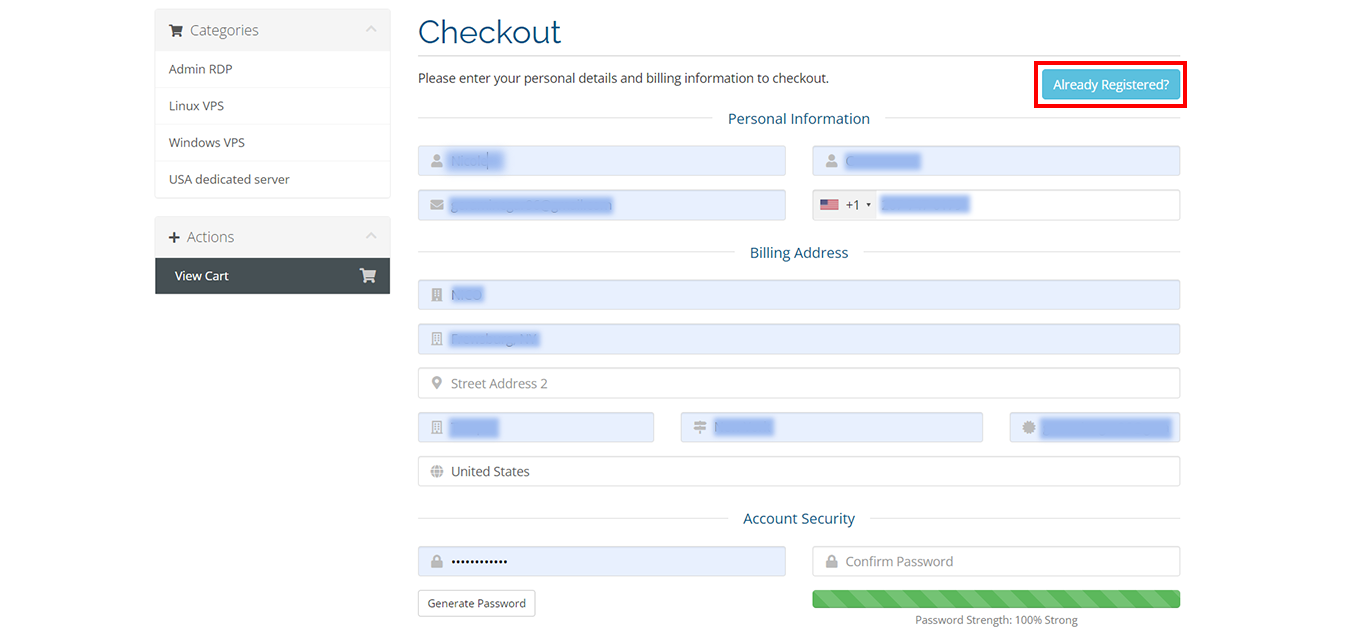
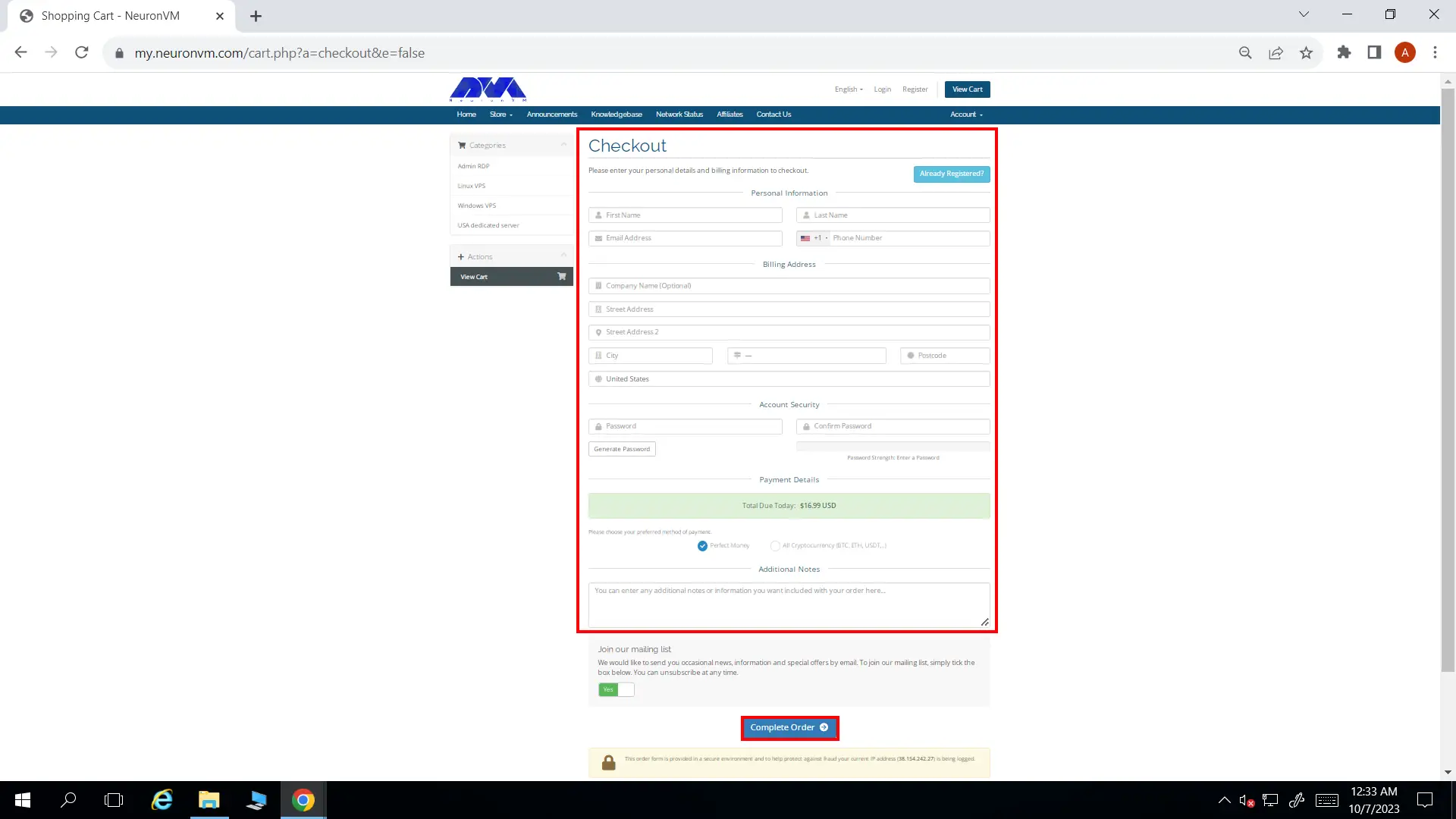
NeuronVM will require some of your information to complete the ordering process. If you’ve registered in our website before, you can simply click on Already Registered button. At the bottom of the page, choose All Cryptocurrencies and then click on Complete Order.
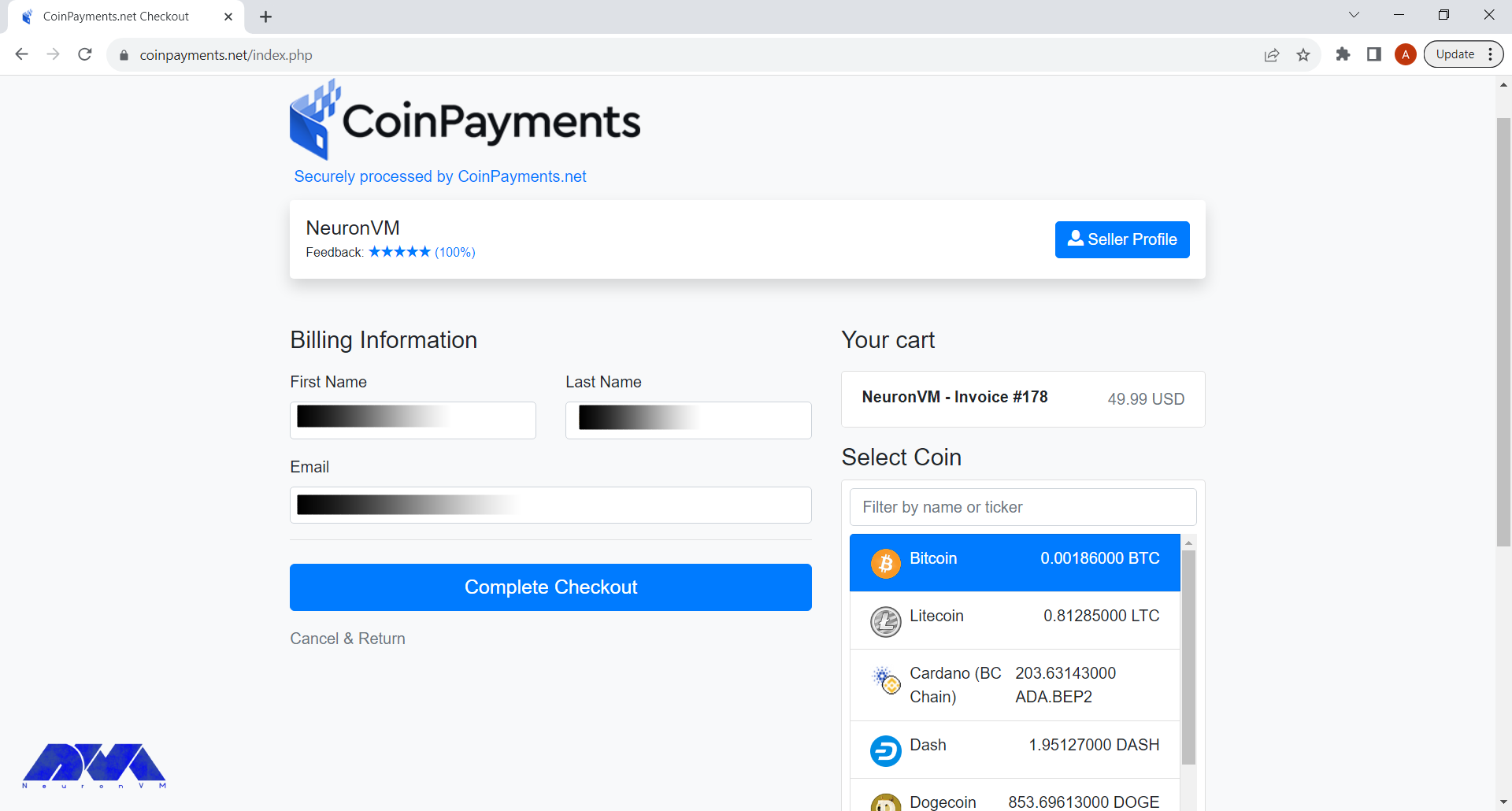
In the final step, choose Bitcoin as your preferred cryptocurrency and complete the buying process.
After the payment is done, NeuronVM will instantly provide you with your France RDP and you can start using it. Remember if you had any issues going through this process, you can either comment down below or contact our friendly support team. We will get back to you in no time.
Conclusion
In conclusion, France RDP offers a multitude of benefits for businesses and individuals seeking reliable remote access solutions. The enhanced performance and connectivity provided by France’s strong network infrastructure ensure seamless and high-speed remote access experiences. Moreover, opting for France RDP means benefiting from advanced security measures, including robust data protection regulations and reliable server monitoring, reducing the risk of data breaches or cyberattacks.
From a business perspective, France RDP allows companies to expand their reach globally, serving clients and customers from around the world with ease. Additionally, it offers cost-effective solutions, saving on hardware costs, maintenance, and operational expenses compared to setting up on-premises infrastructure.
For individuals, France RDP provides access to enterprise-level software and resources at a fraction of the cost, enhancing productivity while saving on personal investments.
With the ability to purchase France RDP using Bitcoin, the process becomes even more convenient and aligned with the modern trend of digital transactions. Embracing France RDP empowers users to bridge geographical barriers, streamline operations, and leverage the remarkable benefits of remote desktop protocol. So, embark on the Bitcoin Boulevard to France and unlock the infinite potential of RDP.
Are you ready to take your website or online business to the next level? If so, it might be time to consider using a dedicated server. While shared hosting may be suitable for beginners or small websites, a dedicated server offers the most control, flexibility, and power. In this guide, we will walk you through the process of mastering the art of dedicated servers. From choosing the right server to configuring it for optimum performance, you’ll be equipped with the knowledge to make the most of this powerful hosting solution.
Determining Your Requirements
Assessing your needs with a dedicated server requires a thorough understanding of your business requirements, resource demands, and growth projections. Here are some key factors to consider:
1. Performance and Scalability: Determine the level of performance required by your applications and consider any potential growth in traffic, users, or data. Evaluate if your current hosting environment can handle the increasing load or if a dedicated server is necessary to ensure optimal performance.
2. Security: Assess the sensitivity of your data and the level of security required. Dedicated servers offer enhanced security features, such as dedicated firewalls and isolated environments, which can be crucial for industries prone to cyber threats or compliance requirements.
3. Customization and Control: Evaluate whether your applications require specific configurations, software installations, or specialized environments. Dedicated servers provide complete control and flexibility, allowing you to tailor the server infrastructure to your exact needs.
4. Cost Considerations: Assess the cost implications of moving to a dedicated server. Calculate the expenses associated with hardware, software licensing, maintenance, and ongoing operational costs. Compare this with the potential benefits and savings from improved performance, scalability, and security.
5. Technical Expertise: Determine if you have the necessary technical expertise or if you require managed dedicated server services. Managed options provide assistance with server setup, maintenance, security, and troubleshooting, allowing you to focus on your core business.
6. Redundancy and High Availability: Evaluate your need for redundancy and high availability. Dedicated servers can be configured with failover solutions, clustered environments, or load-balancing setups to ensure consistent performance and minimal downtime.
7. Support and Service Level Agreements (SLAs): Consider the level of technical support and SLAs needed for your business. Evaluate the responsiveness, availability, and expertise of the hosting provider’s support team.
Selecting the Perfect Hardware
Choosing the right hardware for a dedicated server depends on several factors including the specific requirements of your server workload, budget considerations, and future scalability needs.
Here are some key hardware components to consider when choosing a dedicated server:
Processors (CPU)
Memory (RAM)
Storage
RAID Controllers
Network Connectivity
Power Supply
Server Chassis and Cooling
Remote Management and Monitoring
Scalability
It is recommended to get in touch with our support experts by sending a ticket from the user area to assess your specific needs and select the most suitable hardware for your dedicated server setup.
Operating System Selection
The next step is choosing an operating system (OS) for your server. Popular choices include Linux distributions like Ubuntu, CentOS, or Debian, as well as Windows Server OS. Consider your familiarity with the OS, compatibility with your applications, and any specific requirements when making your decision.
Server Setup
Setting up a dedicated server can be a complex process, but with the right knowledge and guidance, you can master the art of dedicated servers. Here are the key steps in server setup:
Step1: Plan and determine server requirements:
Define the purpose of the server, including the operating system, software, storage, memory, and bandwidth needed.
Step2: Choose a hosting provider:
Select a reliable hosting provider that offers dedicated server hosting services.
Step3: Order and provision the server:
Place an order for the dedicated server with the chosen hosting provider. Provide necessary information, such as the desired configuration, billing details, and initial setup requirements.
Step4: Configure network settings:
Determine the IP address allocation and set up the network configuration, such as assigning static IP addresses, configuring DNS settings, and configuring firewalls.
Step5: Install the operating system:
Install the preferred operating system on the server. This may include Windows Server, Linux distributions like Ubuntu or CentOS, or other customized versions.
Step6: Server hardening:
Enhance the security of the server by applying necessary security measures, such as setting up a strong password policy, disabling unnecessary services, configuring firewall rules, and installing security software.
Step7: Configure server settings:
Customize server settings according to the desired requirements, including optimizing performance, storage configuration, and network settings.
Step8: Backup and disaster recovery:
Establish regular backup processes and implement strategies for disaster recovery to ensure data integrity and availability.
Step9: Testing and optimization:
Test the server to ensure it is functioning properly and optimize its performance by fine-tuning configurations, monitoring system performance, and applying necessary updates and patches.
Tip: It is important to follow best practices and consult with professionals or technical support resources when setting up a dedicated server, as the process can be complex and may require advanced knowledge in server administration and security measures.
Security First: Fortify Your Server
One of the most crucial aspects of managing a dedicated server is ensuring its security:
– Start by installing a firewall to protect against unauthorized access.
– Regularly update your OS and installed software, and consider implementing security measures like two-factor authentication and strong passwords.
– Regularly monitor logs for any suspicious activity.
Software Installation and Server Optimization
Installing software and optimizing a dedicated server involves several steps. Here is a general outline of the process. In the first step, we will examine how to install software on a dedicated server:
1) Connect to the dedicated server using remote desktop software or SSH.
2) Update the operating system to ensure it has the latest security patches and software updates.
3) Install necessary software packages for your server. This could include web servers (such as Apache or Nginx), database servers (such as MySQL or PostgreSQL), programming languages (such as PHP or Python), and any other required applications.
4) Configure the software settings and make any necessary changes to meet specific requirements.
5) Test the installed software to ensure everything is working correctly.
To maximize the performance of your dedicated server, it’s important to optimize its configurations. This includes fine-tuning settings like PHP memory limit, web server caching, and database optimization. Additionally, consider implementing content delivery networks (CDNs) and load balancers to improve website speed and handle high traffic efficiently:
1) Optimize the server’s resources by adjusting server parameters and settings, such as memory allocation, disk read and write buffers, and network configurations.
2) Implement caching mechanisms to improve server performance, such as opcode caching for PHP or content caching for web servers.
3) Enable Gzip compression to reduce the size of files transmitted between the server and clients.
4) Configure server-level caching solutions, such as Varnish or Redis, to store frequently accessed data in memory for faster retrieval.
5) Implement a content delivery network (CDN) to distribute static resources across multiple servers globally for improved speed and reliability.
6) Monitor server performance and utilization using server monitoring tools, and make any necessary adjustments to ensure optimal performance.
Monitoring and Maintenance
Monitoring your server’s performance is crucial for identifying and resolving issues promptly. Implement monitoring tools that track resource usage, server uptime, and website performance. This allows you to identify potential bottlenecks, troubleshoot problems, and optimize your server for the best user experience.
Monitoring tools can be very helpful in ensuring the smooth functioning and optimal performance of a dedicated server. Here are some popular monitoring tools that can be utilized:
Nagios
Zabbix
PRTG Network Monitor
SolarWinds Server & Application Monitor
Datadog
New Relic
These monitoring tools can be installed on the dedicated server to continuously monitor its performance, identify any issues or bottlenecks, and enable proactive troubleshooting and optimization.
Scaling and Future-Proofing
Scaling and future-proofing dedicated servers involves ensuring that the infrastructure can handle increasing demands and technology advancements in the future. Here are some key considerations:
Scalability: A dedicated server should have the option to scale its resources vertically (increasing individual components like CPU, RAM, or storage) or horizontally (adding more servers to a cluster). This allows the server to handle increasing traffic and workload requirements.
Upgradable hardware: Choose a dedicated server provider that offers flexibility in upgrading or replacing hardware components. This ensures that your server can accommodate future advancements in hardware technology without requiring a complete replacement.
Network capacity: Ensure that the dedicated server provider has sufficient network capacity to handle increasing data transfer requirements. This includes sufficient bandwidth, low latency, and scalability to accommodate higher data volumes.
Virtualization support: Dedicated servers that support virtualization technologies such as VMware, Hyper-V, or KVM allow for efficient resource utilization and scalability. This enables the easy deployment of additional virtual machines as needed.
Redundancy and high availability: Consider redundancy options like RAID configurations for data storage, redundant power supplies, and network connections. High availability configurations, such as clustering or load balancing, can ensure that your server remains online even in the event of hardware or network failures.
Future technology support: Stay updated with emerging technologies and trends in server hardware, software, and networking. Regularly review your server infrastructure and consider upgrades or enhancements to keep pace with the latest advancements.
By incorporating these considerations, you can ensure that your dedicated server infrastructure is scalable, adaptable to future requirements, and can effectively handle increasing demands.