Blog

  • The Battle of Firewalls: Hardware vs. Software

    The Battle of Firewalls: Hardware vs. Software

    In today’s technologically advanced world, ensuring cybersecurity is of utmost importance. Firewalls play a crucial role in protecting networks and systems from potential threats. However, a common dilemma faced by organizations is whether to opt for hardware or software firewalls. This comprehensive guide will provide an in-depth analysis of both approaches. Outlining their advantages, and disadvantages, and concluding with a comparison to assist in making an informed decision.

    If you are looking for a quality VPS, we suggest you use the Windows VPS plans provided on our website.

    A. Hardware Firewalls

    Hardware firewalls are dedicated devices that act as a barrier between an organization’s internal network and the external internet. Here are their key features:

    hardware firewalls

    Advantages of Hardware Firewalls

    – Enhanced Security: Hardware firewalls offer robust security capabilities, inspecting incoming and outgoing traffic at the network level, and protecting against various threats. Such as malware, DoS attacks, and unauthorized access.

    – Ease of Management: Hardware firewalls are relatively simpler to set up and manage. They provide a centralized control point for network security, making it convenient to implement and enforce security policies across multiple devices.

    – Performance: Hardware firewalls are designing to handle high volumes of network traffic. Their dedicated hardware allows for efficient packet filtering, resulting in minimal impact on network performance.

    Disadvantages of Hardware Firewalls

    – Cost: Hardware firewalls may require a significant initial investment, making them less affordable for small-scale organizations.

    – Limited Scalability: Upgrading or expanding hardware firewalls can be challenging, especially if the network architecture undergoes changes.

    – Maintenance and Updates: Often require firmware updates and periodic maintenance checks which could involve additional costs and time investment.

    B. Software Firewalls

    Software firewalls are applications that installing on individual devices, providing protection at the operating system or individual software level. Let’s explore their characteristics:

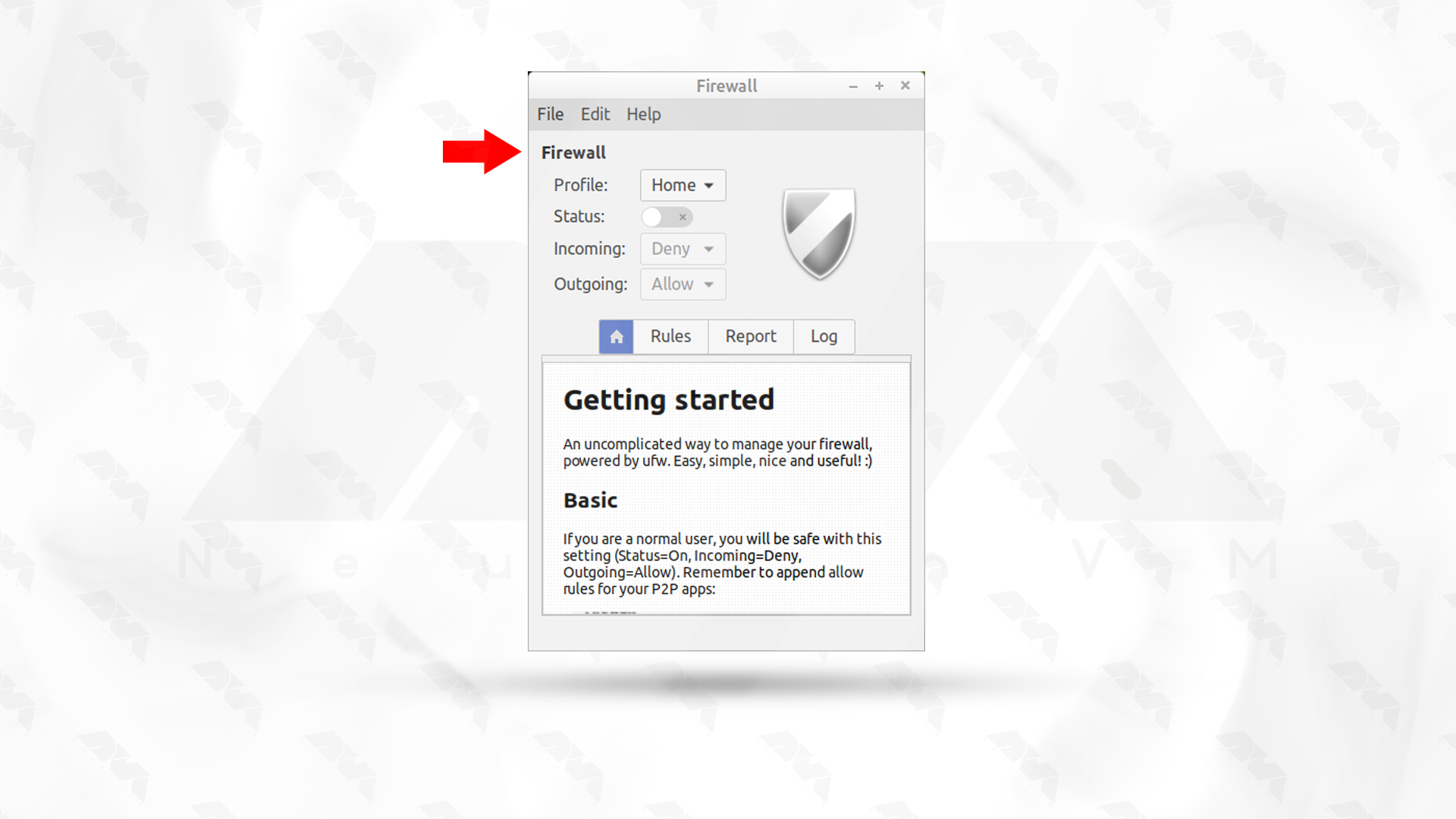
    software firewalls

    Advantages of Software Firewalls

    – Cost-effectiveness: Software firewalls are generally more affordable, as they can installed on existing devices without the need for dedicated hardware.

    – Flexibility and Customization: Software firewalls allow users to configure security settings based on individual needs, providing a higher degree of customization.
    – Mobility: Software firewalls can protect devices on the go, making them suitable for remote workers or individuals operating outside a typical network environment.

    If you intend to set up a software firewall on a dedicated server, we suggest you read How to Setup a Firewall on a Dedicated Server.

    Disadvantages of Software Firewalls

    – Performance Impact: As software firewalls operate on the device itself, they can potentially consume system resources and impact overall performance, especially on older or low-powered devices.

    – Device-Specific Protection: Software firewalls primarily safeguard the device they are installing on, leaving the network susceptible to threats from other devices.

    – Managing Multiple Instances: Organizations with numerous devices require manual installation and monitoring of software firewalls on each device, resulting in more administrative effort.

    Comparison of Hardware and Software Firewalls

    Here is a comparison between hardware and software firewalls:

    AspectHardware FirewallSoftware Firewall
    InstallationInstalled as a physical device or integrated into network devicesInstalled on individual computers or servers
    PerformanceHigher performance and throughput due to dedicated hardware resourcesMay consume system resources and impact overall performance
    ScalabilityCan handle a higher number of simultaneous connectionsSuitable for smaller networks or individual computers
    ConfigurationConfiguration through a web-based interface or command line interfaceConfiguration through a graphical user interface
    CostHigher upfront cost due to dedicated hardwareGenerally lower cost as it does not require dedicated hardware
    MaintenanceMinimal maintenance requiredSoftware updates and maintenance required
    SecurityOffers strong network-wide protectionProtects individual computers or servers
    Network CoverageProtects the entire networkLimited to protecting individual devices
    Hardware Firewalls vs. Software Firewalls

    Conclusion

    Choosing between hardware and software firewalls depends on the specific needs and resources of an organization. Hardware firewalls provide robust security, centralized management, and better performance at the cost of initial investment. Software firewalls offer greater flexibility, customization, and cost-effectiveness, but may burden individual devices and require manual management. It is crucial to carefully weigh the advantages and disadvantages outlined in this guide while considering factors such as budget, network architecture, and scalability requirements to make an informed decision about the most suitable firewall solution for an organization’s cybersecurity needs.

  • A Clever Guide to Installing MySQL Shell on Kali Linux

    A Clever Guide to Installing MySQL Shell on Kali Linux

    MySQL Shell is a powerful command-line tool that provides advanced functionality for managing and interacting with MySQL databases. It is essential for individuals working with MySQL databases to have it installed on their systems. The features of Kali Linux are very wide and varied. In this comprehensive guide, we will walk you through the process of installing MySQL Shell on Kali Linux.

    Requirements

    – Internet Connection: A stable internet connection is necessary to download and install MySQL Shell.

    – Root Access: You need root or superuser privileges to install packages on Kali Linux. Make sure you have the necessary permissions.

    We recommend you use the various Linux VPS server plans, with high quality and a wide variety of locations, which are presented on our website.

    installing mysql shell on kali linux

    Step.1: Update Your System

    Before installing any new packages, it is recommended to update your system to ensure you have the latest software packages. Open the terminal in Kali Linux and run the following command:

    sudo apt update
    sudo apt upgrade -y

    This command will update your system and upgrade any outdated packages.

    Step.2: Install MySQL Shell on Kali Linux

    To install MySQL Shell, you need to add the MySQL APT repository to your system. Run the following command to download and install the repository:

    wget https://dev.mysql.com/get/mysql-apt-config_0.10.4-1_all.deb

    Once the download is complete, use the dpkg command to install the repository:

    sudo dpkg -i mysql-apt-config_0.10.4-1_all.deb

    Note: During the installation, you will be asked to choose the version of MySQL to install. Please choose the version that meets your needs.

    Next, update the package repository:

    sudo apt update

    Finally, install MySQL Shell:

    sudo apt install mysql-shell

    Step.3: Verify the Installation

    To verify that MySQL Shell has been successfully installed, open the terminal and run the following command:

    mysqlsh --version

    If the installation was successful, you will see the version number of MySQL Shell displayed on the screen.

    Step.4: Configure MySQL Shell on Kali Linux

    After installing MySQL Shell, you may need to configure it to connect to your MySQL server. Just use the following command:

    mysqlsh

    This will start the MySQL Shell. Please follow the prompts to establish a fresh connection. Provide the hostname, port number, username, and password of your MySQL server when prompted.

    Conclusion

    Installing MySQL Shell on Kali Linux is a straightforward process that involves adding the MySQL APT repository and installing the package through the package manager. By following this comprehensive guide, you should now have MySQL Shell up and running on your Kali Linux system. MySQL Shell provides a powerful command-line interface for managing MySQL databases, allowing you to perform advanced tasks efficiently.

  • A Foolproof Guide to Easily Install Ubuntu on a USB Drive

    A Foolproof Guide to Easily Install Ubuntu on a USB Drive

    Installing Ubuntu on a USB drive allows you to have a portable and independent operating system that can be run on any computer. It provides flexibility and convenience, making it a useful tool for troubleshooting, testing, or simply having your own customized system. This article will take you through the step-by-step how to install Ubuntu on a USB drive.

    We suggest you, fans of the popular Ubuntu operating system, use the various and attractive plans on our website if you want to use a Linux VPS server.

    Prerequisites:

    – A USB drive with a capacity of 8GB or more.

    – The Ubuntu ISO file.

    Rufus, a free and open-source tool for creating bootable USB drives.

    Download the Ubuntu ISO file

    Visit the official Ubuntu website and navigate to the “Download” section.

    Choose the version of Ubuntu you wish to install and download the corresponding ISO file:

    download ubuntu iso file

    Prepare the USB Drive to Install Ubuntu

    – Connect the USB drive to your computer and ensure that it is recognized.

    – Launch Rufus and select the USB drive from the “Device” dropdown menu.

    – Under “Boot selection” click on the “Select” button and browse to the location where you downloaded the Ubuntu ISO file.

    – Click on “Start” to begin creating the bootable USB drive. Rufus will format the USB drive and copy all the necessary files.

    rufus usb drive to install ubuntu

    Boot from the USB drive

    Restart your computer and enter the BIOS or UEFI settings by pressing the designated key (e.g., F2, Del, F12) during startup.

    – In the BIOS/UEFI settings, go to the “Boot” or “Startup” section and set the USB drive as the primary boot device. Save the changes and exit.

    – The computer will now reboot and boot from the USB drive.

    Install Ubuntu on a USB Drive

    The Ubuntu installation wizard will open. Select your preferred language and click on “Install Ubuntu“:

    ubuntu language

    Follow the on-screen instructions to set your keyboard layout and other preferences:

    ubuntu keyboard layout

    As you can see in the picture below, depending on the storage capacity of the USB flash drive, you may want to choose “Normal installation” or “Minimal installation“. After choosing one of these options, click on continue:

    ubuntu updates and other softwares

    If you see the following message, click “No” and continue the installation:

    install ubuntu on a usb drive

    When prompted to choose the installation type, select “Something else” for advanced partitioning options.

    Select the USB drive from the list of available drives and click on the “+” button to create a new partition.

    Allocate the desired amount of disk space for the Ubuntu installation. It is recommending to have a root partition (“/“) and a swap partition:

    partitioning ubuntu drive

    Select the newly created partition as the installation location and then click on “Install Now“:

    ubuntu installation type on a usb drive

    Once you see the following message, click Continue to continue installing Ubuntu:

    ubuntu installation on a usb flash drive

    In the next section, you must choose your time zone and click on continue:

    select time zone in installing ubuntu

    Note: Follow the remaining on-screen instructions to set up your username, password, and other system settings.

    You have to wait a few minutes for Ubuntu to finish installing on a USB drive.

    ubuntu on flash drive

    Finally, click on Restart Now:

    restart after installation ubuntu

    Congratulations! You have successfully installed Ubuntu on a USB Drive.

    Conclusion

    By following this guide, you have successfully installed Ubuntu on a USB drive. You now have a portable operating system that can be booted on any computer. Remember to keep your USB drive safe and take advantage of Ubuntu’s features, flexibility, and customization options in your portable setup.

  • A Clever Guide on Generating SSH Keys Like a Pro

    A Clever Guide on Generating SSH Keys Like a Pro

    SSH key (Secure Shell) is a type of access credential using in SSH protocol. SSH protocol is essential in Infrastructure as a Service (IaaS) platforms. They are using to authenticate and establish a secure connection between a client and a server. This article will provide a comprehensive guide on generating SSH keys, which are essential for secure SSH connections.

    If you need to buy a Windows VPS server or a Linux VPS server, you can use the plans provided with high quality and immediate delivery on our website.

    Understanding SSH Keys

    SSH keys are cryptographic keys that consist of a private key and a public key. The private key should be kept secure and never shared, while the public key can be freely distributed. The private key is used for authentication, while the public key is used for encryption.

    How to Generate the SSH Keys on Linux

    First, open the terminal on your Linux system. This can usually be done by searching for “Terminal” in the applications menu or by pressing Ctrl+Alt+T.

    – You can run the following command to generate the SSH key pair:

    ssh-keygen -t rsa -b 4096

    This command generates a 4096-bit RSA key pair, a commonly used encryption algorithm. You may choose a different key type or bit length according to your requirements.

    – Once you press Enter, the terminal will prompt you to select the file location to save the SSH key pair. Press Enter to save it in the default location (~/.ssh/id_rsa), or specify a custom path if desired.

    – You will be prompted to set a passphrase for the SSH key. While not mandatory, setting a passphrase adds an extra layer of security to the key. Type your desired passphrase and press Enter. Note that the passphrase will not be visible as you type.

    – The terminal will display information about the newly generated SSH key pair, including the key fingerprint and location. The public key file will have a .pub extension. Your SSH keys are now ready for use.

    How to Generate the SSH Keys on Windows

    Start by downloading PuTTY and follow the installation instructions provided. Ensure that you download both PuTTYgen and PuTTY tools.

    Open PuTTYgen from the installed PuTTY folder or from the Start menu. PuTTYgen provides a graphical interface to generate SSH key pairs on Windows:

    putty key generator

    Please select the default key type as SSH-2 RSA, which is the latest version of the SSH protocol and incompatible with SSH-1. RSA and DSA are two algorithms utilized for computing digital signatures:

    ssh2rsa

    Specify the bit length (e.g., 2048, 4096, etc.) for the key pair generation:

    number of bits in generated ssh keys

    Click “Generate” to generating the key pair:

    generating_key

    ***

    generated public key

    In the next section, you can save or create a generated key comment:

    key_comment

    Once the key pair is generated, enter a passphrase if desired, then click on “Save private key” to save the private key in a secure location.

    ssh private key passphrase

    ***

    save private key _as_ppk

    The interesting point is that you can also save the key in OpenSSH format. To do this, just select Export SSH key from the Conversions menu:

    export_as_openssh

    ***

    save_as_openssh - Generating SSH keys

    The next step is to generate a public key to pair with the private key. You can easily do this by clicking the save public key button.

    Copy the contents of the public key completely as shown in the following image:

    select_pub_key_chars - Generating SSH keys

    ***

    pasted_public_key - Generating SSH keys

    Finally, save the generated key. We recommend that the format .pub. Use to store a public key:

    save_pasted_pub_key_as_pub - Generating SSH keys

    Conclusion

    Generating SSH keys is a crucial step in establishing secure connections and managing remote access to servers on both Linux and Windows systems. This comprehensive guide has provided step-by-step instructions for generating SSH keys on Linux using the terminal and on Windows using PuTTY. By following these instructions, you can ensure a more secure and efficient way to manage your systems, thus enhancing the overall security of your network. Remember to protect your private key and passphrase, and regularly update your SSH keys for added security.

  • A Clever Guide to Installing SteamCMD on your VPS

    A Clever Guide to Installing SteamCMD on your VPS

    SteamCMD is a command-line tool developed by Valve. This tool is used to download, update, and manage dedicated servers for various games available on the Steam platform. By installing SteamCMD on your VPS, you can easily set up and maintain dedicated game servers for your favorite multiplayer games. This article will take you through the step-by-step process of installing SteamCMD on your VPS. If you are planning to buy VPS, we have an attractive offer for you. You can visit our website to see the various VPS server plans that are offered in various locations and after choosing the plan you want, buy and enjoy it.

    Step 1: Connecting to Your VPS

    Before proceeding with the installation, make sure you have SSH (Secure Shell) access to your VPS. You can use an SSH client like PuTTY (for Windows) or OpenSSH (for Linux) to establish a secure connection to your VPS:

    login to vps using putty - installing SteamCMD on your VPS

    Step 2: Updating System Packages on VPS

    Once connected to your VPS, it is essential to update the system packages to ensure you have the latest versions installed. Run the following commands to update the packages on your VPS:

    For Ubuntu/Debian-based systems:

    sudo apt update
    sudo apt upgrade

    For CentOS/RHEL-based systems:

    sudo yum update
    sudo yum upgrade

    Step 3: Installing Required Dependencies

    SteamCMD requires a few dependencies to be installed on your VPS before its installation. Use the appropriate commands for your system:

    Ubuntu/Debian-based systems:

    sudo apt install lib32gcc1 lib32stdc++6 libtcmalloc-minimal4

    CentOS/RHEL-based systems:

    sudo yum install glibc libstdc++ glibc.i686 libstdc++.i686 libcurl

    Step 4: Downloading and Installing SteamCMD

    Now, let’s proceed with the installation of SteamCMD on your VPS. Follow the steps below:

    – Create a new directory where you want to install SteamCMD. For example:

    mkdir steamcmd
    cd steamcmd

    – Download the SteamCMD installation package using the following command:

    wget https://steamcdn-a.akamaihd.net/client/installer/steamcmd_linux.tar.gz

    – Extract the downloaded package using the following command:

    tar -xvzf steamcmd_linux.tar.gz

    – Run SteamCMD for the first time. This step will download and install additional necessary files:

    ./steamcmd.sh

    Troubleshooting Issues about Installing SteamCMD

    1) Verify prerequisites: SteamCMD requires certain dependencies to be installed on your VPS. Make sure you have the required packages, such as lib32gcc1, libc6, lib32stdc++6, lib32z1, and lib32z1-dev installed. You can install them using the package manager specific to your server’s operating system.

    2) Check SteamCMD documentation and forums: SteamCMD has an official wiki and a community forum that can be valuable resources for troubleshooting. Search for the error message you encountered to see if it has been discussed before. Browse through the documentation to ensure you are following the correct installation steps.

    3) Try alternative installation methods: If the error persists, consider using alternative methods to install SteamCMD. For example, you can try downloading the SteamCMD package manually from the official website and manually installing it on your VPS.

    Conclusion

    By following this guide, you have successfully installed SteamCMD on your VPS. You can now use SteamCMD to easily download, update, and manage dedicated game servers for a wide range of multiplayer games available on the Steam platform. Enjoy hosting your own game servers with SteamCMD!

  • How to Connect to Mikrotik Router

    How to Connect to Mikrotik Router

    If you’re unfamiliar with networking and router configurations, connecting to the Mikrotik router can be intimidating. However, this step-by-step guide will walk you through the process to ensure a successful connection. Following these instructions, you can easily access and configure your router settings.

    Requirements

    Before you connect to Mikrotik router, make sure you have the following equipment ready:

    1) A computer or laptop with an Ethernet port

    2) An Ethernet cable for a wired connection to the router

    If you want to buy a Mikrotik VPS server, we suggest you test and use the plans provided on our website, which are delivered immediately.

    Step 1: Physical connection

    To start, plug one end of the Ethernet cable into your computer’s Ethernet port and the other end into any available Ethernet port on the Mikrotik router.

    Step 2: Configure IP settings

    To establish communication between your computer and the Mikrotik router, follow these steps to configure the IP settings:

    For Windows users

    1) Open the Control Panel and go to “Network and Sharing Center.”

    Network and Sharing Center

    2) Now, you should click on “Change adapter settings“.

    Change adapter settings

    3) Right-click on the Ethernet adapter connected to the Mikrotik router and select “Properties.”

    Ethernet adapter connected to the MikroTik router

    4) Highlight “Internet Protocol Version 4 (TCP/IPv4)” from the list and click on “Properties.”

    Internet Protocol Version 4 (TCP-IPv4)

    5) Select “Use the following IP address” and enter the following details:

    – IP address: 192.168.88.2 (choose any IP address within the 192.168.88.x range)

    – Subnet mask: 255.255.255.0

    – Leave the rest of the fields empty and click “OK” to save the changes.

    how to connect to mikrotik router

    For MacOS users

    1) Click on the Apple logo at the top-left corner and choose “System Preferences.”

    2) Select “Network.”

    3) Choose the Ethernet adapter connected to the Mikrotik router from the sidebar.

    4) Click on the “Advanced” button at the bottom-right corner.

    5) Go to the “TCP/IP” tab.

    6) Select “Manually” from the “Configure IPv4” dropdown menu.

    7) Enter the following details:

    – IP address: 192.168.88.2 (choose any IP address within the 192.168.88.x range)

    – Subnet mask: 255.255.255.0

    8) Click “OK” to save the changes.

    Step 3: Access the Mikrotik router’s web interface

    With the physical and IP settings in place, you can now connect to the Mikrotik router using its web interface. Here’s what you should do:

    Open your favorite web browser (e.g., Google Chrome, Mozilla Firefox, Microsoft Edge).

    Enter “192.168.88.1” (the default IP address of Mikrotik routers) in the address bar and press Enter.

    You will be directed to the Mikrotik router’s login page:

    Step 4: Log in to the router

    To access and configure the router settings, log in using the following default credentials:

    - Username: admin
    - Password: admin
    mikrotik router login page

    If you have previously changed these credentials, enter the updated login details.

    mikrotik roter dashboard

    Conclusion

    While connecting to a Mikrotik router may appear complex at first, this comprehensive guide will help you establish a connection and access the router’s web interface with ease. Remember the necessary steps: obtaining the required equipment, making the physical connection, configuring IP settings, accessing the web interface, and finally logging in with the correct credentials. With these instructions, you can confidently connect and manage your Mikrotik router.

  • A Clever Guide on Install Mikrotik on a VPS

    A Clever Guide on Install Mikrotik on a VPS

    Mikrotik is a powerful and versatile operating system that can be installed on various hardware platforms, including a Linux-based VPS. In this guide, we will provide a step-by-step tutorial on how to install Mikrotik on a Linux VPS. By following these instructions, you will be able to leverage the full potential of the Mikrotik software suite for networking and administration.

    First method: Installing Mikrotik on Linux VPS

    The first method to install Mikrotik involves setting up the Mikrotik RouterOS on a VPS running Linux. In the following, we will teach you this method.

    Step 1: Connect to the VPS

    Once you have rented a Linux VPS, you will need to connect to it.

    Use an SSH client like PuTTY (for Windows) or the Terminal (for Linux/Mac). Enter the IP address of your VPS, along with the provided username and password, to establish an SSH connection:

    login to vps using putty

    Step 2: Update System Packages

    Before proceeding with the installation, it is essential to update the system packages to ensure that you have the latest software versions. Run the following commands:

    sudo apt update
    sudo apt upgrade

    Step 3: Find the Storage Name

    You may need to know some parameters about your server. One of these parameters is the storage name. You can find and see the storage name by executing the below command:

    lsblk | grep disk | cut -d ' ' -f 1 | head -n 1

    Step 4: Find the Ethernet Name

    You can also see the ethernet name by running the following command:

    ip route show default | sed -n 's/.* dev \([^\ ]*\) .*/\1/p'

    Step 5: Find the IP Address Name

    To view the IP address, run the following command:

    ip addr show $ETH | grep global | cut -d' ' -f 6 | head -n 1

    Step 6: Find the Gateway Name

    To view the Gateway name, run the following command:

    ip route list | grep default | cut -d' ' -f 3

    Step 7: Installing Mikrotik on a VPS

    Finally, you can easily install Mikrotik on your server using the following command. Note that in this command we will install version 7.10.2. Therefore, if you wish, you can replace the latest version of Mikrotik in the following command:

    bash -c "$(curl -L https://raw.githubusercontent.com/azadrahorg/Install-MikroTik-CHR-on-VPS/main/mik78.sh)"

    Step 8: Access the Mikrotik Web Interface

    Once the VPS has restarted, you can access the Mikrotik Web Interface by opening a web browser and entering the IP address of your VPS. Alternatively, you can use the Winbox utility provided by Mikrotik for a more advanced configuration.

    On the login page, you can enter admin:

    admin

    Be careful to only press Enter when prompted for a password.

    Now you can easily change your password because RouterOS prompts you to request a password change.

    Second method: Buy Mikrotik VPS from NeuronVM

    Open the NeuronVM Mikrotik VPS page. Choose your desired plan and click on “Purchase Now“:

    mikrotik vps plans

    In the next section, fill in the available fields with the required information. These fields are Billing cycle, Hostname, Root password, NS prefixes, and location. Then click on Continue:

    setup mikrotik on vps

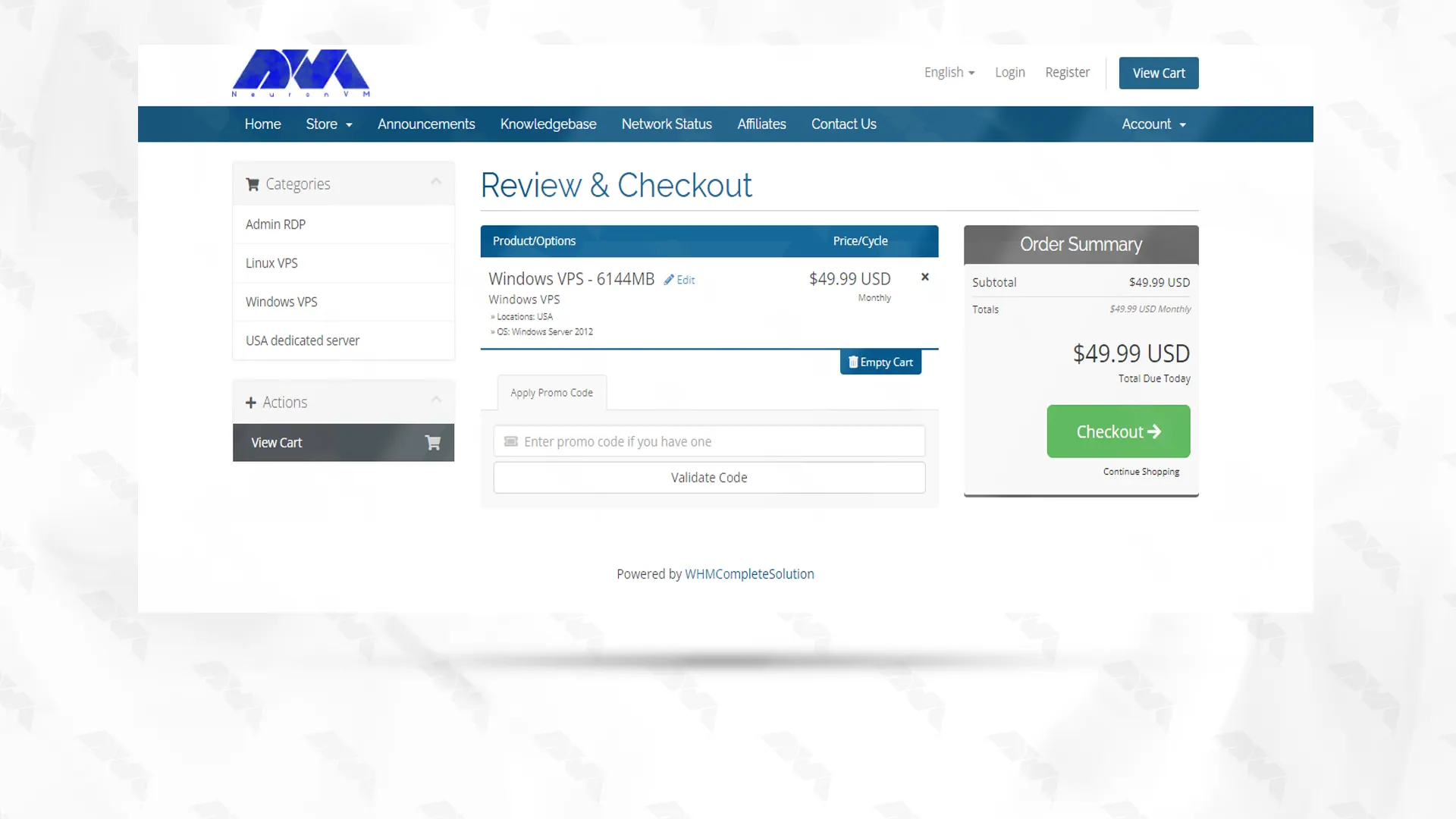
    Do you have a discount code? If yes, enter it and click on Validate Code to apply. Click on Checkout to continue shopping:

    how to install mikrotik on a vps

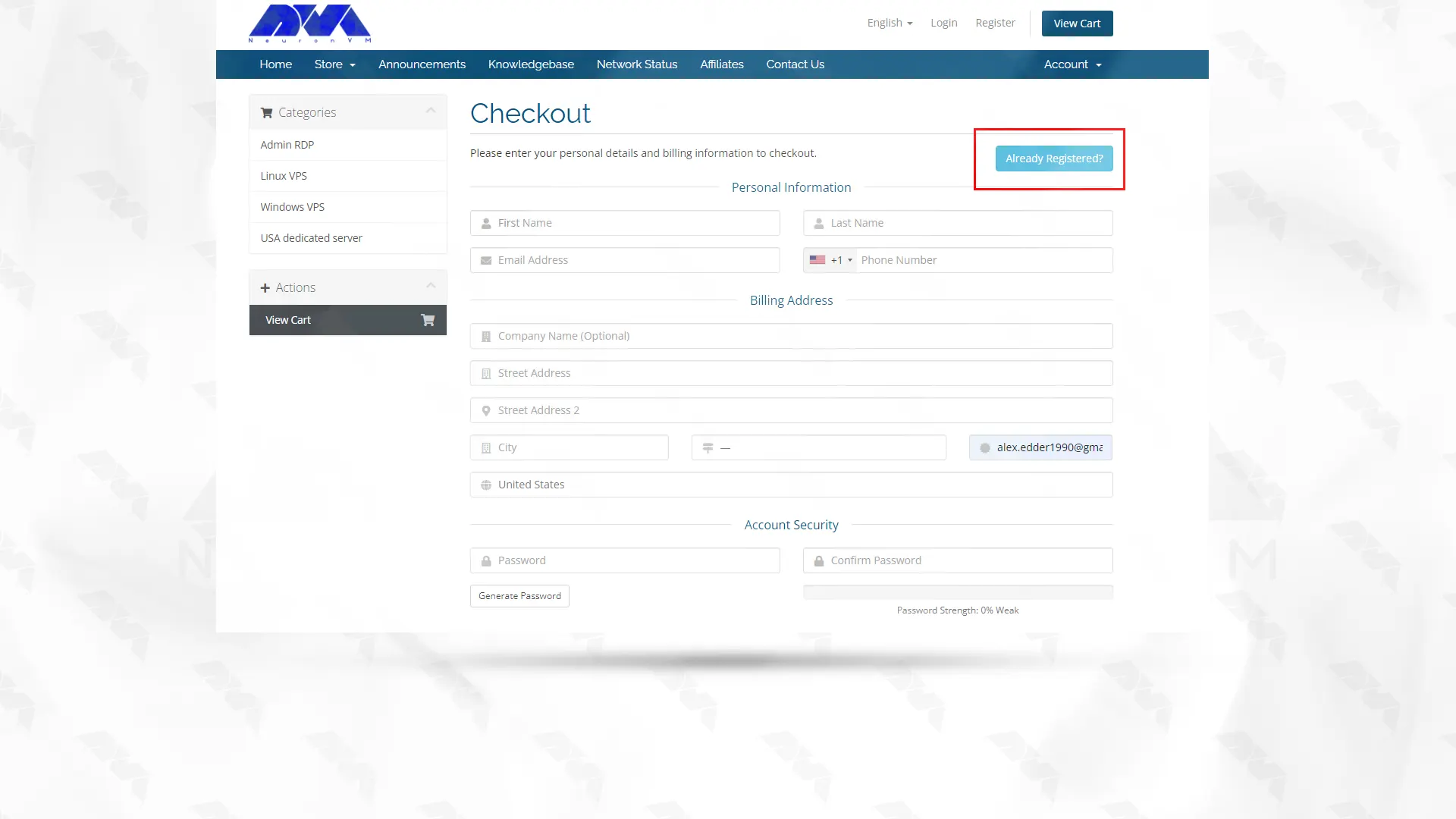
    Have you registered on the site? If not, enter the required information in the requested fields and register. If you are already registered, click on Already Registered and enter your account:

    register in neuronvm website

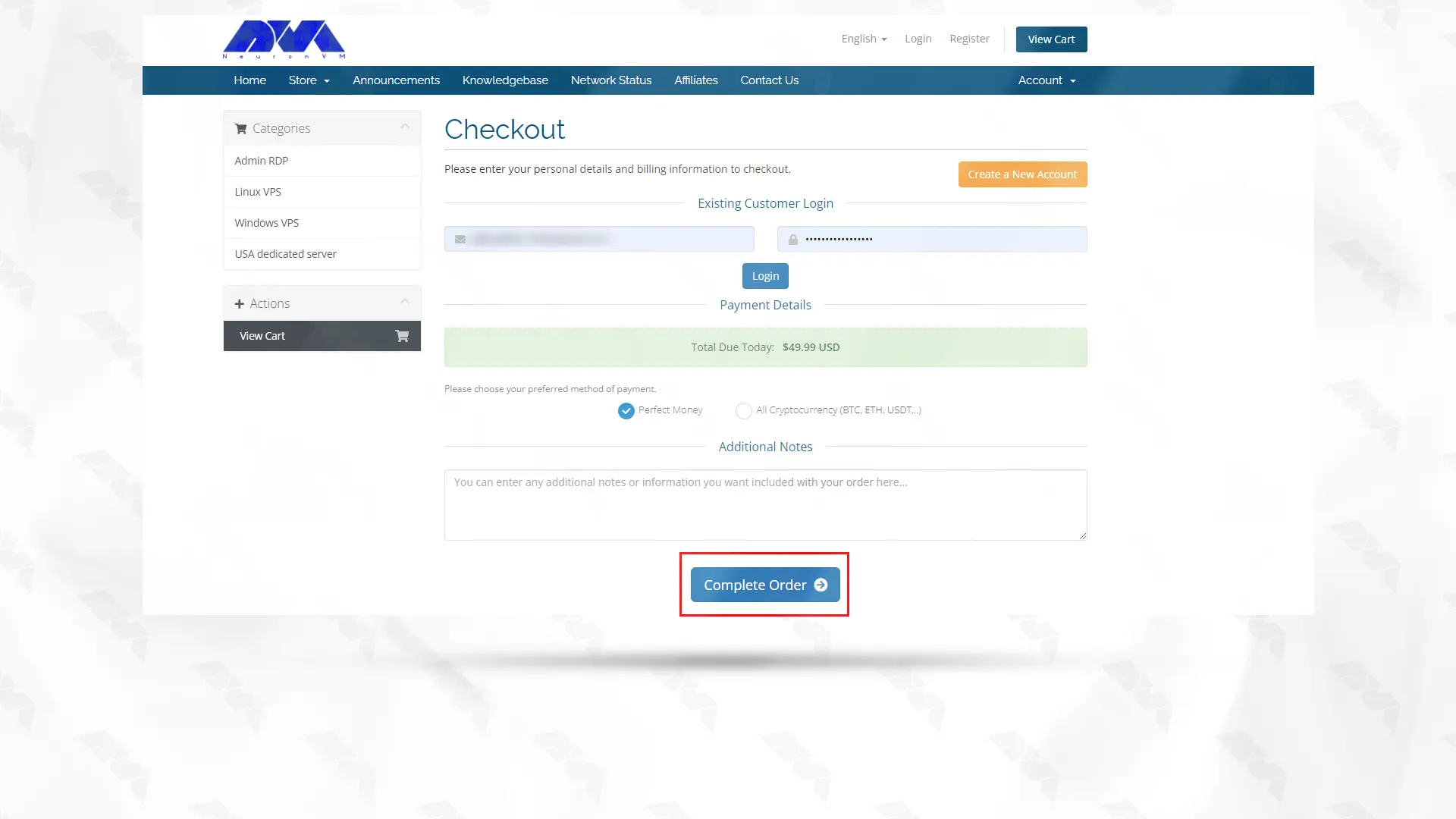
    In this step, you can choose your preferred payment method. After that click on Complete Order:

    login to neuronvm website to buy mikrotik vps

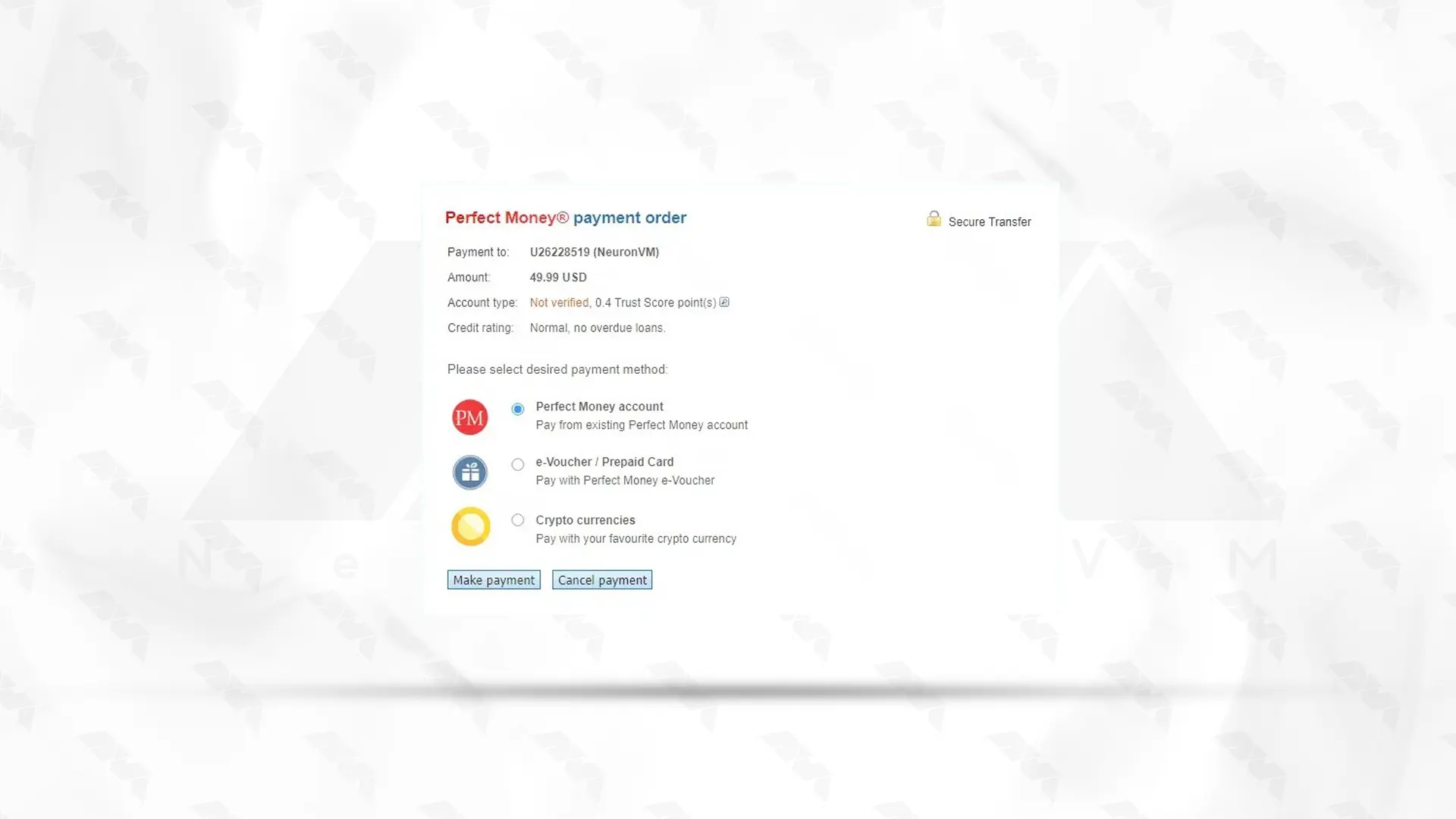
    Click on Make Payment and enter your card information to complete the purchase. Your server information will be sent to your email address as soon as possible.

    buy mikrotik vps with perfect money

    ***

    buy mikrotik vps with perfect money

    Conclusion

    Setting up Mikrotik on a VPS is a convenient solution for network management. By purchasing a Mikrotik VPS from the reliable NeuronVM website, one can easily deploy and utilize the powerful features of Mikrotik RouterOS. This enables efficient control and administration of networks, ensuring enhanced performance and security.

  • A Clever Guide to cPanel to cPanel Migration

    A Clever Guide to cPanel to cPanel Migration

    A cPanel to cPanel migration refers to the process of moving all data, settings, and configurations from one cPanel account to another. This is often done when you want to transfer your website from one hosting provider to another or when you need to create a backup of your existing cPanel account. Migrating your cPanel account ensures a seamless transition without any data loss or downtime. In this article, we will provide a comprehensive step-by-step guide on how to perform a cPanel to cPanel migration.

    You can confidently launch your website on Linux VPS servers that are offered on our website with various plans.

    Requirements

    To perform a successful cPanel to cPanel migration, you will need the following requirements:

    – Access to both the source and destination cPanel accounts

    – Sufficient disk space on the destination server

    – Stable internet connection

    – WHM (Web Host Manager) access

    – Backup of the source cPanel account

    – Compatible cPanel versions

    – Permission to access firewall settings

    Step.1: Backup Your Source cPanel Account

    – Log in to your source cPanel account:

    login to cpanel

    – Navigate to the “Backup” or “Backup Wizard” section within cPanel:

    backup cpanel account

    – Click on “Download a Full Website Backup” to create a full backup of your account, including the home directory, databases, email forwarders, and filters:

    download full backup cpanel

    *

    generate-a-cpanel-full-backup

    – Save the backup file to a safe location, either on your computer or in cloud storage by clicking on “Generate Backup“:

    download-cpanel-backup-file

    Step.2: Create a Destination cPanel Account

    – Sign up with the new hosting provider or create a new cPanel account with your existing provider for the destination website.

    – Make note of the destination cPanel login details.

    Step.3: Upload and Restore the Backup

    – Login to the destination cPanel account.

    – Navigate to the “Backup” section.

    – Click on “Restore a Full Backup/cpmove File” to restore a backup and upload the backup file you created earlier.

    – Please complete the restoration process by following the instructions displayed on the screen:

    how-ro-restore-cpanel-acount-cpanel-to-cpanel-migration

    Note: Wait until the restoration process finishes, which may take some time depending on the size of your backup file.

    Step.4: Update DNS Settings

    Once the restoration is complete, you need to update your domain’s DNS settings to point to the new server.

    1- Log in to your domain registrar or DNS provider.

    2- Locate the DNS settings for your domain and update the nameservers to those provided by the new hosting provider.

    3- Save the changes and allow some time for the DNS propagation to take effect (usually 24-48 hours).

    Step.5: Test the New Website

    1. After the DNS propagation, access your website using the domain name or the new server’s IP address.

    2. Make sure all the pages, functionalities, and configurations are working correctly.

    3. Test email accounts, forms, databases, and any other features associated with your website.

    Step.6: Update any Additional Configurations

    – If you are using any website-specific configurations or plugins, ensure they are properly configured on the new server.

    – Update any relevant paths, URLs, or settings in your website’s configuration files or database to match the new server structure.

    Conclusion

    Migrating from one cPanel account to another involves creating a backup of the source cPanel account, creating a destination cPanel account, restoring the backup to the new server, updating DNS settings, testing the new website, and updating any additional configurations. By following these steps, you can successfully migrate your website without any data loss or downtime. Remember to take regular backups and ensure proper testing to ensure a smooth transition.

  • How to Install Kubernetes on Ubuntu 22.04

    How to Install Kubernetes on Ubuntu 22.04

    Kubernetes is a cutting-edge open-source platform for orchestrating containers. It effectively streamlines the deployment, scaling, and management of containerized applications. It allows you to efficiently manage and run applications across multiple hosts, making deploying and scaling applications in a distributed system easier. This guide will walk you through the steps to install Kubernetes on Ubuntu 22.04.

    Prerequisites

    Before you install Kubernetes on Ubuntu, ensure that your system meets the following requirements:

    – A Linux VPS with Ubuntu 22.04 Operating system

    – A minimum of 2 CPU cores

    – 2GB of RAM

    – A stable internet connection

    install kubernetes on ubuntu 22.04

    Step 1: Update System Packages

    To ensure that your Ubuntu system is up-to-date, please execute the following command in your terminal:

    sudo apt update
    sudo apt upgrade

    Step 2: Disable Swap

    Kubernetes requires that swap be disabled on your system. You can disable the swap temporarily by running the following command:

    sudo swapoff -a

    Step 3: Install Docker

    Kubernetes relies on Docker for container runtime. Install Docker with the below command:

    sudo apt install docker.io

    Then, you should start the Docker using the following command:

    sudo systemctl start docker

    Finally, enable Docker by running the following command:

    sudo systemctl enable docker

    Step 4: Install Kubernetes Components

    To install Kubernetes components, execute the following commands:

    sudo apt install curl
    sudo apt install apt-transport-https

    You should add a Kubernetes Signing Key using the following command:

    curl -s https://packages.cloud.google.com/apt/doc/apt-key.gpg | sudo apt-key add -

    You can also add Kubernetes Repository with the help of the following command:

    sudo apt-add-repository "deb http://apt.kubernetes.io/ kubernetes-xenial main"

    Update the system packages again by running the following command:

    sudo apt update

    Finally, you can install Kubernetes using the following commands:

    sudo apt install kubectl
    sudo apt install kubelet
    sudo apt install kubeadm

    Step 5: Initialize Kubernetes Master Node

    On the master node, initialize Kubernetes by running the following command:

    sudo kubeadm init

    Make a note of the provided kubeadm join command, as you will need it later to join worker nodes to the cluster.

    Step 6: Configure Kubernetes for Non-Root User

    To use kubectl as a non-root user, execute the following commands:

    mkdir -p $HOME/.kube
    sudo cp -i /etc/kubernetes/admin.conf $HOME/.kube/config
    sudo chown $(id -u):$(id -g) $HOME/.kube/config

    Step 7: Join Worker Nodes

    On each worker node, join the cluster by executing the kubeadm join command noted in Step 5:

    sudo kubeadm join : --token --discovery-token-ca-cert-hash

    Step 8: Verify Cluster Status

    To verify the cluster status, run the following command on the master node:

    kubectl get nodes

    You should see all the worker nodes listed as ready.

    Troubleshooting

    1) Compatibility issues: Ensure that the version of Kubernetes you are trying to install is compatible with Ubuntu 22.04. Check the Kubernetes documentation for the supported versions.

    2) Dependencies: Kubernetes has dependencies on various components, such as Docker and kubelet. Make sure you have the correct versions of these components installed and properly configured.

    3) Networking issues: Kubernetes relies on networking for communication between its various components. Verify that your network setup is properly configured, including any firewall rules or network policies that may be blocking communication.

    Conclusion

    Congratulations! Kubernetes has been installed successfully on Ubuntu 22.04. You now have a fully functional Kubernetes cluster that can be used to deploy and manage containerized applications. Feel free to explore further Kubernetes features and start deploying your applications on the cluster.