Category: Infographic

  • Top 10 Programming Languages 2023 [Infographic]

    Top 10 Programming Languages 2023 [Infographic]

    In the year and times we live in, programming languages play a crucial role in shaping the digital landscape. The top 10 programming languages are constantly evolving, driven by their popularity and demand. These languages possess unique features, extensive libraries, and offer robust frameworks, making them the go-to choices for developers worldwide. Here we will help you explore the top 10 programming languages in 2023 with an eye-catching infographic provided for you by our specialists.

    Before that, let’s take a quick look on what really impact a programming language be so popular and useful like the ones that are on our list.

    An Overview of What’s Impacting Top 10 Programming Languages 2023

    One key factor contributing to the popularity of these top 10 programming languages is their versatility and applicability across a broad range of domains. Languages like Python, JavaScript, and Java rank high due to their widespread adoption and extensive community support, enabling developers to build various applications across web development, data analysis, artificial intelligence, and more. This popularity leads to a larger talent pool, extensive online resources, and a vibrant ecosystem of libraries and frameworks.

    When examining the difficulty level of these languages, some are generally considered easier for beginners to grasp. Python, known for its simple syntax and readability, is often labeled as a beginner-friendly language. However, more complex languages like C++ and Rust offer unparalleled performance and control, attracting experienced developers seeking intricate functionalities.

    The choice of programming language also influences developers’ income. Languages such as JavaScript, Python, and Java often pay well due to their wide-ranging applications and high-demand skillsets. However, niche languages like Go may offer competitive salaries due to their scarcity and specialization in certain domains. The complexity, demand, and rarity of these languages often contribute to higher income opportunities.

    Additionally, the timeline for becoming proficient in a programming language varies for each individual. The availability of learning resources, community support, and personal dedication greatly influence the time required to master a language. Some may opt for languages with quicker learning curves, like Python or JavaScript, allowing for faster development and shorter project timelines. On the other hand, more complex languages like C may require a longer investment in learning but can provide superior performance and optimization capabilities.

    In conclusion, the top 10 programming languages owe their popularity to their versatility, vast community support, and extensive libraries. The choice of language also impacts income, influenced by demand and rarity. Lastly, the timeline for proficiency varies based on the language’s learning curve and personal dedication. Remaining up-to-date with the ever-evolving landscape of programming languages is essential for developers to stay competitive in the thriving tech industry.

    *Note: Please download the PDF file for the maximum quality.

  • Cloud Computing Structure [Infographic]

    Cloud Computing Structure [Infographic]

    Cloud computing has emerged as a game-changing technology in the field of information technology. It has completely transformed the way businesses manage and deliver services while offering numerous benefits. This post provides a brief overview of this popular concept and its impact on today’s digital landscape.

    In a rapidly evolving digital world, organizations are continuously generating massive amounts of data. Storing, managing, and accessing this data can be challenging and costly with traditional methods. This is where cloud computing comes into play. it refers to the practice of using a network of remote servers hosted on the internet to store, manage, and process data, rather than using a local server or personal computer. It provides users with the ability to access data and applications anytime, anywhere, over the internet.

    About Cloud Computing

    Unleashing the Power of Cloud Computing One of the key advantages of it, is its scalability and flexibility. Traditionally, organizations had to invest heavily in on-premises infrastructure to accommodate peak workloads, leading to idle resources during low-demand periods. With cloud computing, businesses can scale their resources up or down, depending on their needs, and only pay for what they use. This eliminates the need for large upfront investments in hardware and software, making it an attractive option for startups and small businesses.

    Moreover, cloud computing offers increased flexibility in terms of location and device. By leveraging the power of the cloud, employees can access applications and data using any internet-enabled device, facilitating remote work and enhancing collaboration. This flexibility has become particularly crucial in today’s digital age as businesses strive to adapt to remote workforces and changing market dynamics.

    In conclusion, cloud computing has revolutionized the way businesses operate by providing scalable and flexible solutions for data storage, management, and access. With its ability to adapt to dynamic work environments and its cost efficiency, it has become an indispensable tool for organizations of all sizes. As the reliance on this topic grows, businesses need to understand and leverage its potential to stay competitive in the ever-evolving digital landscape.

    In this infographic show, we are going to show you the different layers of cloud computing in just one picture. You can simply share it with your friends and also check our other infographics.

  • Infographic: Types of Cybersecurity Threats

    Infographic: Types of Cybersecurity Threats

    In today’s interconnected world, where technology has become an integral part of our daily lives, the need for robust cybersecurity measures has become paramount. Cybersecurity threats pose significant risks to individuals, businesses, and even nations. These threats encompass a wide range of malicious activities that target computer systems, networks, and sensitive data. This article explores the various types of cybersecurity threats and highlights their potential impact on individuals and organizations

    Cybersecurity Threats in One Picture

    Cybersecurity is an intricate and indispensable area within the realm of information technology. It encompasses numerous complex aspects that demand careful analysis and constant learning. The field is continuously evolving as technology advances, giving rise to new challenges and opportunities. Understanding the significance of cybersecurity is vital, as it plays a crucial role in safeguarding sensitive information against potential threats and attacks.

    Considering the vastness of the subject, it is essential to highlight the various types of cybersecurity threats that have the potential to inflict substantial harm on individuals and organizations.

    First and foremost, there are malware attacks. Malware includes viruses, worms, and ransomware. These malicious programs can infiltrate computer systems, corrupt data, or lock valuable files until a ransom is paid. Additionally, there are phishing attempts. Phishing aims to deceive individuals into divulging personal information. This is often done through fraudulent emails or websites, putting individuals at risk of identity theft and financial loss. Other notable threats include DDoS attacks. DDoS stands for Distributed Denial of Service. In these attacks, multiple systems simultaneously overwhelm a target’s server, causing it to shut down. This denies access to legitimate users. Similarly, there is the threat of insider attacks. Insider attacks occur when malicious actors within an organization exploit their privileges. They do this to steal sensitive data or disrupt operations for personal gain.

    By focusing on identifying and understanding these cybersecurity threats, individuals and businesses can take the necessary steps to mitigate risks. Employing robust security measures, staying updated with the latest advancements in technology, and promoting a culture of vigilance and awareness are crucial in defending against potential cyber threats that could have detrimental consequences.

  • Infographic: The Evolution of Web Hosting

    Infographic: The Evolution of Web Hosting

    Web hosting has come a long way since its inception. From the early days of simple HTML websites to the complex cloud-based solutions we have today, the evolution of web hosting has been nothing short of remarkable. In this infographic post, we will delve into the fascinating journey of web hosting. We will explore its various stages and the technological advancements that have shaped its development.

    The Evolution of Web Hosting: A Timeline of Progress

    In the early 1990s, as the popularity of the world wide web soared, the concept of web hosting emerged. At this stage, web hosting was primarily limited to static websites consisting of basic HTML pages. Furthermore, these early hosting solutions were often provided by individuals or small companies, and websites were hosted on dedicated servers.

    As the demand for more dynamic and interactive websites grew, web hosting technologies had to adapt. The late 1990s saw the emergence of server-side scripting languages like PHP and databases like MySQL, enabling the development of dynamic websites. This shift paved the way for shared hosting, where multiple websites could be hosted on a single server. Shared hosting became a popular choice for individuals and small businesses, offering cost-effective solutions.

    The early 2000s witnessed another significant milestone in the evolution of web hosting with the introduction of virtual private servers (VPS). VPS hosting provided users with more control and resources than shared hosting, without the cost of a dedicated server. This allowed for greater scalability and improved performance for websites, catering to the growing demands of businesses and organizations.

    In recent years, cloud hosting has emerged as the latest innovation in web hosting. With the evolution of virtualization and distributed computing, cloud hosting offers unparalleled flexibility, scalability, and reliability. Websites hosted on the cloud can benefit from automatic resource allocation, ensuring optimal performance even during peak traffic periods.

    As we explore the infographic on the evolution of web hosting, we will delve deeper into each stage, highlighting the key advancements and their impact on the industry. Join us on this journey through time and witness the remarkable progress that has shaped the web hosting landscape as we know it today!

  • Infographic: Top Online AI Tools

    Advancements in artificial intelligence (AI) have redefined the way we approach various tasks. With the ever-growing demand for streamlined processes, online AI tools have emerged as game-changers across diverse fields, such as content writing, sales, marketing, design, and coding. These intelligent tools harness the power of AI algorithms to automate repetitive tasks, ultimately increasing productivity and efficiency. In this blog post, we explore how online AI tools are transforming the way we work while enhancing our capabilities.

    The Rise of Online AI Tools: Empowering Efficiency

    Online AI tools have revolutionized the way professionals in various domains carry out their work. Tasks that were once time-consuming and monotonous can now be automated, liberating precious human resources to focus on more creative and critical aspects of their work. These tools utilize AI algorithms to analyze data, recognize patterns, and generate intelligent solutions, enabling professionals to accomplish more in less time.

    The Influence of these tools Across Different Fields:

    1. Content Writing:

    Online AI tools equipped with natural language processing technology can generate engaging content with minimal human intervention. Tools like ChatGPT can assist in crafting compelling articles, blogs, and social media posts, saving writers valuable time in the creation process.

    1. Sales and Marketing:

    AI-powered tools can automate lead generation, customer profiling, and personalized interactions. Through predictive analytics, these tools can identify potential buyers and predict their preferences, allowing sales and marketing teams to focus on high-value prospects.

    1. Design:

    Designers can leverage AI-powered tools to automate repetitive design tasks, such as resizing images, retouching photos, or creating color palettes. This streamlines the design process, freeing up time for more innovative and concept-driven work.

    1. Coding:

    Online AI tools can assist developers by automating code generation, suggesting optimal code snippets, and detecting errors. This acceleration of coding tasks improves the development cycle, leading to enhanced software quality and faster project delivery.

    In conclusion, the increasing prominence of the mentioned tools signifies a paradigm shift in how we approach repetitive tasks. By harnessing the power of AI algorithms, these tools elevate efficiency and productivity in various fields. Empowering professionals to focus on higher-value activities, AI tools are reshaping industries and providing avenues for innovation. Whether it is content creation, sales, marketing, design, or coding, these intelligent tools pave the way for a future where repetitive work is no longer a burden, but an opportunity for growth. Explore the top online AI tools as we unveil their capabilities in our infographic below.

  • Infographic: Top 10 Linux Distributions

    Infographic: Top 10 Linux Distributions

    Linux distributions have gained significant popularity over the years, offering a robust and flexible alternative to traditional operating systems. With a vast range of choices available, selecting the ideal Linux distribution can be quite daunting. This article aims to provide a comprehensive overview of the top 10 Linux distributions, shedding light on their unique features and suitability for various user preferences and purposes.

    Linux Distributions in One Photo

    What you will see below, is a infographic showcase of top distributions from the very beginning. Since Linux is an open-source operating system, there are a lot of official and unofficial distributions of it. Although this 10 distributions are the ones that either have stood the test of time or gathered a significant number of audience in a short time.

    By delving into the history and growth of these distributions, we hope to shed light on their pioneering nature and exceptional qualities that have solidified their status over the years. From the early days of Linux, these distributions have consistently pushed the boundaries, offering a diverse range of tools, features, and customization options that have empowered users to tailor their computing experience to their specific needs and preferences.

    Furthermore, each of these distributions has attracted a dedicated and passionate community. This community-driven aspect has played an instrumental role in their success, fostering continuous development, robust support forums, and a wealth of tutorials and resources available to users worldwide. The widespread adoption and unwavering loyalty these distributions have garnered in a relatively short time span highlight their exceptional quality and appeal.

    It is our belief that this curated infographic will serve as both a celebration of the remarkable Linux ecosystem and a valuable resource for curious users seeking to navigate through the vast array of available distributions. Whether you are an experienced Linux user or just beginning your exploration of this rich operating system, we invite you to dive into this comprehensive showcase and discover the top 10 Linux distributions that have left an indelible mark on the world of open-source technology.

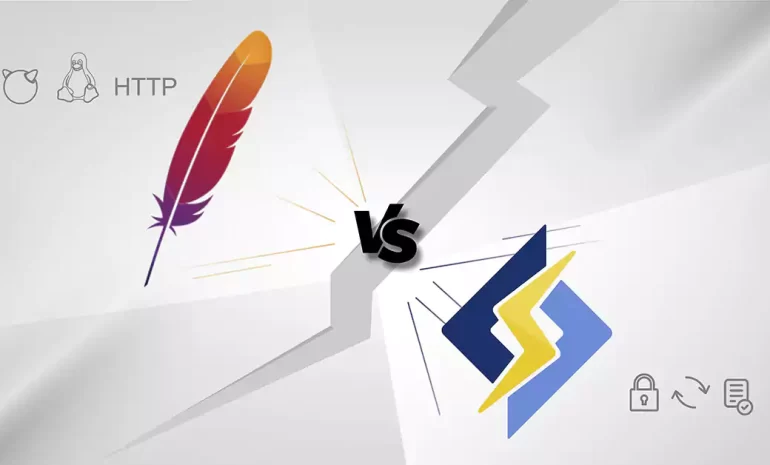
  • Infographic: Apache vs Litespeed

    Infographic: Apache vs Litespeed

    When it comes to web server technology, Apache and Litespeed are two popular options that often make the list. Apache, an open-source web server software, has been the go-to choice for many webmasters for decades. On the other hand, Litespeed, a commercial server software, has gained significant popularity in recent years due to its high performance and efficiency. In this infographic post, we will compare Apache vs Litespeed in terms of their performance, features, and other things to determine which one is the better choice for your website. By examining the strengths and weaknesses of each server, we aim to provide you with valuable insights to make an informed decision in choosing between Apache and Litespeed for your web hosting needs.

    Apache vs Litespeed Overview

    Apache, known for its stability and versatility, has remained a stalwart in the world of web servers since its inception. With a wide range of modules and extensive community support, Apache offers a comprehensive solution for various web hosting requirements. However, as websites become more dynamic and handle heavy traffic loads, Apache’s processing speed can sometimes lag behind, resulting in longer page load times and reduced server performance. This is where Litespeed emerges as a strong contender in the Apache vs Litespeed debate. Litespeed is designed to tackle the performance limitations of Apache, exhibiting significantly faster response times and better scalability. Additionally, Litespeed incorporates advanced caching mechanisms and efficient resource utilization, allowing it to handle larger volumes of concurrent connections and requests with ease.

    In conclusion, the Apache vs Litespeed debate revolves around balancing stability, community support, and cost-effectiveness against superior performance and scalability. While Apache remains the trusted choice for its versatility and extensive plugin ecosystem, Litespeed’s focus on speed and efficiency renders it an appealing alternative, especially for high-traffic websites.

    Remember you can always buy a reliable server from NeuronVM and test the things we discuss in our post in a safe environment.

  • Infographic: Unleashing the Power of Kali Linux Tools

    Infographic: Unleashing the Power of Kali Linux Tools

    Kali Linux, a powerful operating system, has emerged as a game-changer for cybersecurity enthusiasts and professionals worldwide. With its arsenal of awesome tools, Kali Linux empowers users to penetrate systems, conduct ethical hacking, and enhance their security defenses. The vast range of these tools covers everything from network analysis, password cracking, and wireless attacks to digital forensics and vulnerability assessment. These meticulously crafted tools, designed and developed by an expert community, equip users with unparalleled capabilities to uncover vulnerabilities, simulate real-world attacks, and fortify their systems against malicious threats.

    Kali Linux Tools Infographic

    Whether you’re a beginner or an advanced user, Kali Linux tools offer an immersive and exhilarating experience in the world of cybersecurity. Diving into the realm of network analysis, tools like Wireshark and Nmap enable users to visualize and understand network traffic, perform deep packet inspection, and identify potential weaknesses. For those interested in password security, John the Ripper and Hydra prove invaluable by efficiently cracking encrypted passwords through brute-force attacks and dictionary-based methods. As you progress further, you stumble upon tools like Metasploit and Burp Suite, which provide the ability to emulate actual attacks and test the resilience of systems against various exploits. Additionally, the extensive collection of digital forensics tools allows users to investigate incidents, recover deleted files, and analyze system artifacts. Thus, these tools not only expand your knowledge but also ensure you’re armed with the necessary skills to safeguard your digital assets.

    Below, you can see an infographic showcase of the most popular and common Kali Linux tools in 13 different categories. Sure there are way more tools that you can use for penetration testing, but these are the essential ones. Hope this post gives you the bigger picture you may need! You can also download the PDF file if you want to have a closer look!