Category: Ubuntu

  • Tutorial Setup and Use Linux Telnet on Ubuntu 22.04

    Tutorial Setup and Use Linux Telnet on Ubuntu 22.04

    Linux telnet is used to communicate between different machines. This command allows you to manage remote devices using the CLI (Command Line Interface). Use TCP port 23, which is dedicated to the telnet protocol. In the continuation of this article, we are going to teach you how to Setup and Use Linux Telnet on Ubuntu 22.04.

    Introduction to Telnet

    Telnet is installed in isolated networks for historical purposes and for use in local environments. Telnet is not used for open network connections to the Internet because data is sent over the connection, including information such as passwords and other confidential information that is not encrypted. So the data can be easily intercepted by hackers. Use SSH (Secure Shell) to securely connect to remote servers over public networks.

    Prerequisites

    1. Recommended a Linux VPS Server with Ubuntu 22.04 OS

    2. User account with sudo or root access

    How To Setup Linux Telnet on Ubuntu 22.04

    Ubuntu 22.04 repository Telnet is available by default. As the first step, use the following command to install it:

    sudo apt install telnetd -y

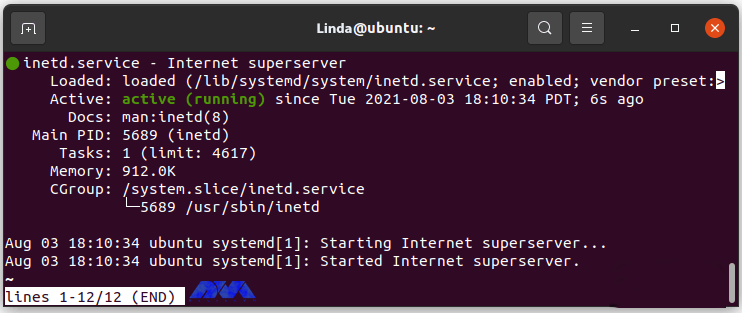
    After installation, check if the Telnet status works correctly with the following command:

    sudo systemctl status inetd

    Output

    system-status-telnet-ubuntu

    How to Use Linux Telnet on Ubuntu 22.04

    In this section, we are going to show you step-by-step how to use Linux Telnet on Ubuntu 22.04. In the first step, we will teach you how to connect to a remote system running Telnet.

    To connect to a remote system running Telnet, you must set a permission rule. By default, Telnet runs on port 23. There are several ways to regulate the UFW. It is recommended that you provide the connecting IP server only if the subnet is much worse. Do not leave port 23 open for everything, and this will lead to brute force efforts.

    The rule for single IP using the following command:

    sudo ufw allow from your_ip_address to any port 23

    Allow from the subnet using the following command:

    sudo ufw allow from your_ip_address to any port 23

    How to Connect to the Remote Server Using Telnet

    Now that you have set the UFW rules so that you can connect to the remote server using Telnet, use the following command (telnet):

    telnet your_ip_address

    How to Uninstall Telnet from Ubuntu 22.04

    Use the following command to remove Telnet from Ubuntu 22.04 operating system:

    sudo apt autoremove telnetd --purge

    This command completely removes Telnet and traces.

    Conclusion

    In general, the safest form of communication of this nature is to use SSH instead of Telnet. Development environments running on isolated Telnet LANs can be more useful. In this tutorial, you learned how to Setup and Use Linux Telnet on Ubuntu 22.04. We hope you find this article useful. Share your comments with us via the form below.

    FAQ

    Is it possible to customize the Telnet setting?

    Yes, you can customize various settings in Telnet. All you have to do is to the command prompt by entering ctrl+], and then use the commands to change the setting.

    Can we trust Telnet?

    Telnet is insecure because it transmits important data like passwords in plain text. It means that all ao the transmitted data can be intercepted and read by someone with malicious intent.

  • Top way to Install Xubuntu on VirtualBox

    Top way to Install Xubuntu on VirtualBox

    If you aim to install Xubuntu on VirtualBox, you are on the right pass. In this context, we will introduce you to the best way to install this beautiful and user-friendly operating system. Xubuntu is designed for those who want to get the most out of their services and is derived from the Ubuntu operating system.

    What is Xubuntu?

    As we mentioned in the introduction part, Xubuntu is a user-friendly and lightweight distribution based on Ubuntu which is used Xfce as its graphical desktop and is a stable desktop environment for users. a good feature of this distribution is its satisfactory performance on old hardware. Xubuntu is developed by Canonical Ltd. The noticeable point is that this operating system only includes GTK+ applications.

    Prerequisites

    In this section, we will examine Xubuntu installation step-by-step on VirtualBox. But before starting the installation process, it is better to provide the necessary prerequisites. You must first install VirtualBox on the system. We suggest that you visit the plans offered in NeuronVM to buy a Windows VPS server.

    Download and Install VirtualBox

    1- As the first step you should download the VirtualBox from the VirtualBox official website, so that, you can run Xubuntu on it and click on Windows hosts.

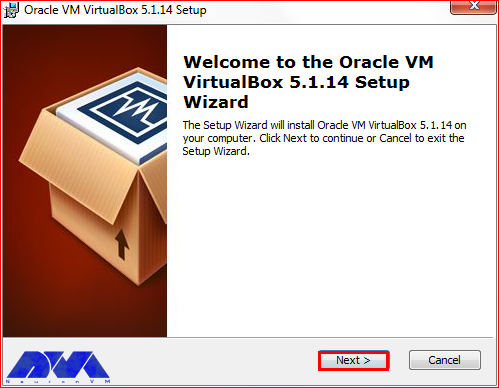
    2- As you finished downloading the .exe file. You can start the installation process using the VirtualBox wizard. Press Next to continue:

    Download and Install VirtualBox

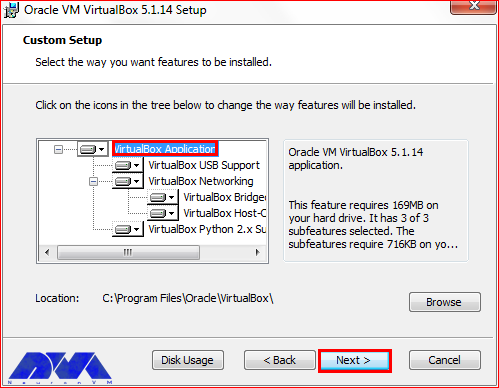
    3- In the custom setup, choose the VirtualBox application and select the location of your installation file by pressing the Browse button. Now press Next:

    Install VirtualBox on windows

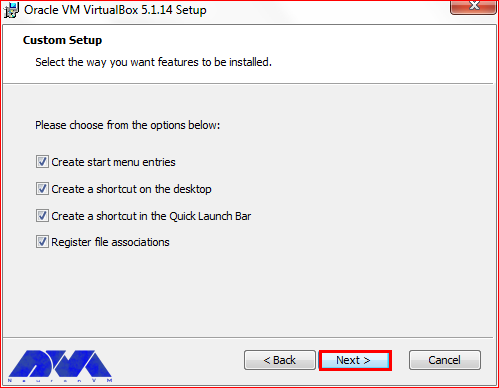
    4- You can choose the way you want features to be installed and press Next:

    VirtualBox custom setup

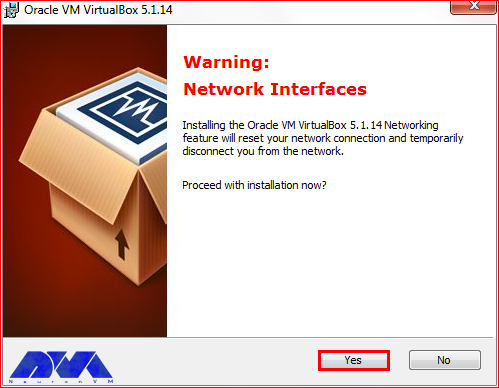
    5- In this section, by pressing the Yes button you will accept the installation:

    Install VirtualBox on windows vps

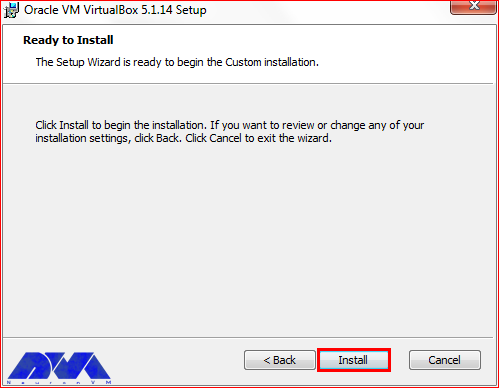
    6- At the last window, you can press the Install button and start the installation:

    how to Install VirtualBox

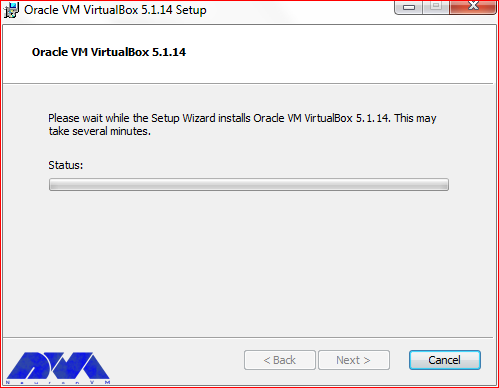
    ***

    Installing VirtualBox on windows

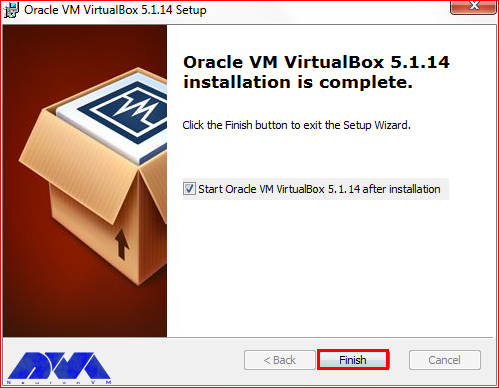
    8- As you finished the installation part, press the Finish button:

    Download and Install VirtualBox

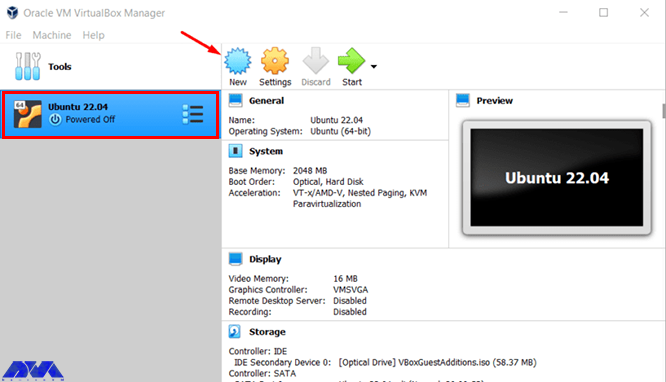
    Now that you have VirtualBox on your system, it’s time to create it. For this reason, open the VirtualBox manager from your desktop shortcut and click on the New button, which will look like this:

    virtualbox manager

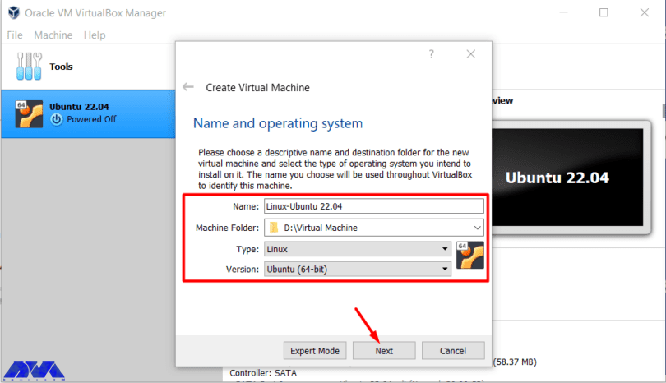
    Here, you should choose a Name for your VirtualBox and set the type on Linux, and the version on Ubuntu:

    create virtual machine

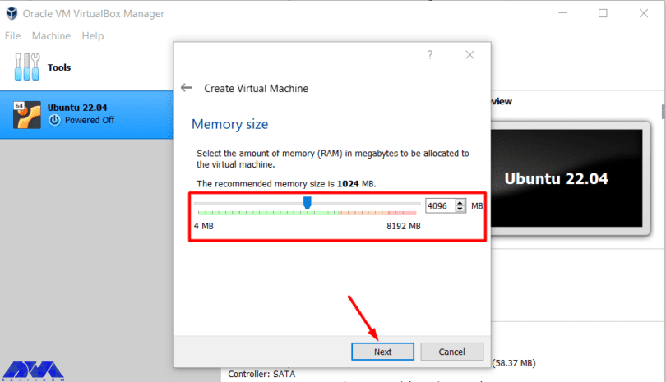
    Now, choose the proper Memory size and press Next:

    create virtual machine

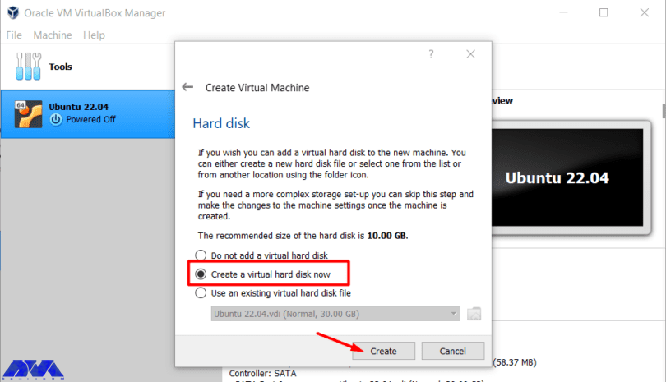
    On the created virtual machine window, check the Create a virtual hard disk now option and Create to add a hard disk to your virtual machine:

    create virtual machine

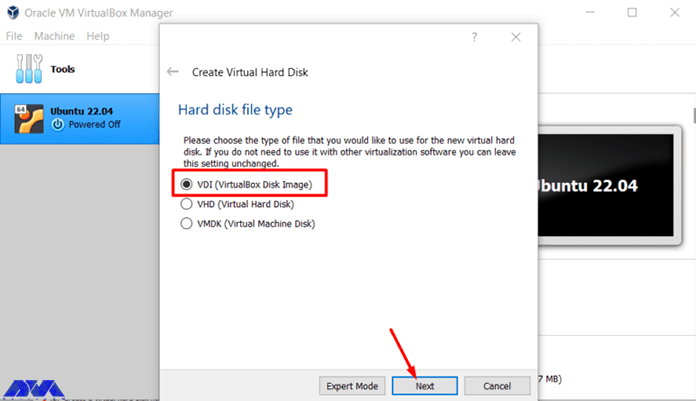
    Here you should choose the type of file you want for your hard disk:

    hard disk file type on virtual machine

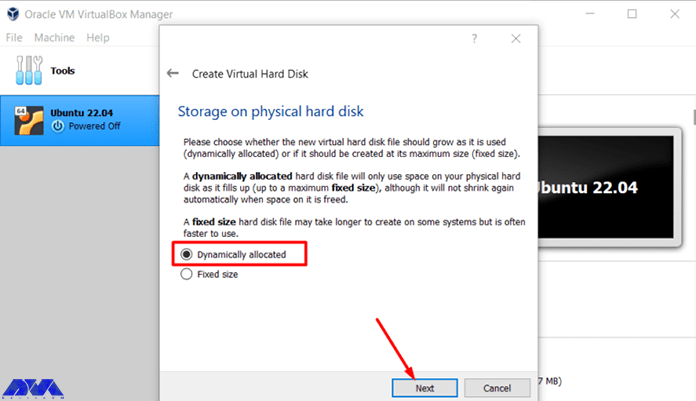
    Choose the storage of your hard disk. It is better to check the Dynamically allocated option and press Next:

    storage on physical hard disk on virtual machine

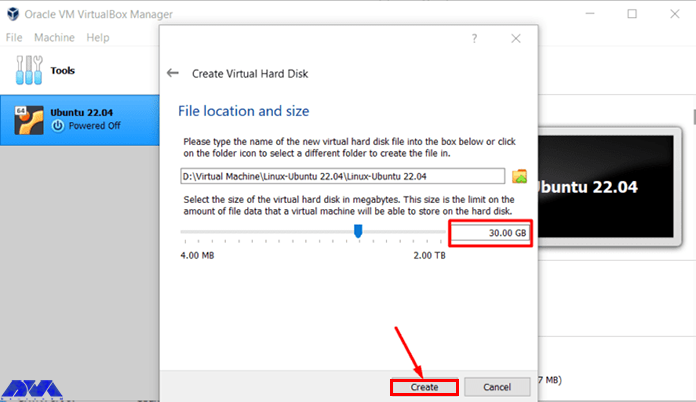
    Here, in the first box, you should type the name of your virtual machine and specify the size of the virtual hard disk. At last, press create:

    virtual machine file location and size

    Now, you can see the created VirtualBox and it’s time to add the Xubuntu operating system.

    How to Install Xubuntu on VirtualBox

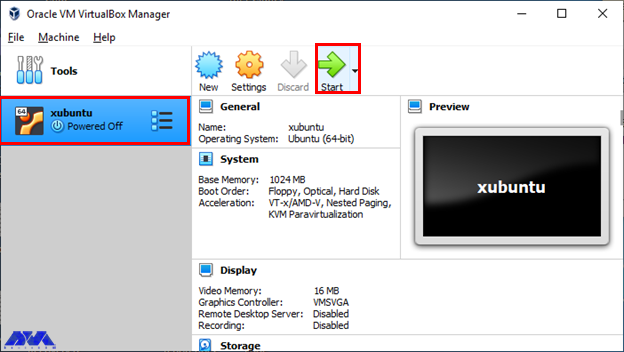
    After downloading the iso file, save the desired file in a specified path. Open VirtualBox and click on the Start button to boot the virtual machine and go to the browse part to put the Xubuntu file. Like the image below:

    adding xubuntu

    As you created the virtual machine, let’s do the instruction below to add Xubuntu. Notice that you should download the iso file of Xubuntu on a 64-bit operating system. For this reason, go to the official page of Xubuntu.

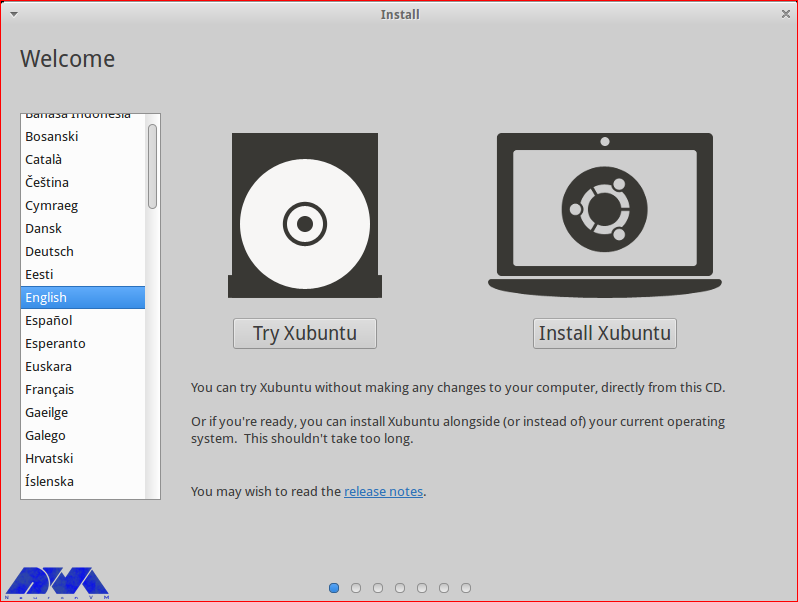
    Here, you will see the Welcome page. Choose the preferred language and click on Install Ubuntu:

    install xubuntu on virtualbox

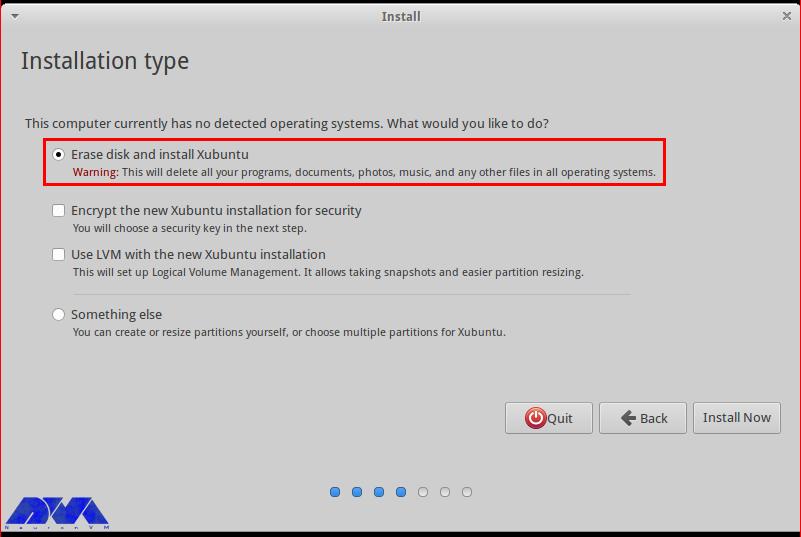
    In this section, choose the Erase disk and install Xubuntu and click on Install Now:

    installing xubuntu

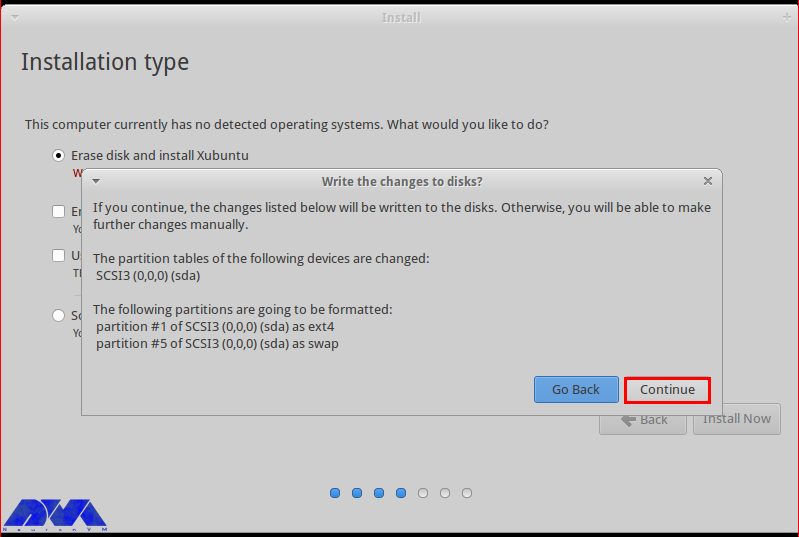
    There will appear a pop-up window. Press Continue to confirm the changes you did to the disk:

    xubuntu installation type

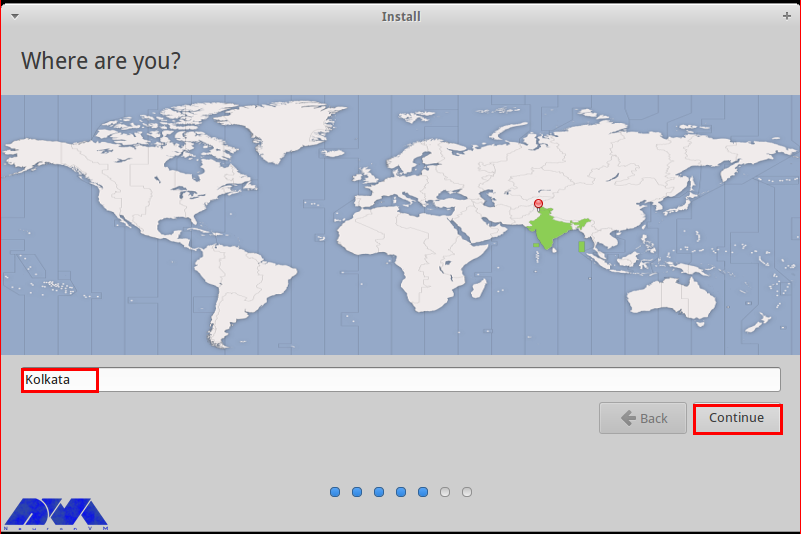
    Choose the proper location and go to the next part:

    how to setup xubuntu

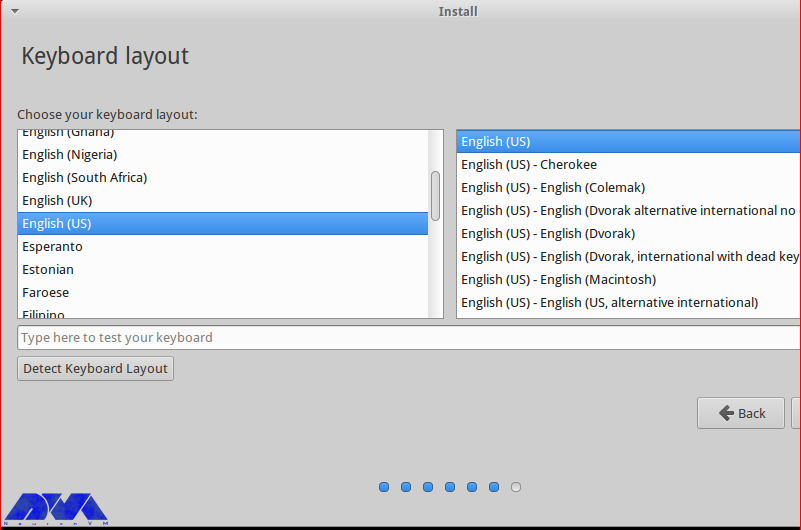
    Choose the language of the keyboard layout and continue:

    xubuntu kayboard layout settings

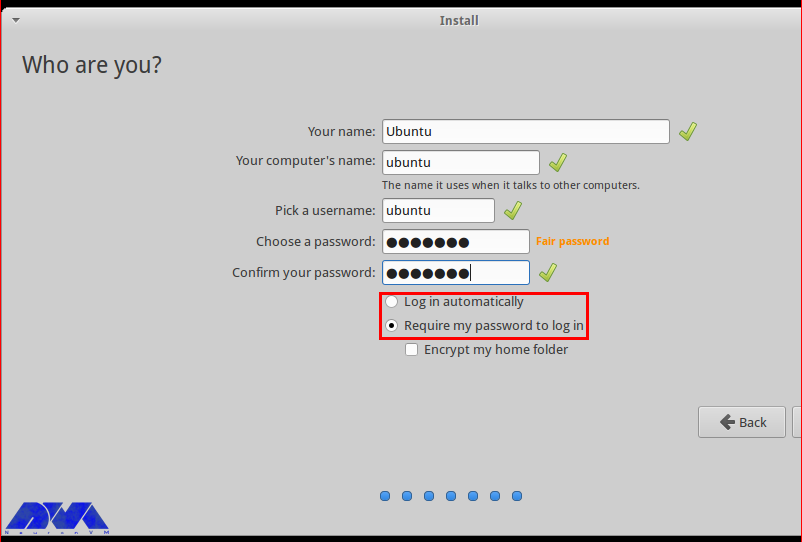
    In this section, fill the related details and determine the login way:

    configure xubuntu on virtualbox

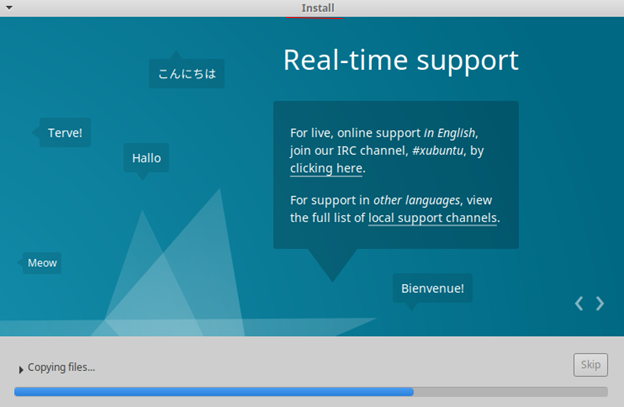
    As you continue the process, here you will encounter the Xubuntu Welcome page and the installation process will begin:

    xubuntu installation

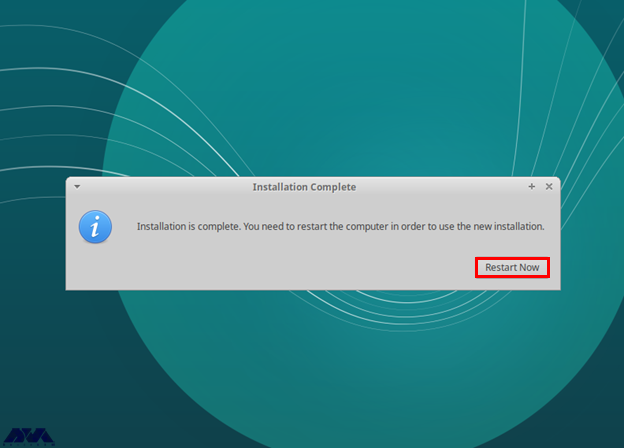
    Well done. The following image shows that you successfully finished the installation part. You will restart the system to confirm the changes:

    xubuntu installation progress on virtualbox

    As a result, you have Xubuntu on your VirtualBox. Enjoy using this applicable operating system.

    Conclusion

    Xubuntu is an operating system, based on Ubuntu and if you decided to use it on your system, you should use a virtual machine. Also, as we mentioned in this article, you should download the iso file. We tried to guide you to install Xubuntu on Windows using a VirtualBox and hope it was helpful for you. If you have any questions, leave a comment.

    FAQ

    Is Xubuntu a stable version?

    In fact, Xubuntu is the LTS version which means it has been supported for a long time. LTS versions are also provided as stable.

    How much RAM is needed for Xubuntu?

    As a minimum, you should allocate 512 MB RAM for Xubuntu but the recommended amount is 2 GB.

  • How To Install and Secure Memcached on Ubuntu 22.04

    How To Install and Secure Memcached on Ubuntu 22.04

    Memory object storage systems such as Memcached can optimize the performance of the backup database by temporarily storing information in memory and preserving frequently requested records. This will reduce the number of direct requests to your databases. We’ll look at how to add authentication to secure Memcached using Simple Authentication and Security Layer (SASL), as well as how to connect Memcached to a local or private network interface to make sure only on networks trusted by users. After reading this post, you will fully learn How To Install and Secure Memcached on Ubuntu 22.04. Therefore, we suggest you stay with us until the end of this article.

    What is Memcached?

    Memcached is a very powerful and free cache system that has been released as open source. Memcached is software for performing cache operations on Dynamic website servers that will make better and more efficient use of resources. Typically, it is using as a cache system to speed up applications by storing various objects from the results of database conversations.

    This system is typically using to speed up websites that use the database, using data storage and objects in main memory (RAM) to reduce the number of times the data is read from an external data source (for example, the database). In the continuation of this article, you will learn about Install and Secure Memcached on Ubuntu 22.04

    Prerequisites

    A Linux VPS Ubuntu 22.04 server

    – Non-root sudo user

    – firewall enabled.

    Install and Secure Memcached on Ubuntu 22.04

    In this section, we are going to teach you step-by-step how to Install and Secure Memcached on Ubuntu 22.04. If you do not have Memcached installed on your server, install it from the official Ubuntu repositories. First, make sure your local package list is updated using the following command:

    sudo apt update

    Install the official package of memcached as follows:

    sudo apt install memcached

    You can install libmemcached-tools, which contain various tools that you can use to check, test, and manage your Memcached server. Add the package to the server using the following command:

    sudo apt install libmemcached-tools

    Memcached is installed as a service on your server, with tools that allow you to test its connectivity. To launch Memcached, run the systemctl command:

    sudo systemctl start memcached

    You can now go to secure the configuration settings.

    How to Configure Memcached Network Settings

    If the Memcached server only needs to support local IPv4 connections using TCP, you can skip this step and go to the next step. But if you want to configure Memcached to use UDP sockets, Unix domain sockets, or add support for IPv6 connections, follow the steps in this section.

    First, make sure your Memcached instance listens to the local IPv4 127.0.0.1 Loopback interface. The current version of Memcached, which ships with Ubuntu and Debian, has its -l configuration parameter configured on the local interface to receive only connections from the server where Memcached runs.

    Use the following command to verify that Memcached is currently connected to the local IPv4 127.0.0.1 interface and is listening for TCP connections:

    sudo ss -plunt

    The flags will alter ss output in the following ways:

    -p adds the name of the process that is using a socket

    -l limits the output to listening sockets only, as opposed to also including connected sockets to other systems

    -u includes UDP-based sockets in the output

    -n displays numeric values in the output instead of human-readable names and values

    -t includes TCP-based sockets in the output

    You should receive the output as follows:

    This output verifies that Memcached is connected to the IPv4 Loopback address 127.0.0.1 using the TCP protocol. Now that it has been verified that Memcached is configured to support IPv4 with TCP connections only, you can edit /etc/memcached.conf to support UDP connections, Unix domain sockets, or IPv6.

    How to Configuration IPv6 to Memcached

    To enable IPv6 connections to Memcached, open the configuration file with Nano or other editors:

    sudo nano /etc/memcached.conf

    First, find the following command in the file:

    . . .
    -l 127.0.0.1

    This line is where Memcached is configuring to listen to the local IPv4 interface. To add IPv6 support, add the IPv6 local loop address command (:: 1) as follows:

    . . .
    -l 127.0.0.1
    -l ::1

    Save and close the file by pressing CTRL+O, then ENTER to save, and then CTRL+X to exit Nano. Also, restart Memcached using the systemctl command:

    sudo systemctl restart memcached

    You can now check that Memcached also responds to IPv6 connections by repeating the ss command in the previous section:

    sudo ss -plunt

    You should receive the output as follows:

    Output
    Netid State Recv-Q Send-Q Local Address:Port Peer Address:Port Process 
    . . .
    tcp LISTEN 0 1024 127.0.0.1:11211 0.0.0.0:* users:(("memcached",pid=8889,fd=26)) 
    . . .
    tcp LISTEN 0 1024 [::1]:11211 [::]:* users:(("memcached",pid=8889,fd=27))

    Output segments show that Memcached is now responding to TCP connections in the local IPv6 interface. If you want to disable IPv4 support and only listen to IPv6 connections, you can remove the -l 127.0.0.1 command from /etc/memcached.conf and restart the service using the systemctl command.

    How to Configure UDP on Memcached

    If you want to use Memcached with UDP sockets, enable UDP support by editing the configuration file and opening /etc/memcached.conf using the nano or custom editor, then add the following command to the bottom of the file do:

    . . .
    -U 11211

    If you do not need TCP support, find the -p 11211 command and change it to -p 0 to disable TCP connections. After editing the file, save and close it by entering CTRL+O to save and then CTRL+X to exit.

    Restart the Memcached service with the systemctl command to apply the changes:

    sudo systemctl restart memcached

    Memcached listens to UDP connections using the following command:

    sudo ss -plunt

    If you have disabled TCP support and enabled IPv6 connections, you should get the following output:

    [secondary_label Output] 
    Netid State Recv-Q Send-Q Local Address:Port Peer Address:Port Process 
    . . .
    udp UNCONN 0 0 127.0.0.1:11211 0.0.0.0:* users:(("memcached",pid=8889,fd=28))
    udp UNCONN 0 0 [::1]:11211 [::]:* users:(("memcached",pid=8889,fd=29))
    . . .

    Note that if you only enable IPv4 connections and enable TCP connections, your output may be different.

    How to Configure Unix Domain Sockets

    If you want to use Memcached with Unix domain sockets, you can enable support by editing the configuration file. Note that if you configure Memcached to use the Unix domain socket, Memcached disables TCP and UDP support, so before enabling socket support, make sure your applications do not need to connect using those protocols. Open /etc/memcached.conf using Nano or other editors, then add the following commands to the bottom of the file:

    . . .
    -s /var/run/memcached/memcached.sock
    -a 660

    The -a flag specifies the permissions in the socket file. Make sure the user to connect to Memcached is part of the Memcache group on your server, otherwise, a permission message will reject when you try to access the socket. Then, restart the Memcached service with the following command to apply the changes:

    sudo systemctl restart memcached

    Make sure Memcached listens to Unix domain socket connections using the following command:

    sudo ss -lnx | grep memcached

    The -x flag restricts the ss output to display socket files. You should receive the outputs as follows:

    Output
    u_str LISTEN 0 1024 /var/run/memcached/memcached.sock 20234658 * 0

    Now that you have configured the Memcached network settings, go to the next step, adding SASL for authentication to Memcached.

    How to Add Authorized Users to Memcached

    To add authentication users to the Memcached service, use Simple Authentication and Security Layer (SASL), which separates authentication procedures from application protocols. First, add SASL support to the server and configure the user with authentication. Also, enable SASL in the Memcached configuration file and verify that everything is working properly.

    Adding a Verified User

    To start adding SASL support, you must install the sasl2-bin package, which includes management programs for the SASL user database. This tool helps you create an authenticated user. To install this tool, run the following command:

    sudo apt install sasl2-bin

    Create a directory and file that Memcached checks the SASL configuration settings using the mkdir command:

    sudo mkdir -p /etc/sasl2

    Now create the SASL configuration file using nano or the editor:

    sudo nano /etc/sasl2/memcached.conf

    Add the following command:

    log_level: 5
    mech_list: plain
    sasldb_path: /etc/sasl2/memcached-sasldb2

    In addition to setting the report level, mech_list is set to plain, which indicates to Memcached that it must use its password file and confirm the plain text password. The last command you added specifies the path to the user database file that you will create in the next step. Save and close the file when done.

    Now create a valid SASL database and use the saslpasswd2 command with the -c flag to create a new user entry in the SASL database. The user here will be Linda, but you can replace this name with your own. The -f flag specifies the path to the database. This is the path you set in /etc/sasl2/memcached.conf:

    sudo saslpasswd2 -a memcached -c -f /etc/sasl2/memcached-sasldb2 linda

    Give the SASL database ownership to the user and memcache group with the following chown command:

    sudo chown memcache:memcache /etc/sasl2/memcached-sasldb2

    You now have a SASL configuration that Memcached uses for authentication. Next, verify that Memcached is running with its default settings, then reconfigure it and verify that it works with SASL authentication.

    How to Configure SASL Support of the Memcached

    First test the connection of the Memcached instance with the memcstat command. This check helps determine if Memcached is running and properly configured before activating SASL and authenticating the user. After making changes to the configuration files, run the command again to check for different outputs. To verify that Memcached is enabled and running using the memcstat command, type the following:

    memcstat --servers="127.0.0.1"

    If you are using IPv6, replace :: 1 with IPv4 127.0.0.1. If you are using a Unix domain socket, use the socket path instead of the IP address, for example –servers =/var/run/memcached/memached.sock. When you run the memcstat command and successfully connect to Memcached, you should get the following output:

    Output
    Server: 127.0.0.1 (11211)
    pid: 2299875
    uptime: 2020
    time: 1632404590
    version: 1.5.22
    . . .

    Tip: If you are using Memcached with UDP support, the memcstat command cannot connect to the UDP port. Use the following netcat command to confirm the connection:

    nc -u 127.0.0.1 11211 -vz

    If Memcached responds, you should get the output as follows:

    Output
    Connection to 127.0.0.1 11211 port [udp/*] succeeded!

    If you are using Memcached with IPv6 and UDP, the command should look like this:

    nc -6 -u ::1 11211 -vz

    Enable SASL now. Add the -S parameter to the configuration file. Reopen the file with Nano:

    sudo nano /etc/memcached.conf

    In the file, add the following command:

    . . .
    -S

    Next, find and ignore the -vv option, which provides full output to /var/log/memcached. The command without comment should be as follows:

    . . .
    -vv

    Save and close the file. Restart the Memcached service using the systemctl command below:

    sudo systemctl restart memcached

    Check the journalctl report for Memcached to make sure SASL support is enabled:

    sudo journalctl -u memcached |grep SASL

    You should receive the output command as follows to indicate that SASL support is enabled:

    Output
    Sep 23 17:00:55 memcached systemd-memcached-wrapper[2303930]: Initialized SASL.

    Now try connecting to Memcached again. Despite SASL support and initialization, the following memcstat command must fail without valid authentication:

    memcstat --servers="127.0.0.1"

    The command should not generate output. Enter the following shell command to check the status as follows:

    echo $?

    $? Always returns the exit code of the last command that came out. Anything other than 0 indicates process failure. In this case, you should get exit status 1, which indicates the failure of the memcstat command. Re-running memcstat, with the username and password, verifies that the authentication process works.

    If you use different credentials, replace the following command with the values linda and your_password:

    memcstat --servers="127.0.0.1" --username=linda --password=your_password

    You should receive the output as follows:

    Output
    Server: 127.0.0.1 (11211)
    pid: 3831
    uptime: 9
    time: 1520028517
    version: 1.4.25
    . . .

    Memcached is now configuring and executing with SASL support and user authentication.

    Allowing Access Over the Private Network (Optional)

    Memcached is configuring to listen only to the local loopback interface (127.0.0.1), which protects the Memcached interface from being exposed to outside parties. There may be times when you need permission to access from other servers. You can configure it to connect Memcached to a private network interface.

    How to Restrict IP Access with a Firewall

    Before configuring settings, set firewall rules to restrict machines that can connect to your Memcached server. You must first record the private IP address of each device you used to connect to Memcached. Once you have a private IP address, add the explicit firewall rule to allow the device to access Memcached. If you are using a UFW firewall, restrict access to the Memcached instance by entering the following commands in the Memcached server:

    sudo ufw allow from client_system_private_IP/32 to any port 11211

    If more than one system has access to Memcached over a private network, be sure to add the ufw rules for each device using the above rule as a template. Make changes to the Memcached service to connect to the server’s private network interface.

    Memcached Connection to Private Network Interface

    Now that your firewall is in place, configure Memcached to connect to the server’s private network interface instead of 127.0.0.1. Find the Memcached server’s private network interface using the IP command below.

    ip -brief address show

    Depending on the server network configuration, the output may differ.

    Once you find the IP address or private addresses of the server, reopen the configuration file using Nano:

    sudo nano /etc/memcached.conf

    Find the -l 127.0.0.1 command that you previously checked or modified, and change the address to match the server’s private network interface:

    . . .
    -l memcached_servers_private_IP
    . . .

    If you want Memcached to listen to multiple addresses, add another similar instruction for each address, either IPv4 or IPv6 using the -l memcached_servers_private_IP format. Save and close the file after completing the steps. Then restart the Memcached service:

    sudo systemctl restart memcached

    Check the new settings with ss to confirm the change:

    sudo ss -plunt

    Test your external customer connection to make sure you can still access the service. Also, check the access of an unauthorized client (try connecting without a username and password) to make sure your SASL authentication works properly. Also, try connecting to Memcached from another server that is not allowed to connect to make sure the firewall rules created are effective.

    Conclusion

    In this tutorial, you learned How To Install and Secure Memcached on Ubuntu 22.04. Also configure Memcached with IPv4, IPv6, TCP, UDP, and Unix domain sockets and how to secure your Memcached server by enabling SASL authentication. Finally, you learned how to connect Memcached to your local or private network interface and configure firewall rules to restrict access to Memcached. We hope you find this article useful. Share your comments with us via the form below.

  • 2 Ways to Install Redis on Ubuntu 22.04

    2 Ways to Install Redis on Ubuntu 22.04

    Redis is a kind of data structure storage and is used as a message broker, key-value database, and also cache system. It is written in C language and supports a large amount of data types like strings, lists, hashes, and many others. Here, we are going to analyze this applicable data store and learn 2 ways to install Redis on Ubuntu 22.04.

    Steps to Install Redis on Ubuntu 22.04

    Installing Redis is an easy process that may take just a few minutes. But first, you should prepare some requirements.

    Prerequisites

    – A Linux VPS with Ubuntu 22.04 OS

    – A root user or non-root user with sudo privileges

    1- Updating system packages

    Before you start the installation part, your system should be up to date. So, use the following command:

    sudo apt update

    2- Adding PPA repository

    This section will show how you can add the PPA repository to the Ubuntu operating system.

    sudo add-apt-repository ppa:redislabs/redis

    3- Installing Redis

    As you add the PPA repository, use the following command to start the installation process:

    sudo apt-get install redis

    4- checking the version of Redis

    If you desire to see the version of the installed Redis, you can run the following command:

    redis-server -v

    After the installation, It’s time to do the configuration part.

    Configuring Redis on Ubuntu 22.04

    Here, you can use step-by-step instructions to Configure Redis on your Ubuntu system.

    1- Enabling Redis on Ubuntu

    If you want to configure Redis, first of all, you should enable the Redis service by running the following command:

    sudo systemctl enable --now redis-server

    2- Opening the Configuration File

    In this section, you should open the Redis configuration file in your desired editor to make changes:

    Tip: Here, we will use nano editor.

    Sudo nano/etc/redis/redis.conf

    Here is what the configuration file looks like:

    redise-config-file

    Now, you should find the Bind address line (127.0.0.1) and replace it with the (Bind 0.0.0.0):

    how to configure redis on ubuntu

    You will need a password for the configuration part which must be specified with the “Requirepass” attribute. Then hit the Ctrl+O keys to apply the changes and return to the terminal:

    install redis on ubuntu

    3- Restarting the Redis

    In this section, you can use the command below to restart the Redis:

    sudo systemctl restart redis-server

    4- Verifying Redis IP and Port

    Use the command below to check the IP and Port number which is used by this service:

    ss -tunelp | grep 6379

    Tip: To have a TCP connection you can use port: (6379)

    sudo ufw allow 6379/tcp

    5- Testing Redis Server

    Run the related command to test the Redis server and connect locally:

    redis-cli

    Now, you should run the “AUTH” command and specify the password you set in the configuration part:

    AUTH specify_the_password

    For a stable connection and positive output (Ok), you should enter the correct password.

    6- Checking the Redis Info

    Use the Info command to get detailed information about Redis:

    INF0

    You can use the ping command to ping the Redis:

    ping

    7- How to exit Redis

    To exit Redis, use the “quit” command:

    quit

    Uninstalling Redis on Ubuntu 22.04

    If you decide to uninstall Redis from your Ubuntu operating system, you can run the following command:

    sudo apt remove --autoremove redis-server -y

    This method was the best and easiest way to install and use Redis on Ubuntu OS.

    Conclusion

    You can install Redis on any server. But here we decided to focus on the Ubuntu operating system. Here, you learned how to install Redis on Ubuntu 22.04. We thought about the way of installation and configuration of this service. Also, we showed how you can uninstall Redis. Hope you enjoyed this article.

    FAQ

    How many connections can we have on Redis?

    There can be up to 10000 connections on Redis or 4 simultaneous connections per MB of your memory.

    Can we use multiple CPUs on Redis?

    As Redis is single-threaded, it can not use multiple cores of the server’s CPU.

  • The Top Way to Setup Thumbor on Ubuntu 20.04

    The Top Way to Setup Thumbor on Ubuntu 20.04

    Have you ever heard of Thumbor? This practical application has many features such as resizing, applying various features, and flipping images. The advantage of this tool is its ease of use because users only need to access the URL of the Thumbor service to make changes to images. In this article, we decided to introduce you to a Top Way to Setup Thumbor on Ubuntu 20.04.

    What is Thumbor?

    As we mentioned in the introduction, Thumbor is a smart imaging service that cuts, resizes, and flips images based on your taste and desire. This tool uses advanced face recognition algorithms to determine the important points of images for better cropping and resizing. In fact, Thumbor is an Http service and is provided as a free and open-source service.

    What is Thumbor? - Setup Thumbor on Ubuntu

    Install and Setup Thumbor on Ubuntu 20.04

    Now that you are somewhat familiar with the Thumbor service, let’s learn how to install and configure it, which is explained step-by-step in this section.

    Prerequisites

    To install Thumbor you have to prepare some requirements:

    – A Linux VPS with Ubuntu 20.04 OS

    – Update the operating system

    – A non-root user with sudo privileges and login with ssh

    How to Install Thumbor on Ubuntu

    We have to mention that Thumbor is a Python service but you can use it for Ubuntu. So, use the apt command to install Thumbor on Ubuntu 20.04 and follow the instructions below to start the process:

    – The first step is Updating the package information:

    sudo apt update

    – Use the following command to do the installation of Python virtual environment library:

    sudo apt install python3-venv -y

    – Then you should install the Thumbor dependencies:

    sudo apt install build-essential libssl-dev libffi-dev python3-dev libcurl4-openssl-dev libcairo2-dev libjpeg-progs gifsicle ffmpeg -y

    – To create a virtual environment use the below command:

    python3 -m venv thumbor-venv

    – Run the command below for activating the virtual command:

    source thumbor-venv/bin/activate

    – Now, you can use this command to install Thumbor:

    (thumbor-venv) $ pip install thumbor[all]

    If you want to check the status of dependencies, follow the command below:

    (thumbor-venv) $ thumbor-Doctor

    After the installation of Thumbor, you will see that all plugins and compiled libraries support this service.

    How to Start Thumbor

    In the Thumbor launch section, you should run the related command in the virtual environment:

    (thumbor-venv) $ thumbor

    Now, the application will run in your system’s foreground, on port 8888.

    Using Thumbor is very easy through URL. So that, if you have an image and you want to resize or apply a filter, the location will be like this:

    https://upload.wikimedia.org/wikipedia/commons/3/37/Acorus_calamus1.jpg

    This is how you can pass an image to Thumbor through a URL.

    If you want to open another ssh session on your server, you can access the image through the URL:

    $ wget http://localhost:8888/unsafe/300x200/https://upload.wikimedia.org/wikipedia/commons/3/37/Acorus_calamus1.jpg -O small_pic.jpg

    If you close the SSL session, the Thumbor command will die, and if you want to prevent that, run it in the background with screen or tmux.

    The common way to run Thumbor is to run this service with supervisors or systems.

    You can use another port for Thumbor. Run it on port 80 using sudo permission. The point is that this solution runs Thumbor outside of the Python virtual environment.

    To deactivate the Thumbor command use Ctrl+C and deactivate Python virtual environment:

    (thumbor-venv) $ deactivate

    Now, run Thumbor with the full pass:

    sudo thumbor-venv/bin/thumbor -p 80

    Then use the command below to make sure that port 80 has been opened to the public:

    sudo /sbin/iptables -I INPUT -p tcp -m tcp --dport 80 -j ACCEPT 

    Use a browser to insert the URL and access Thumbor:

    http://your_server_ip_address/unsafe/300x200/https://upload.wikimedia.org/wikipedia/commons/3/37/Acorus_calamus1.jpg.

    Then, make sure you access the server with the HTTP protocol, and as the final step replace your_server_ip_address with your real IP address or domain.

    An Example of Thumbor Usage

    For example, if you want to flip an image using a URL, you would do it like this:

    http://your_server_ip_address/unsafe/-300x-200/https://upload.wikimedia.org/wikipedia/commons/3/37/Acorus_calamus1.jpg.

    The -300 part will make the image flip horizontally and the -200 part means you flipped vertically.

    If you want to configure and launch Thumbor, then you should kill it and start with the configuration file.

    Configure Thumbor on Ubuntu

    Use a configuration file to configure the behaviors of the Thumbor. The first step is creating a sample configuration file:

    thumbor-venv/bin/thumbor-config > thumbor_sample.conf

    The configuration file is full of comments:

    ################################### Logging ####################################
    
    ## Logging configuration as json
    
    ## Defaults to: None
    
    #THUMBOR_LOG_CONFIG = None
    
    
    ## Log Format to be used by thumbor when writing log messages.
    
    ## Defaults to: '%(asctime)s %(name)s:%(levelname)s %(message)s'
    
    #THUMBOR_LOG_FORMAT = '%(asctime)s %(name)s:%(levelname)s %(message)s'


    ## Date Format to be used by thumbor when writing log messages.
    
    ## Defaults to: '%Y-%m-%d %H:%M:%S'
    
    #THUMBOR_LOG_DATE_FORMAT = '%Y-%m-%d %H:%M:%S'
    
    ################################################################################
    
    ################################### Imaging ####################################
    
    ## Max width in pixels for images read or generated by thumbor
    
    ## Defaults to: 0
    
    #MAX_WIDTH = 0
    ...
    ## Result Storage that will be used with the compatibility layer, instead of the
    
    ## compatibility result storage. Please only use this if you can't use up-to-
    
    ## date result storages.
    
    ## Defaults to: None
    
    #COMPATIBILITY_LEGACY_RESULT_STORAGE = None

    Using the command below, you can edit the setting. Here, uncomment MAX_WIDTH set it like this:

    MAX_WIDTH = 100

    This action will show that you set the maximum width of the image that is allowed to be read.

    Use the configuration file to run the Thumbor command:

    sudo thumbor-venv/bin/thumbor -p 80 -c thumbor_sample.conf

    In the following URL, you will see that the width of your image is much smaller than the height:

    Open this URL, http://your_server_ip_address/unsafe/400x400/https://upload.wikimedia.org/wikipedia/commons/3/37/Acorus_calamus1.jpg.

    To edit the configuration file, kill the Thumbor again. Now, you should uncomment FILE_STORAGE_ROOT_PATH and set it like this:

    FILE_STORAGE_ROOT_PATH = '/tmp/storage'

    Then use the configuration file and run Thumbor again and open the related URL:

    http://your_server_ip_address/unsafe/400x400/https://upload.wikimedia.org/wikipedia/commons/3/37/Acorus_calamus1.jpg.

    Here, do the same action again and kill the Thumbor. Thumbor will save your image in the /tmp/storage directory:

    ls /tmp/storage

    Now that you installed and configured Thumbor successfully, you can edit your images so easily. Enjoy the service.

    Conclusion

    By reading this content, you learned how to install and Setup Thumbor on Ubuntu 20.04. Thumbor is created for Python environments but you can use it on old Ubuntu versions. We hope you enjoyed this article. For any questions, just leave a comment below.

    FAQ

    What is the default port in Thumbor?

    The default port is 8888, but if the virtual machine IP address is 12.123.12.123. Then you will be able to access Thumbor from the web browser at http://12.123.12.123:8888/…/

    What is a qualified and good image size?

    Image size of 1280*720 is large enough to be HD standards and is commonly used in photography and films.

  • How to Configure DNS Server on Ubuntu 22.04

    How to Configure DNS Server on Ubuntu 22.04

    DNS or Domain Name System is a type of network service that every Linux administrator should be familiar with. This internet service acts like a phone book that resolves IP addresses like 192.168.1.1 to FQDNs (Fully Qualified Domain Names). Read the following article carefully to find out how to configure the DNS server on Ubuntu 22.04.

    Steps to Configure DNS Server on Ubuntu

    In order to make the configuration of the DNS server on Ubuntu 22.04, the first action is to install this server. Therefore, we recommend you choose the plan you need with the Ubuntu operating system from our Linux VPS server plans. We will use Bind DNS for this reason. Bind is a software that is open-source, scalable, and full-featured software suited for DNS services.

    how to configure dns server on ubuntu 22.04

    The desired Environment

    First of all, you should create a DNS domain for your site. (e.g. neuronvm.local)

    – Neuronvm.local is the domain name

    – ns.neuronvm.local is the DNS server name

    – The IP address is 192.168.1.1

    Tip 1: Here, the used IP address is just an example.

    Tip 2: Make sure that your DNS server has a static IP address.

    Installing DNS Server on Ubuntu 22.04

    In this part, you will learn how to install a DNS server using Bind software. But first, you need to update your system using the following command:

    sudo apt update

    In this example, the package name is Bind9 and it is accessible in your base OS repository. Now, to update your system use the apt command below:

    sudo apt install -y bind9 bind9-utils

    The installation part was easy and simple.

    Configuring the DNS Server

    The next part of your process is to make the configuration part. For this reason, you can use the /etc/bind/ directory that will hold configuration files and zone files. Also, /etc/bind/named.conf is the global configuration file for the DNS server.

    Creating Zones

    You can apply the /etc/bind/named.conf.local directory and replace it with the global configuration file to create zones.

    Here, we will show with the related command, how you can do this process:

    sudo nano /etc/bind/named.conf.local

    Create Forward Zone

    We will use the domain neuronvm.local for forward zone entry in the file named.conf.local. The role of this forward zone is to translate a fully qualified domain name into an IP address:

    zone "neuronvm.local" IN { // Domain name
    type master;
    file "/etc/bind/neuronvm.local.db"; // Forward Zone file
    allow-update { none; }; // Since this is the primary DNS, it should be none.
    };

    Create Reverse Zone

    For the creation of a reverse name resolution zone in the named.conf.local file, you should go through the command below:

    zone "0.168.192.in-addr.arpa" IN { // Reverse lookup name, should match your network in reverse order
    type master;
    file "/etc/bind/r.neuronvm.local.db"; // Reverse lookup file
    allow-update { none; }; // Since this is the primary DNS, it should be none.
    };

    Create Zone Files

    Now you should create zone files for your forward and reverse DNS zones.

    – To create a forward DNS zone file /etc/bind/neuronvm.local.db, use the following command:

    sudo nano /etc/bind/neuronvm.local.db

    The record types :

    SOA is the start of authority.

    NS is the name server.

    A is A record.

    MX is mail for exchange.

    CN is a canonical name.

    Tip 1: Pay attention that domain names have to be ended with a dot (.).

    Tip 2: As you want to change any record in your zone file, you should update the serial number of +1with the current number.

    $TTL 86400
    @ IN SOA ns.neuronvm.local.root.neuronvm.local.
    200101 ; Serial
    21600 ; Refresh
    3600 ;
    604800 ; Expire
    86400 ) ; Negative Cache TTL
    ;
    ;Name Server Information
    @ IN NS ns.neuronvm.local.
    ;IP address of Name Server
    ns IN A 192.168.0.10
    ;Mail Exchanger
    @ IN MX 10 mail.neuronvm.local.
    ;A – Record HostName To IP Address
    www IN A 192.168.0.101
    mail IN A 192.168.0.102
    ;CNAME record
    ftp IN CNAME www.neuronvm.local.

    – Now, for the creation of reverse DNS zone file /etc/bind/r.neuronvm.local.db, run this command:

    sudo nano /etc/bind/r.neuronvm.local.db

    Update the parts which are shown below:

    PTR is the pointer.

    SOA is the start of authority.

    Tip 3: As you want to change any records in the lookup file, you should update the serial number +1 with the current number.

    $TTL 86400
    @ IN SOA ns.neuronvm.local.root.neuronvm.local.
    200101 ; Serial
    21600 ; Refresh
    3600 ;
    604800 ; Expire
    86400 ) ; Negative Cache TTL
    ;
    ;Name Server Information
    @ IN NS ns.neuronvm.local.
    ;Reverse lookup for Name Server
    10 IN PTR ns.neuronvm.local.
    ;PTR Record IP address to HostName
    101 IN PTR www.neuronvm.local.
    102 IN PTR mail.neuronvm.local.

    DNS Server Validation

    For checking any errors in the syntax of the DNS configuration file, apply this command:

    sudo named-checkconf

    If no error occurred, the command will return to the shell.

    Validation of Forward Zone

    Use the command below to check the validation of the forward zone:

    sudo named-checkzone neuronvm.local /etc/bind/neuronvm.local.db

    Validation of Reverse Zone

    Use the following command, to check the validation of the reverse zone:

    sudo named-checkzone 0.168.192.in-addr.arpa /etc/bind/r.neuronvm.local.db

    As the final step, you can reload both of the file zones. Also, you can use this command when you are willing to change the zone and zone file.

    sudo rndc reload

    Verifying DNS Server

    If you want to verify the DNS server, you should run the dig command by looking up records.

    dig www.neuronvm.local @192.168.1.1

    For confirmation go through this way:

    dig -x 192.168.1.11 @192.168.1.1

    And at the end, you will be able to confirm that both lookup and reverse zones are working well.

    Conclusion

    By reading this article, you learned how you can install a DNS server on the Ubuntu operating system. Also, you learned how to create DNS and file zones and the way to confirm and verify both lookup and reverse zones. We hope you enjoy this tutorial.

    FAQ

    How safe is private DNS?

    Once you enabled private DNS, all of the DNS queries will be encrypted and will provide good safety for users.

    Is it possible to increase speed by DNS?

    Actually, DNS does not affect internet speed directly, but it can influence how fast a webpage appears on your system.

  • How to Setup Xubuntu on Vmware

    How to Setup Xubuntu on Vmware

    This article will help you to install Xubuntu on Vmware workstation. We recommend Xubuntu because of its impressive benefits. This beautiful operating system can be used as a free distribution and is fast. Also, using the Xfce desktop environment is a significant advantage for Xubuntu. So, follow this article to find out how you can setup Xubuntu on Vmware.

    What Is Xubuntu?

    Xubuntu is a derivation of the Ubuntu operating system provided by Canonical Ltd company. The name Xubuntu is a combination of Xfce and Ubuntu. This distribution tries to provide a stable, customizable, and lightweight desktop environment using Xfce and also, is intended for both beginners and professional users.

    Steps to Setup Xubuntu on Vmware

    After a short explanation about Xubuntu distribution, let’s see how we can set it up on Vmware workstation through a step-by-step guide prepared for you. After purchasing a Linux VPS server from NeuronVM, you can test this training on it and enjoy it.

    1- Downloading Xubuntu

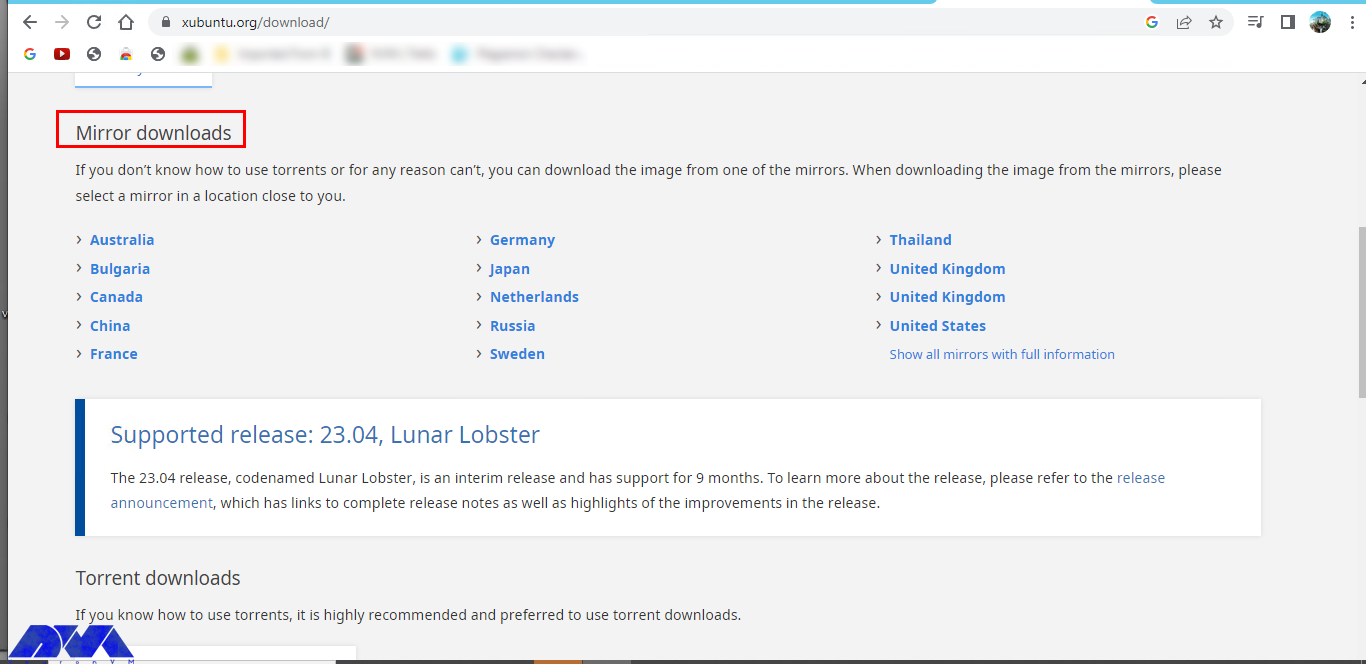
    This step is straightforward. Just go to the official page and download Xubuntu. It is recommended to use a torrent file because it’s flexible or uses the iso image file under the Mirror Downloads section. you should choose the closest location:

     Downloading Xubuntu

    – Then go to the downloads folder and find the image file. Probably, the file name starts with Xubuntu and is an iso file

    – Now you can start the installation process. open the Vmware workstation but if you don’t have it on your system you can download it from the official page.

    2- Creating a Virtual Machine on Vmware

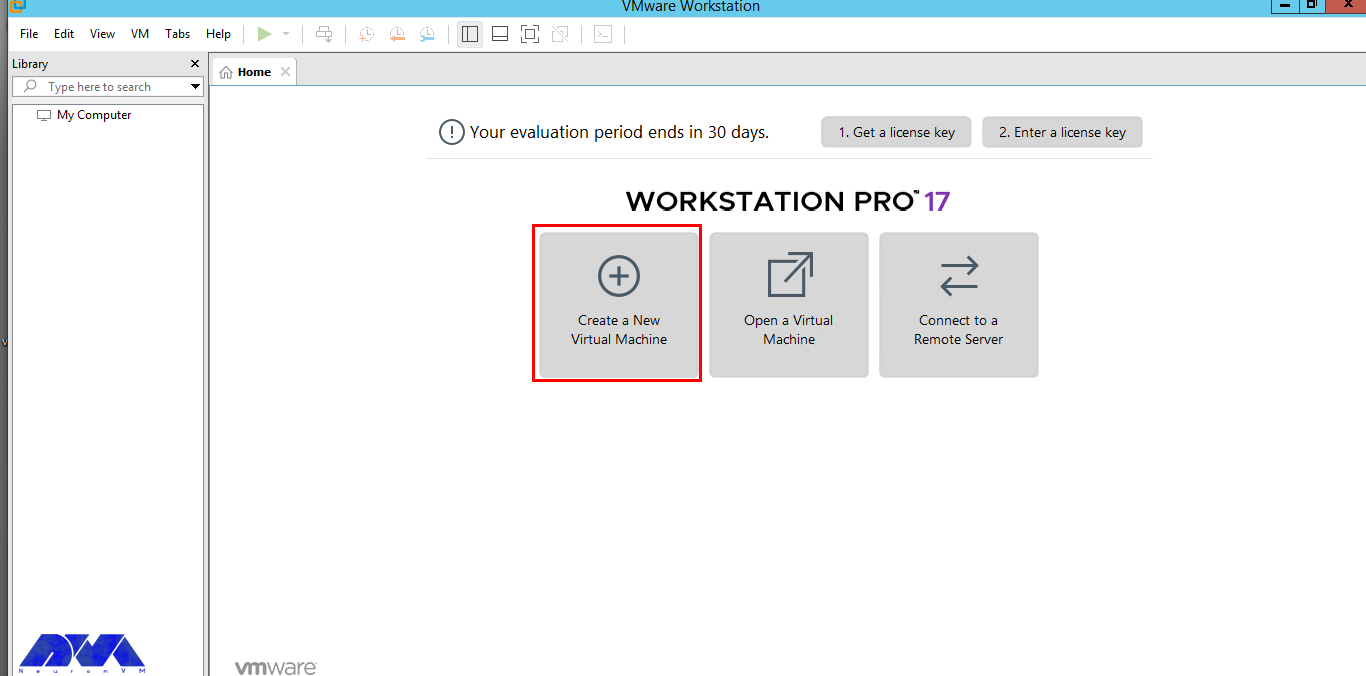
    – To start the process of installing Xubuntu, Open the Vmware workstation and click on Create a new virtual machine on your home screen or you can go through this pass: File > New Virtual Machine. Also, use the keyboard shortcut Ctrl+N.

     Creating Virtual Machine on Vmware

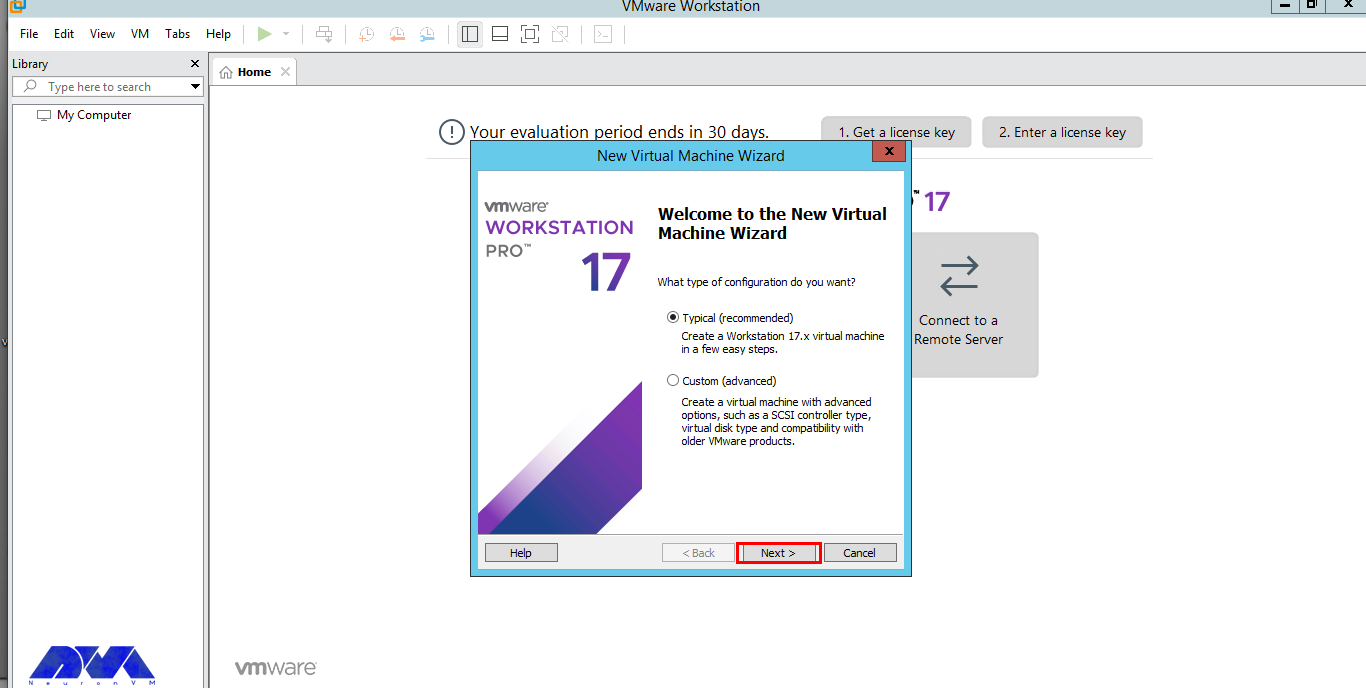
    – In this section, you will start the Vmware virtual machine Wizard. As soon as you see the welcome window of the wizard, you can do the configuration. Custom is a more advanced setting, so, the only thing you have to do is select the Typical option which is checked in default mode. Enter Next to continue:

    Creating Virtual Machine on Vmware

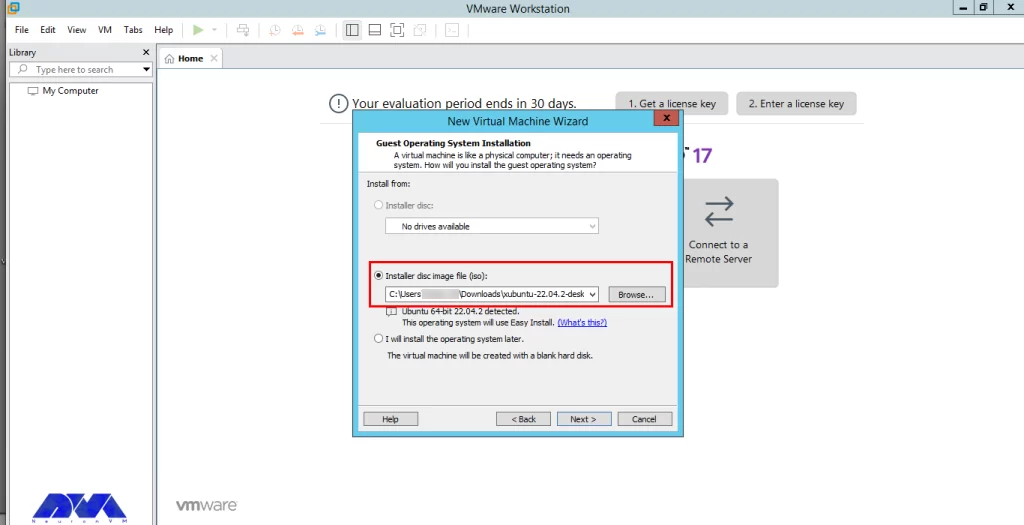
    – In the next step, you should browse the downloaded iso image file and click Next:

    Creating Virtual Machine on Vmware

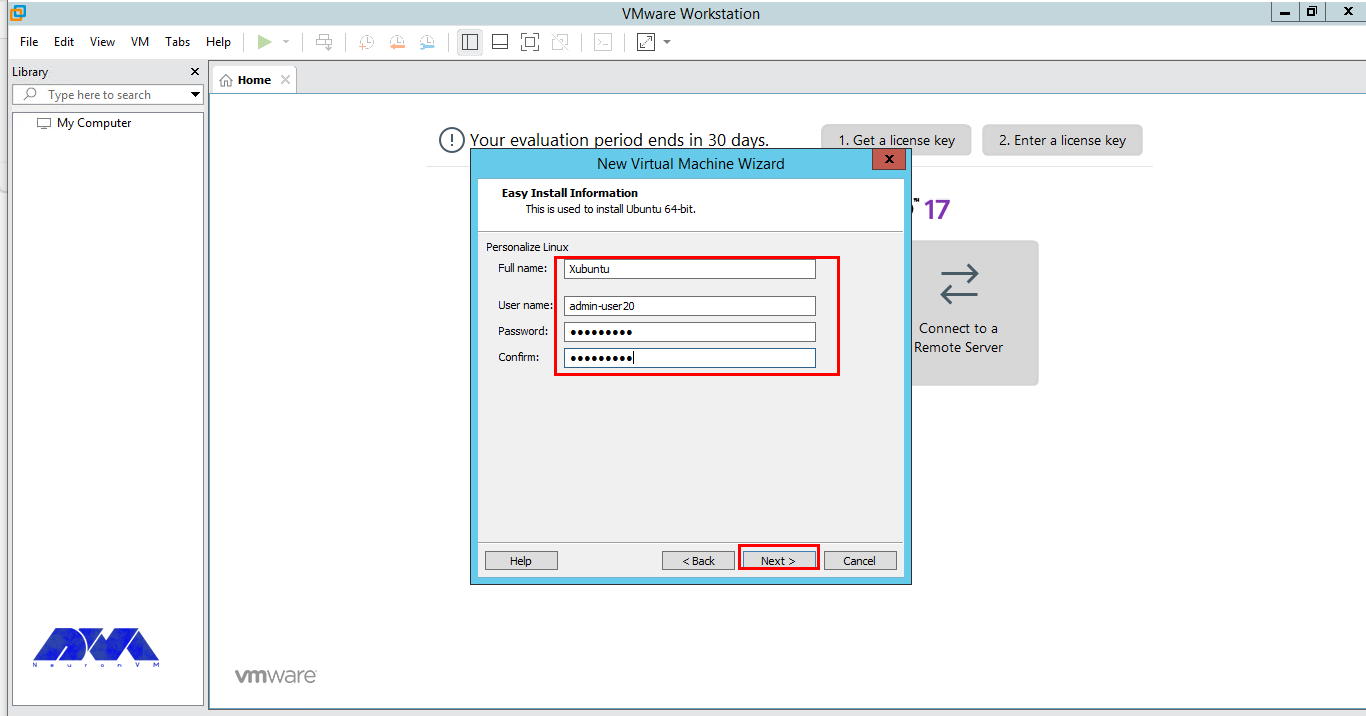
    – Here, you should enter your virtual machines Name, Username, and Password:

    Creating Virtual Machine on Vmware

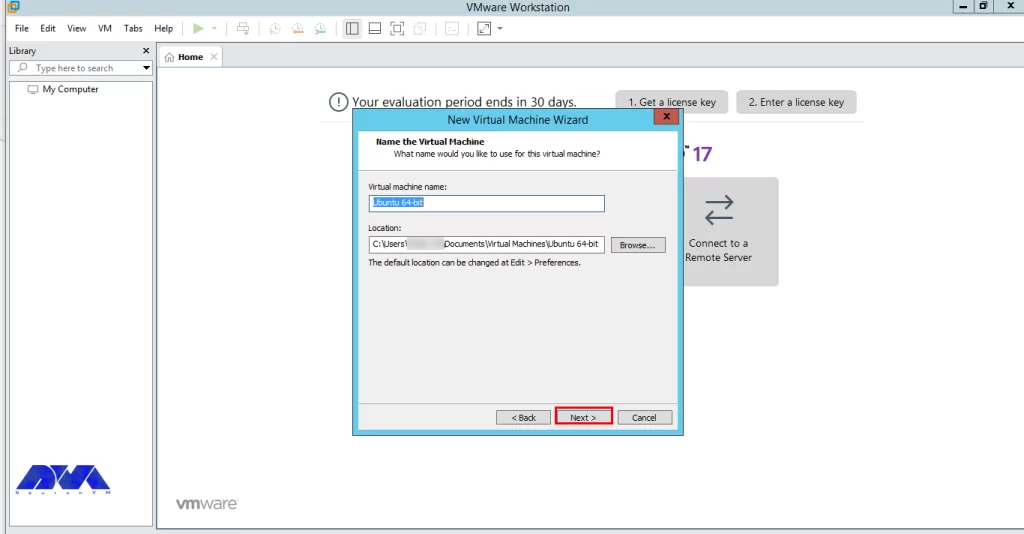
    – Then, specify your VMs name in the dialog box or leave it as the default. Also, you can accept the default location. Your folders name will be the same as your VM file name:

    Creating Virtual Machine on Vmware

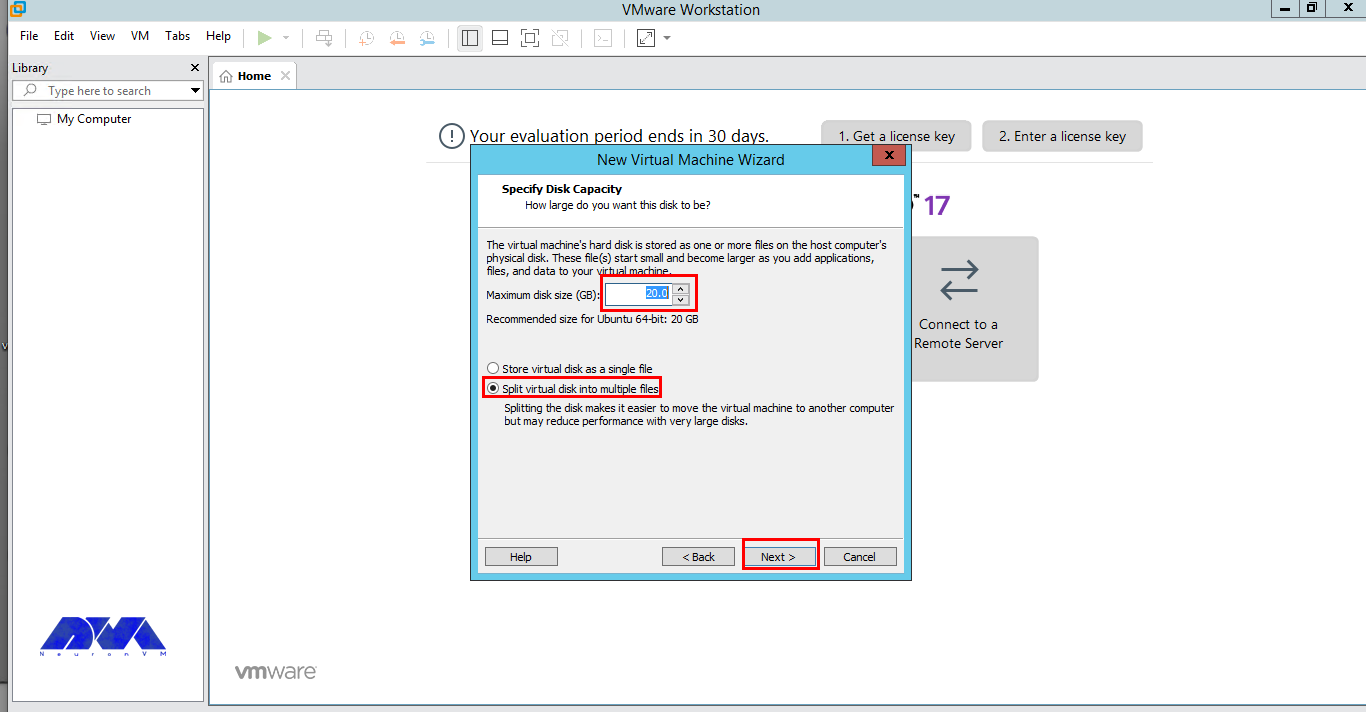
    – It is time to determine the Disk Space capacity. The default amount is 20 GB. We should mention that if you are not using heavy applications like Photoshop, this amount will be enough. Mark the Split Virtual Disk into Multiple Files option and go to the next part:

    Creating Virtual Machine-specify disk space

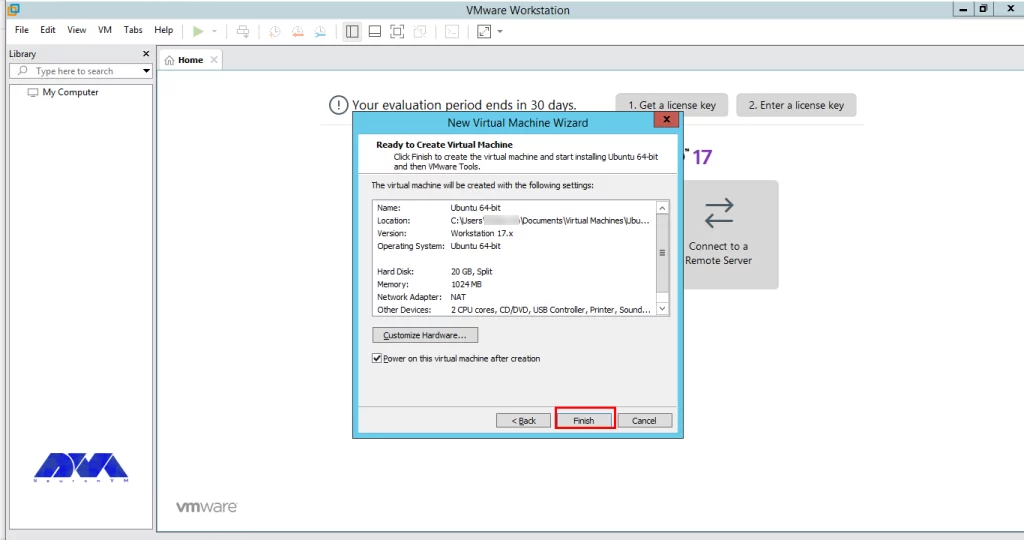
    – This is the final dialog box. Here, you can see the details of your setup. The only thing to do is click on the Finish button:

    Creating Virtual Machine on Vmware

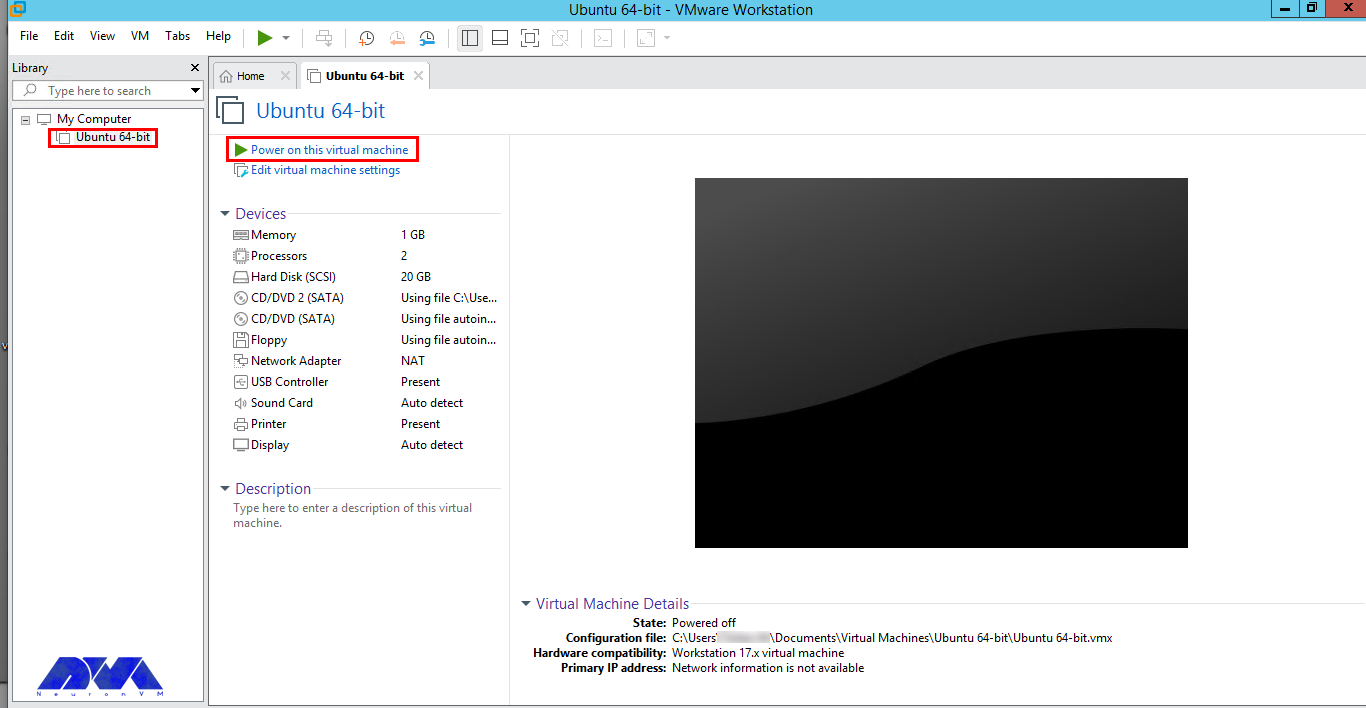
    – Now power on a virtual machine to start and Vmware will start automatically:

    Creating Virtual Machine on Vmware

    3- Setting up Xubuntu

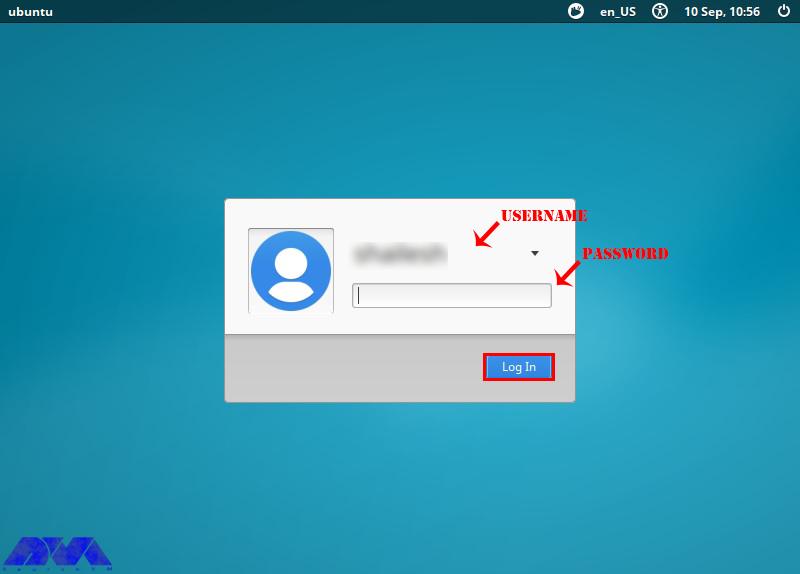
    – After an automatic reboot, you should enter the Username and Password:

    Setting up Xubuntu

    ###

    Setting up Xubuntu

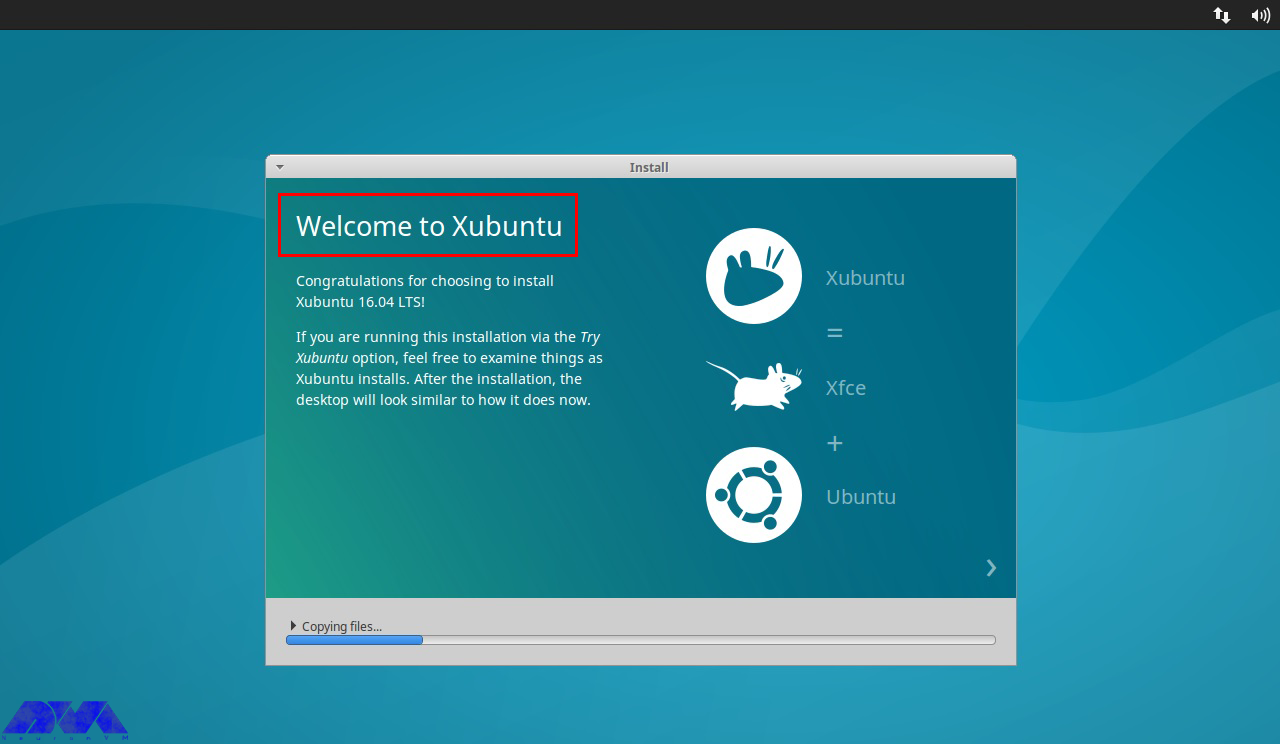
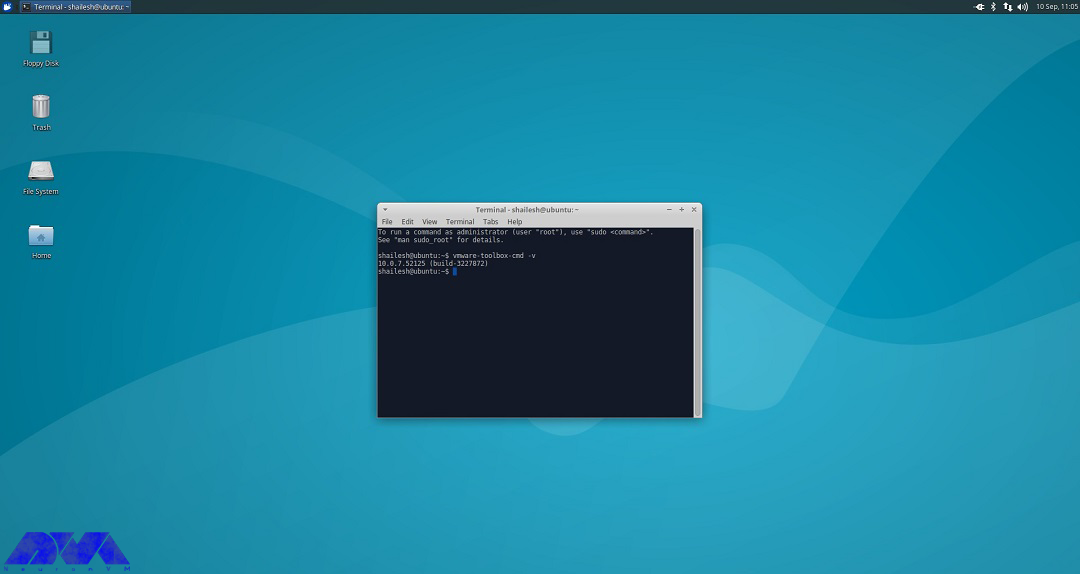
    – Vmware tools will install automatically. If you see the VM > Reinstall Vmware tools then You have already installed them. To check the status, use the command below:

    vmware-toolbox-cmd -v

    If you notice the version number, you have installed the Vmware tools. If not, go through this pass VM > Install VMware tools and restart the system:

    Setting up Xubuntu

    Now, you can see the Xubuntu desktop on full scream. If you can not see the full-screen mode, then you should restart your system:

    Xubuntu desktop environment

    Conclusion

    Xubuntu is an easy-to-use, great operating system that is derived from Ubuntu. This article can be a helpful guide to show the way to setup Xubuntu on Vmware. We tried to teach how you can download and install it on Vmware and how you can create a virtual machine to start your task. Hope you enjoyed the content. If you have any questions or ideas, just leave a comment.

    FAQ

    What file systems are suitable for Xubuntu?

    Xubuntu can use Xfce file manager Thunar.

    How much RAM is needed for Xubuntu?

    You should allocate at least 1 GB RAM and Intel or AMD 64 Bit processor for your Xubuntu distribution.

  • Tutorial Configure ModSecurity for Apache on Ubuntu

    Tutorial Configure ModSecurity for Apache on Ubuntu

    Apache Web Server is a modular web server that can have flexibility, power, and high performance on all different platforms and environments. The modularity of this web server means that most of the key features in it are designed in the form of modules that can be enabled or unenabled during compilation or even during execution, and using this allows a webmaster to configure the Apache webserver. ModSecurity is one of the Apache Web Server modules. After reading this article, you will fully understand how to Configure ModSecurity for Apache on Ubuntu.

    What is ModSecurity?

    ModSecurity is an open-source web-based firewall software that can work as a reverse proxy and is supporting by Apache, Nginx, and IIS web servers. Web application firewalls are using to create an external security layer that increases the level of protection, detecting and preventing attacks before they reach web applications.

    ModSecurity is also one of the Apache web server modules that prevent the execution of dangerous web scripts and also adds intrusion detection and prevention features to the web server. It is basically similar to IDS used to analyze network traffic. Contains a set of core rules that include various rules for website scripting, malicious user agents, SQL injection, Trojans, sessions, and other exploits.

    modsecurity.

    ModSecurity features against attacks

    – HTTP Protection: Violation of HTTP protocol and locally defined usage policy detection

    – Protection against common web attacks: Identify common attacks against web applications

    – Automatic detection: bots, crawlers, scanners, and other malicious activities

    – Trojan protection: detection of Trojan access

    – Hide Error Messages: Hide error messages sent by the server

    Introducing Apache Web Server

    Apache is free and open-source software that runs on 67% of all web servers in the world. This software has high speed, reliability, and high security and can customize using plugins and modules to meet the needs of all users in all environments. WordPress hosts use Apache as web server software. Apache web server was originally developed for Linux and Unix operating systems, which was later adapted to work with other systems including Windows and Mac. The difference in using Apache in different operating systems is the type of directory path and installation steps.

    Prerequisites

    – A Linux VPS plan that runs the Ubuntu OS

    – A non-root user who can perform sudo tasks

    How to Configure ModSecurity for Apache on Ubuntu

    First, you should update the Ubuntu package by entering the following command:

    sudo apt-get update

    Now you can install Apache by executing the following command:

    sudo apt-get install Apache2

    Next, you have to press Y and then Enter. Also, the ModSecurity module for Apache is available in the default Ubuntu repository. You should just execute the following command to install it:

    sudo apt install libapache2-mod-security2

    Enter the following command to enable ModSecurity:

    sudo a2enmod security2

    To make the changes take effect, just restart Apache with the following command:

    sudo systemctl restart apache2

    Now you should find the following line in the /etc/apache2/mods-enabled/security2.conf configuration file:

    IncludeOptional /etc/modsecurity/*.conf

    Apache includes all *.conf files in the folder written in the following command. To do this, you need to rename the Modsecurity.conf file:

    sudo mv /etc/modsecurity/modsecurity.conf-recommended /etc/modsecurity/modsecurity.conf

    Then in this step, you should edit the above file with your desired command-line text editor:

    sudo nano /etc/modsecurity/modsecurity.conf

    Now you need to find the following line:

    SecRuleEngine DetectionOnly

    Configuration allows ModSecurity to log HTTP transactions but takes no action when the attack is detecting. ModSecurity detects and blocks web attacks by entering the following command:

    SecRuleEngine On

    The following line tells ModSecurity what information should be included in the audit report. You should find it:

    SecAuditLogParts ABDEFHIJZ

    The default settings should changed as follows:

    SecAuditLogParts ABCEFHJKZ

    Finally, save and close the file. You should restart Apache to apply the changes by entering the following command:

    sudo systemctl restart apache2

    ModSecurity can protect your web applications by setting rules to detect and block malicious agents. Also, install existing rule sets and get start quickly. There are several free rules for ModSecurity. The OWASP Core Rule Set (CRS) is a standard set of rules using with ModSecurity.

    The OWASP Core Rule Set is free, community-maintained, and the most widely used rule set that provides the default configuration sold for ModSecurity. It can be integrated with the Honeypot project and contains rules that help stop command attack vectors, including SQL injection (SQLi), cross-site scripting (XSS), and many others that can be used to detect bots and Identification of scanners used. Adjusted through wide exposure to have very few false positives.

    By installing ModSecurity from the default Ubuntu repository, the modsecurity-crs package is also installing, which includes the OWASP core rule set version 3.x. You can download the latest CRS OWASP from GitHub, and execute the following command:

    wget https://github.com/coreruleset/coreruleset/archive/v3.3.0.tar.gz

    Then you should extract the file with the following command:

    tar xvf v3.3.0.tar.gz

    Now you need to create a directory to store CRS files. To do this, enter the following command:

    sudo mkdir /etc/apache2/modsecurity-crs/

    Then you need to move the extracted directory to the desired folder in the following command:

    sudo mv coreruleset-3.3.0/ /etc/apache2/modsecurity-crs/

    Navigate to that directory by entering the following command:

    cd/etc/apache2/modsecurity-crs/coreruleset-3.3.0/

    Then Remember to rename the crs-setup.conf.example file:

    sudo mv crs-setup.conf.example crs-setup.conf

    Now you need to edit the desired file with the following command:

    sudo nano /etc/apache2/mods-enabled/security2.conf

    The following line loads the default CRS files. You should find it:

    IncludeOptional /usr/share/modsecurity-crs/*.load

    Now change the above line as shown below:

    IncludeOptional /etc/apache2/modsecurity-crs/coreruleset-3.3.0/crs-setup.conf
    IncludeOptional /etc/apache2/modsecurity-crs/coreruleset-3.3.0/rules/*.conf

    Remember to save the file and close it. Then test the Apache configuration by executing the following command:

    sudo apache2ctl -t

    Finally, restart Apache with the following command:

    sudo systemctl restart apache2

    How To Test the ModSecurity Configuration on Ubuntu

    In the last step, you should test that ModSecurity can detect and block suspicious HTTP traffic. To do this you need to edit the default virtual host file with the following command:

    sudo nano /etc/apache2/sites-available/000-default.conf

    Now In this step, create a blocking rule that blocks access to a specific URL when accessing a web browser. You should append these lines at the end before closing the ‘Virtualhost’ tag. To do this, enter the following command:

    SecRuleEngine On
    SecRule ARGS:testparam "@contains test" "id:254,deny,status:403,msg:'Test Successful'"

    Now you need to set the “id” and “msg” tags to any desired value. Then you should restart the Apache webserver to apply the changes to the host configuration file by executing the following command:

    sudo systemctl restart apache2

    You need to visit the URL shown ?testparam=test at the end:

    http://server-ip/?testparam=test

    If you get a “403 Forbidden error“, it indicates that access to the resource is blocked. In this step, you should check the error logs by entering the following command. This will confirm that the client is blocked:

    cat /var/log/apache2/error.log | grep "Test successful"

    Conclusion

    ModSecurity is using to detect and block unwanted traffic. In this article, you learned how to configure ModSecurity for Apache on Ubuntu. By following our step-by-step tutorial, you can easily install and configure it on your Ubuntu system. We hope this educational article was useful for you. Share your comments with us through the form below.
    FAQ

    What is the role of Modsecurity?

    Mode security is a vital piece of PCI DSS compliance and helps to shield your site against external threats.
    How we can check if Modesecurity is Enabled?

    If you installed Modesecurity, you can find it under your plugins.

  • How to Install Docker on Ubuntu 22.04

    How to Install Docker on Ubuntu 22.04

    What you will read in this article will be familiarization with Docker and then how to install Docker on Ubuntu 22.04. The following content will help you to install Docker successfully and to find out how to work with images and containers. Also, you can add an image to a Docker repository.

    What is Docker?

    Dockers is actually a platform that helps users to package and run applications in containers. These containers are like virtual machines and are isolated. They are also portable and compatible with resources. The isolation factor allows multiple containers to run simultaneously on a single host. Docker has a client-server structure and relies on the Docker daemon to manage containers:

    Install Docker on Ubuntu 22.04

    Prerequisites

    Before you start the installation part, you need to prepare some requirements:

    – A Linux VPS server with Ubuntu 22.04

    – A non-root user with sudo privileges and a firewall

    – A docker Hub account

    Installing Docker on Ubuntu 22.04

    When we want to start, the installation package in the repository may not be the latest version, So we install Docker from the official Docker repository. First, add a new package source and then install the package. Let’s update the list of packages:

    sudo apt update

    Now, you should install the required package that allows apt use packages over HTTPS:

    sudo apt install apt-transport-https ca-certificates curl software-properties-common

    After that, you have to add the GPG key to your system for the official Docker repository:

    curl -fsSL https://download.docker.com/linux/ubuntu/gpg | sudo gpg --dearmor -o /usr/share/keyrings/docker-archive-keyring.gpg

    Using this command, it is time for adding the Docker repository to apt sources:

    echo "deb [arch=$(dpkg --print-architecture) signed-by=/usr/share/keyrings/docker-archive-keyring.gpg] https://download.docker.com/linux/ubuntu $(lsb_release -cs) stable" | sudo tee /etc/apt/sources.list.d/docker.list > /dev/null  

    To be recognized, in addition, you should update the exciting list of packages:

    sudo apt update

    You have to be sure to install your package from the Docker repo instead of the default Ubuntu repo:

    apt-cache policy docker-ce

    TIP: As you got the output, you will see that docker-ce is not installed, but it is the candidate for installation from the Docker repository for Ubuntu 22.04 (that is jammy)

    Now, you can install Docker:

    sudo apt install docker-ce

    After all these steps, Docker can be installed, the daemon started and the process enabled until it starts again after booting the system:

    sudo systemctl status docker

    As you installed this platform, you will have the Docker service available and both the Docker command line tool and the Docker client.

    Run the Docker Command Without Sudo (optional)

    By default, the Docker command is executed only by the main user or the user in the Docker group. But if you don’t want to log in as the sudo user, you should go through the following instructions.

    To run the Docker command without sudo, add your user name to the Docker group:

    sudo usermod -aG docker ${USER}

    Then, to apply for the membership, exit the server and turn back in or type the following command:

    su - ${USER}

    Now, you should enter the user’s password to continue:

    groups

    Then to add a user to the Docker group that you are not logged in as notify the username explicitly using:

    sudo usermod -aG docker username

    When you finished all these sections, you will have the Docker platform on your system.

    Conclusion

    Here, we tried to show how to install Docker on the Ubuntu operating system. Docker is a useful assistant for you. We hope you enjoy this article. If you have any ideas or questions, just leave a comment.

    FAQ

    Is Docker free on Linux?

    Yes, Docker is free to use as part of the Docker personal subscription.

    Does Docker use more RAM?

    Docker doesn’t apply memory limitations to containers by default. It is possible for a Docker container to consume the entire host’s memory.